Bhutan is the Himalayan kingdom that kept its own rules: fortress monasteries still hold both the district government and the monk body, and nobody may climb its peaks above 6,000 m.
Written in the Darjeeling hills by the Darjeeling Trips designers · Updated September 2026
Altitude
2,320 m
Getting there
Paro (PBH), about 1 hour to Thimphu; or Bagdogra (IXB), 162 km to the border, about 4.5 hours
Best months
March to May, September to November
Give it
5 to 7 nights
Best for
Dzongs, festivals, mountain walks, Tiger's Nest and slow lodge stays
Spoken
Dzongkha, English, Nepali (Lhotshamkha), Tshangla
Permits
Indian nationals need no visa, only an entry permit: carry an original passport valid for six months or an original voter ID, and pay the Sustainable Development Fee of ₹1,200 per person per night. Other nationalities need a visa (US$40, applied online, reviewed in about five working days) and pay US$100 per night until 31 August 2027. A licensed Bhutanese guide is required for all.
The name
འབྲུག་ཡུལ།
Druk Yul: the land of the thunder dragon
Bhutan has called itself Druk Yul since the 17th century, after the Drukpa lineage of Buddhism; druk is the thunder dragon. The outside name, Bhutan, is traditionally traced to the Sanskrit Bhota-anta, the end of Tibet.
Druk Yul, Bhutan's own name for itself, written in Dzongkha
Bhutan is the only country in the world that limits tourism by design, charging a daily Sustainable Development Fee and requiring every visitor to travel with a licensed guide. The result is a place that still looks like its own paintings. From Darjeeling the road runs down to the border at Jaigaon and Phuentsholing and then up to Thimphu, or a short flight from Bagdogra reaches Paro. We build Bhutan as a second act to Sikkim or as a journey in its own right, with the Paro Taktsang monastery, Punakha Dzong at the meeting of two rivers, the Phobjikha valley and its cranes, and lodges from the classic to the very best in Asia.
The road up
126 m to 2,320 m, 306 km in about 10 hours
By road: 162 km to Phuentsholing, a night at the gate, then 5 to 6 hours up to Thimphu. Or fly Drukair, Bagdogra to Paro in about 50 minutes, on set days that change with the month: see Getting here.
2,000 mBagdogra airport (IXB)126 mPhuentsholing, the border gate at Jaigaon293 mGedu2,000 mChukha, in the Wang Chhu gorge1,590 mChuzom, where the Paro Chhu meets the Wang Chhu2,050 mThimphu2,320 mDochu La, 108 chortens3,100 mPunakha Dzong1,200 m
Bagdogra airport (IXB)126 m · 0 km
Phuentsholing, the border gate at Jaigaon293 m · 162 km · 4.5 h
Gedu2,000 m · 204 km · 6 h
Chukha, in the Wang Chhu gorge1,590 m · 239 km · 7.5 h
Chuzom, where the Paro Chhu meets the Wang Chhu2,050 m · 280 km · 9 h
Thimphu2,320 m · 306 km · 10 h
Dochu La, 108 chortens3,100 m · 329 km · 10.8 h
Punakha Dzong1,200 m · 378 km · 12.5 h
Altitudes and distances rounded. Times are for a private car in dry weather, without stops.
Bhutan in five scenes
How a stay here actually unfolds
01Rama Krushna Behera
Day 2, 06:30 · Dochu La, 3,100 m
108 chortens and a mountain no one may climb
The car leaves Thimphu before sunrise and climbs 23 km through forest and prayer flags to the pass. At 3,100 m the air bites and your breath shows. Ahead stand the 108 Druk Wangyal chortens, in tiers of 45, 36 and 27, raised by the eldest Queen Mother for soldiers who died in December 2003. From October to February the northern skyline often clears. Your guide will point out Gangkhar Puensum to the northeast: 7,570 m, the country's highest peak, kept unclimbed by law.
02Pema Gyamtsho
Day 2, 11:00 · Punakha Dzong, 1,200 m
Where the male river meets the female river
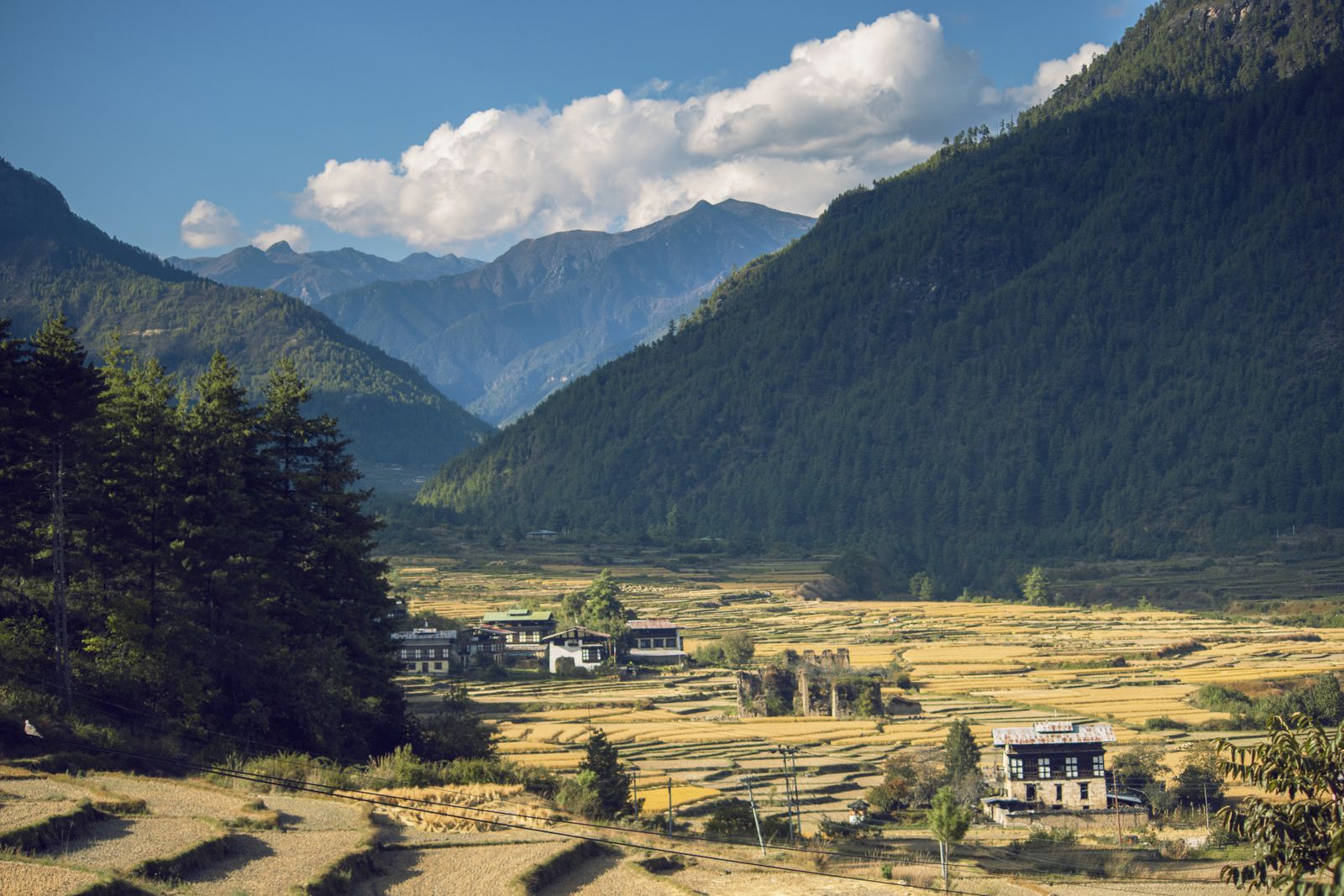
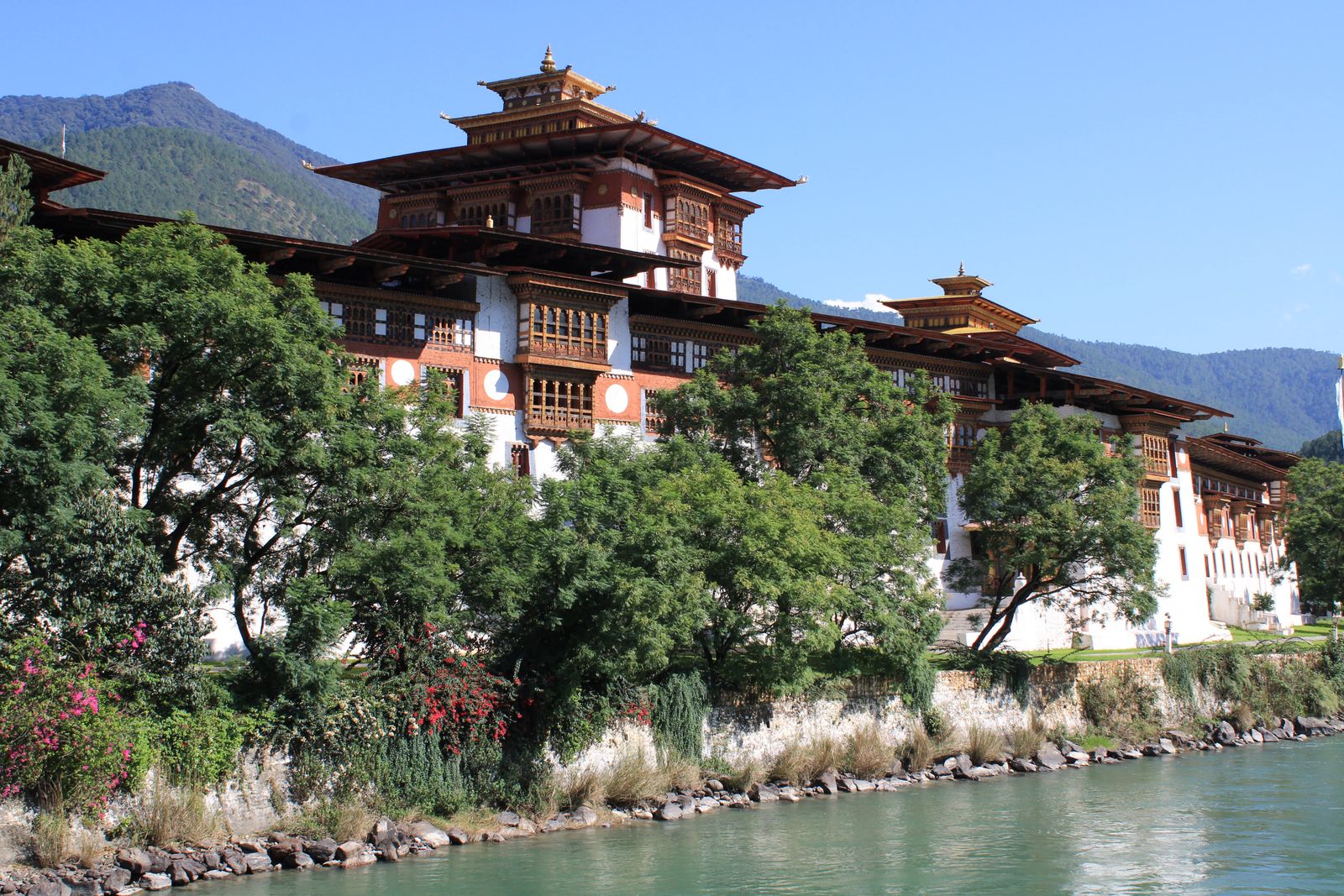
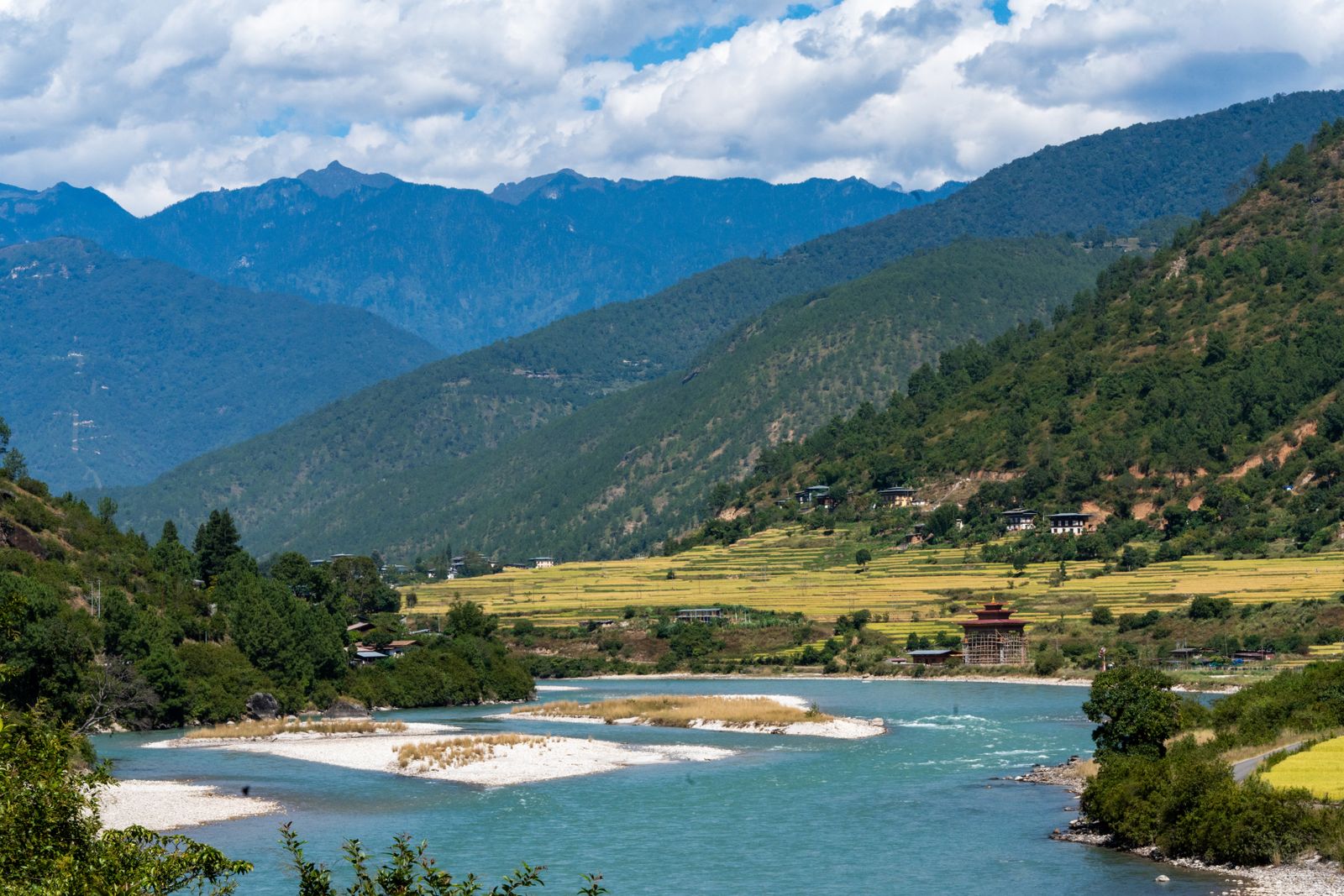
Down 49 km of hairpins the air softens and the rice terraces begin. Punakha Dzong fills the point where the Pho Chhu meets the Mo Chhu, the male and female rivers. The Zhabdrung Ngawang Namgyal built it in 1637 and 1638; legend says his master builder saw the plan in a dream. Bhutan's first king was crowned here in 1907, and each winter the Je Khenpo, the chief abbot, moves in with the central monk body. Cross the covered bridge, climb the steep wooden stairs, and walk the courtyards at the monks' pace.
03Mohamed Abdul Rasheed
Day 4, 07:30 · Taktsang, 3,120 m
Up to the tiger's lair before the day groups
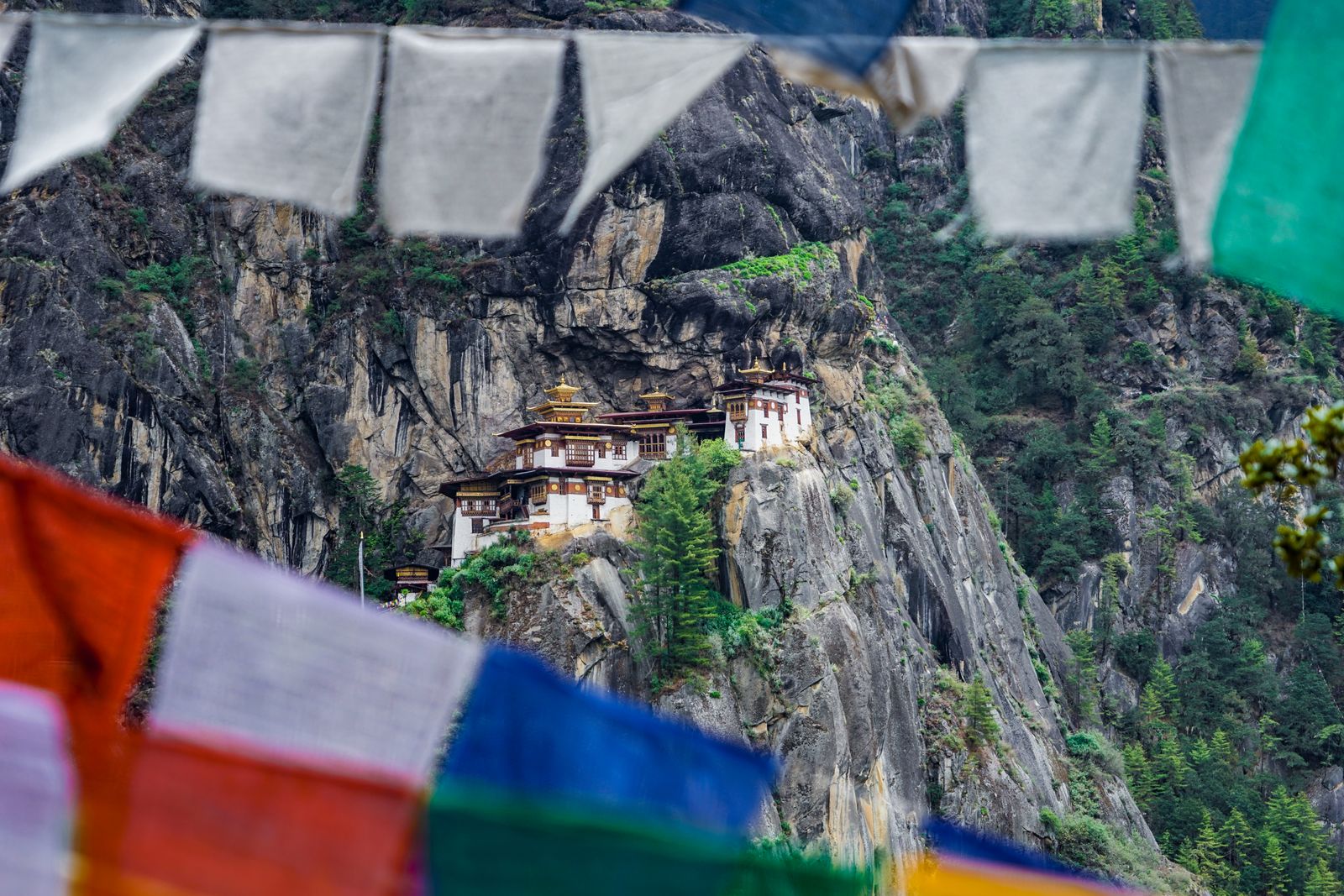
We are on the trail at 07:30, ahead of the day groups. The path climbs through blue pine hung with moss and prayer flags, and the monastery shows and hides itself as the ridge turns. From the viewpoint the trail drops to a bridge beside a 60 m waterfall, then climbs again to the buildings set around Guru Rinpoche's meditation cave: a temple since 1692, gutted by fire in April 1998 and restored by 2005. At the last gate cameras and bags go into lockers, and butter lamps take over. The climb, the hours, the cafeteria and the fee are set out in Taktsang, the facts, below.
04Harsh Suthar
Day 4, 18:00 · Paro, 2,200 m
Dusk at the fortress on a heap of jewels
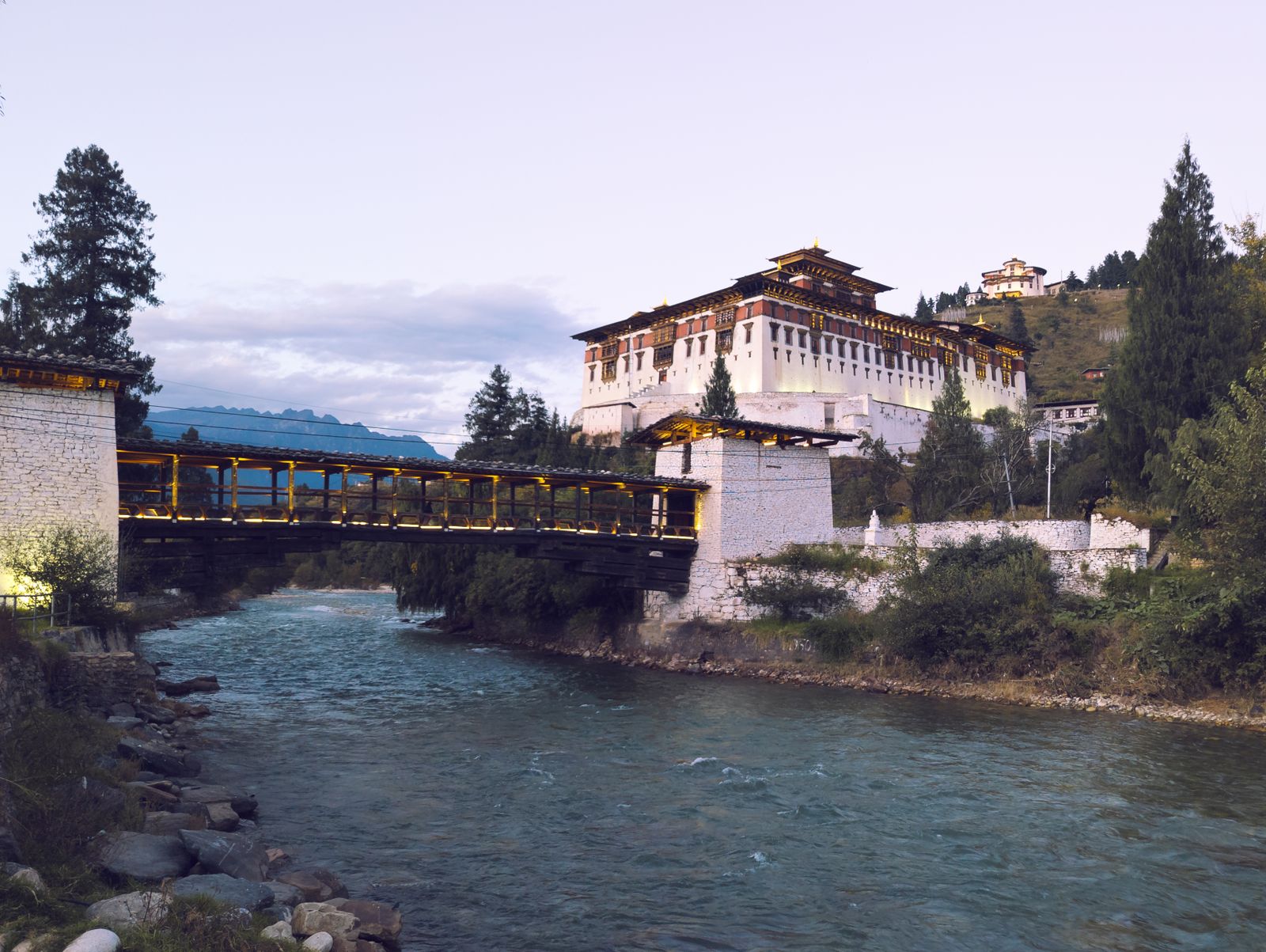
Below Rinpung Dzong the lights come on along the covered cantilever bridge, and the river sounds louder in the dark. The name means fortress on a heap of jewels; it was consecrated in 1646, and scenes of Bernardo Bertolucci's Little Buddha (1993) were filmed here. Then a farmhouse, and the dotsho we booked that morning: river stones heated in a wood fire until they glow, lowered into a wooden tub with khempa, a local artemisia. You soak while the Taktsang climb leaves your legs. Dinner is by the wood stove.
05Nimrod Sheinman / Unsplash
Saturday, 15:00 · Changlimithang, Thimphu, 2,320 m
The national sport, shot at 145 m
Ask your guide on a Saturday whether a side is shooting at Changlimithang, and you will find the capital's real weekend. Archery has been Bhutan's national sport since 1971, the year Bhutan joined the United Nations. The target is a painted board about 91 cm tall and 28 cm wide, set 145 m away, more than twice the Olympic distance, and it is hit often. When it is, the whole team sings and dances at the target end. The women behind the line tease the other side with rhymed insults meant to spoil their aim. Nothing is charged to watch. You stand well behind the archers, never near the target, and half an hour is plenty.
Past Paro and Punakha
Three valleys that ask for an extra day
A first week in Bhutan runs Paro, Thimphu, Punakha. These three take a longer drive or a second flight, and each one asks for nights a first week does not have.
Ema is chilli, datshi is cheese, and in Bhutan's national dish the chilli is the main ingredient, not the seasoning. Cooks use green, red or white chillies, the white ones washed in hot water and dried in the sun, then melt them into datshi made at home from cow or yak milk. It arrives with nutty red rice and a cup of suja, butter tea with salt. For milder palates there is kewa datshi, with potatoes, or shamu datshi, with mushrooms. We arrange it at a farmhouse kitchen in Paro or Punakha, cooked to your heat.
The farmhouse matters as much as the dish. We use a working family farm rather than a roadside farmhouse restaurant: three storeys of rammed earth, animals once kept on the ground floor, the family's altar room, the choesum, on the top, and the chilli agreed with the cook the day before. The manners are simple. Your host will offer suja or ara more than once, and Bhutanese guests say meshu meshu, covering the mouth, before accepting on the second or third offer; a guest may simply take the cup in both hands. Leave a little in the bowl when you have had enough. The manners that also apply inside a dzong are in the checklist below.
A Paro farmhouse kitchen, with red rice and suja; kewa datshi for milder palates
Words to carry
Three words that open doors
Spoken here: Dzongkha, English, Nepali (Lhotshamkha), Tshangla. These three are Dzongkha.
བཀའ་དྲིན་ཆེ་ལགས།Kadrinchey lasay kah-DRIN-chay lahThank you, said with respectDzongkha
ཞིམ་པོ།Zhimposay ZHIM-poDelicious, or good: the word to leave with the cookDzongkha
ལགས་སོ།Lasosay LAH-soYes, all right: the polite way to agreeDzongkha
When to go
Bhutan, month by month
April, October and November rate best here. July: Wettest month, about 150 mm over 19 days.
Jan15°-2°Average low -2 °C, high 15 °C.QuietColdest nights, dry clear days, frost at dawn
Feb17°0°Average low 0 °C, high 17 °C.QuietPunakha Tshechu 16 to 18 Feb 2027; cranes leave mid month
Mar19°4°Average low 4 °C, high 19 °C.GoodRhododendrons open; Paro Tshechu 18 to 22 Mar 2027
Apr22°8°Average low 8 °C, high 22 °C.BestWarm days, Dochu La in flower; Ura Yakchoe from 18 Apr
May25°12°Average low 12 °C, high 25 °C.GoodWarmer and greener, afternoon haze on the peaks
Jun27°15°Average low 15 °C, high 27 °C.MonsoonMonsoon from mid month, about 14 wet days
Jul27°17°Average low 17 °C, high 27 °C.MonsoonWettest month, about 150 mm over 19 days
Aug27°16°Average low 16 °C, high 27 °C.MonsoonRain most afternoons until mid September, slips on the border road
Sep26°15°Average low 15 °C, high 26 °C.GoodRain eases from mid month, clear evenings return
Oct24°9°Average low 9 °C, high 24 °C.BestClear skies, harvest gold; Thimphu Tshechu 10 to 12 Oct 2027
Nov20°3°Average low 3 °C, high 20 °C.BestDriest month; cranes back, crane festival on 11 Nov
Dec17°-1°Average low -1 °C, high 17 °C.GoodCrisp and clear; Druk Wangyel at Dochu La on 13 Dec
BestGoodQuietMonsoonAverage daily low and high, °C · source
The kingdom's own year
Festivals worth moving your dates for
Bhutan's festivals follow the lunar calendar and a district can shift its own by a day, so these are the dates published for the coming year. We confirm each with the dzongkhag before anyone books a flight.
Noor din / Pexels
Feb
Punakha Drubchen and TshechuPunakha Dzong, 1,200 m
Published for 13 to 15 February 2027, then the tshechu from 16 to 18 February. Punakha sits at 1,200 m, so February here is shirtsleeve warm while Paro is still frozen, and rooms in the valley go early.
Mar
Paro TshechuRinpung Dzong and the Deyangkha ground
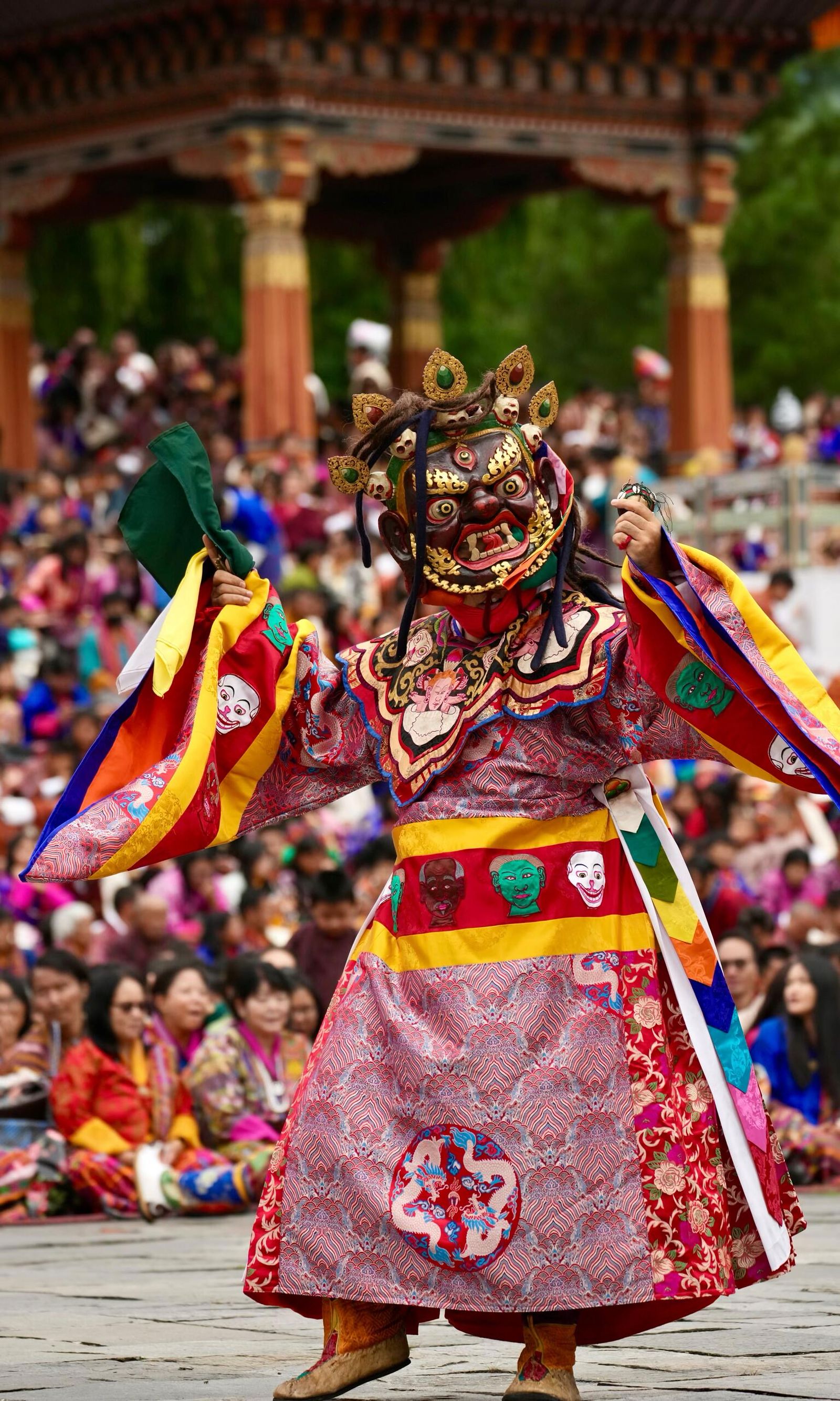
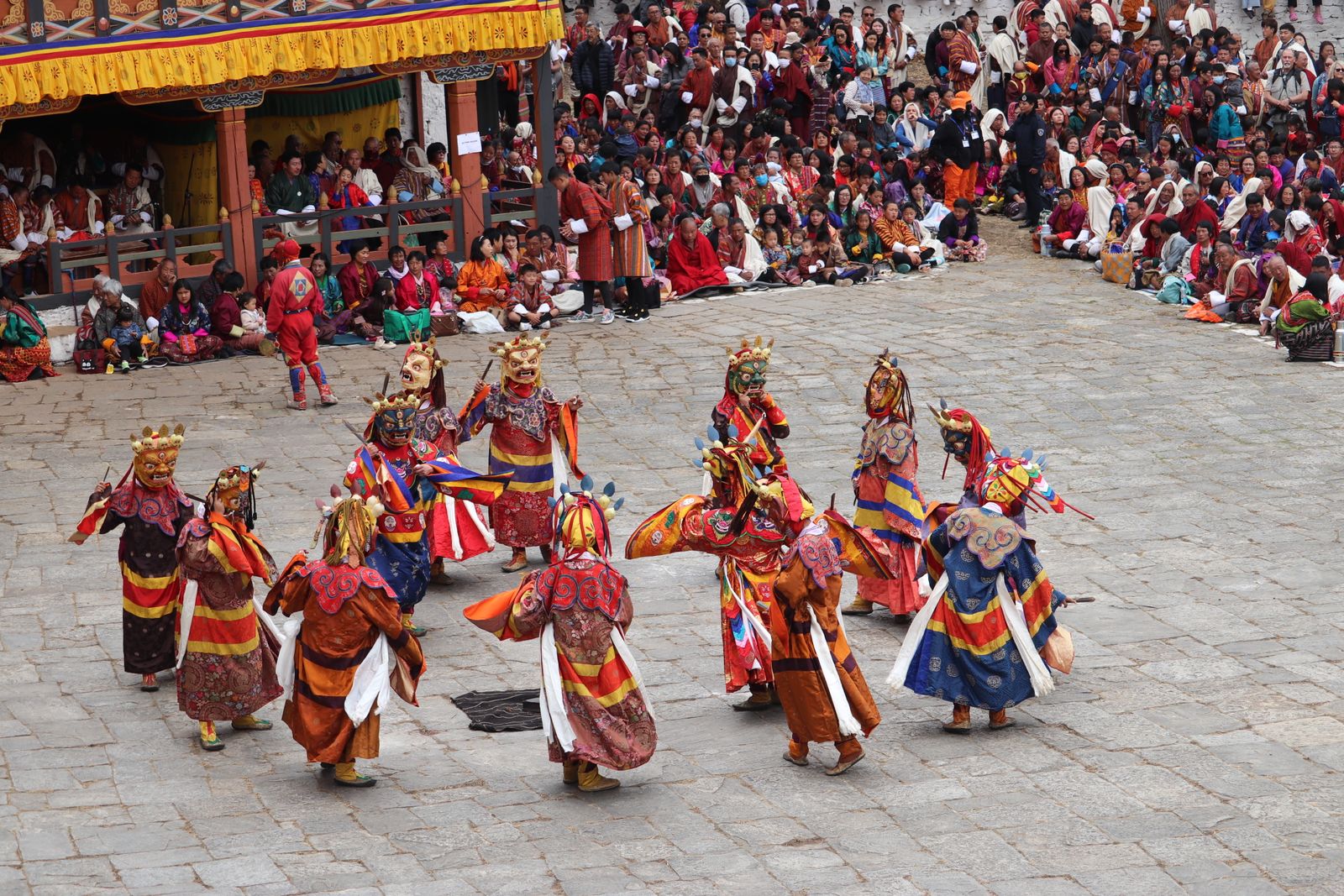
Published for 18 to 22 March 2027. Five days of masked dances in the courtyard, closing before dawn on the last day when the great thongdrel is raised on its wall and taken down before the sun touches it.
Apr
Ura YakchoeUra village, Bumthang
Published for 18 to 22 April 2027. A village festival in a hamlet of stone lanes, danced in a courtyard rather than a dzong. Bumthang has few rooms, so this one is asked for early or not at all.
Oct
Thimphu TshechuTashichho Dzong, Thimphu
Published for 10 to 12 October 2027. The capital's own festival, and the one week when the whole city is in its best gho and kira by eight in the morning. Rooms and Paro seats go first.
11 November, every year, the birthday of the Fourth King. Schoolchildren dance as cranes in the monastery courtyard, the valley's families fill the ground, and the birds are usually in the marsh below by then. The Cranes of Phobjikha is built around this day.
Jambay Lhakhang DrupJambay Lhakhang, Bumthang
Published for 14 to 17 November 2027. It marks the building of a temple raised in 659 and its consecration by Guru Rinpoche. The ninth Bhutanese month can fall in October instead, so this is one to confirm with the dzongkhag before you book a flight.
Dec
Druk Wangyel TshechuDochu La, 3,100 m
13 December, every year. One day of masked dances among the 108 chortens at the pass, with the winter range behind the dancers when the sky is clear. It pairs with crane evenings in Phobjikha.
Solved before you arrive
What nobody warns you about in Bhutan, and what we do about it
Six worries we hear about Bhutan, and how each one is settled before you land.
The problem
Ten hours on the road from Bagdogra is not a holiday
What we do
Then we fly you. The Drukair hop to Paro takes about 50 minutes, but it runs on a handful of weekdays that change month by month, so the week is built around it rather than hoping for it; the days for your month are in Getting here. Paro takes aircraft only in daylight and good visibility, so we never book a tight onward connection. If the flight days do not suit yours, we split the road instead: a night at the gate town, then the mountain road on fresh legs next morning.
The problem
Permits, fees, a guide: I do not want to fill in a single form
What we do
You send clear scans and we do the rest. Indian guests carry the originals named in the facts above, and a birth certificate for each child. We file the entry permit online and pay the nightly Sustainable Development Fee with it; the rates, and who pays half or nothing, are in What it costs.
On a British or other foreign passport, send a passport scan with six months' validity and a photograph. We file the US$40 visa at immi.gov.bt, which the Department of Tourism reviews in about five working days, and the approval reaches you by email. Inside Bhutan the guide and the car come from a licensed Bhutanese operator, and your quote names them with the date each rate was checked; our office in the hills stays your single number. Coming by road, the guide has to be registered at the land port before you cross, which is why we fix the crossing day early: the rule is in Permits and visas.
The problem
My parents cannot climb to Tiger's Nest, and they came for it
What we do
They do not have to reach the top to have been there. We pre-book ponies, as the rules now require, to carry a rider as far as the cafeteria at about 2,950 m, where there is tea and a clear view across the gorge to the monastery. Ponies do not come down, so we plan the descent slowly, with sticks. If even that is too far, Dzongdrakha above Bondey is the gentler hill: about 1.5 km and 350 m of climb to four small temples on a cliff that Paro calls the little Taktsang, from a trailhead 15 to 20 minutes by car from Paro town. Kyichu Lhakhang, first built in 659 and five minutes from town, asks for no climb at all.
The problem
A tshechu sounds wonderful, until you see the crowd
What we do
At a tshechu the crowd is the festival: families in their finest gho and kira, masked dances in the courtyard, picnics on the grass. We time it rather than fight it. We arrive before the first dances, settle you where there is shade and a clear view, and leave before the gate jams. The dates for the coming year are in the festival calendar above, and each dzongkhag confirms its own nearer the time. If they miss your trip we look for a village festival instead, or the one-day tshechu at Dochu La in December.
The problem
Chilli in everything, and my father eats no spice at all
What we do
We brief every lodge in writing before you land: vegetarian, Jain, no chilli, no garlic, allergies. At lunch stops your guide asks the kitchen in Dzongkha to cook yours without chilli, and checks what has come to the table before you do. Kewa datshi, potatoes in soft cheese, and red rice suit mild palates, and we ask each kitchen to make one Bhutanese dish gently so the whole family can taste the country.
The problem
Cold nights and altitude worry me more than the flight
What we do
Thimphu sits at 2,320 m and Paro near 2,200 m, lower than many expect; the high points, Dochu La and Taktsang at about 3,100 m, are day visits, never overnight stops. We put Punakha, at 1,200 m, in the middle so you sleep lower. January nights in Thimphu average -2 °C, so we choose rooms with heating or a bukhari, the Bhutanese wood stove, and keep a warm layer in the car rather than in the boot.
Where we would put you
The right house matters more than the town
Room types and rates are confirmed for your dates in your quote.
The prayer flag footbridge over the Mo Chhu that guests cross into Amankora Punakha.Olivier Lejade, CC BY-SA 2.0, via Wikimedia Commons01
Amankora
Five lodges · 72 suites in all
Paro, Thimphu, Punakha, Gangtey and Bumthang under one standard: for a journey that moves valley to valley and never settles for a lesser room.
Ask for In Punakha, the eight-suite farmhouse lodge above the rice paddies; Gangtey from late October to mid-February.
Thimphu from the pine slopes above it, the high ground the Six Senses lodge stands on.Passang Tobgay / Unsplash02
Six Senses Bhutan
Five lodges · Thimphu, Paro, Punakha, Gangtey, Bumthang
Contemporary lodges on high ground with a wellness bent; Thimphu's sits above the capital among orchards and pine, Gangtey's faces the crane valley.
Ask for In Punakha, an afternoon by the heated outdoor pool; in Gangtey, a room facing the Phobjikha valley.
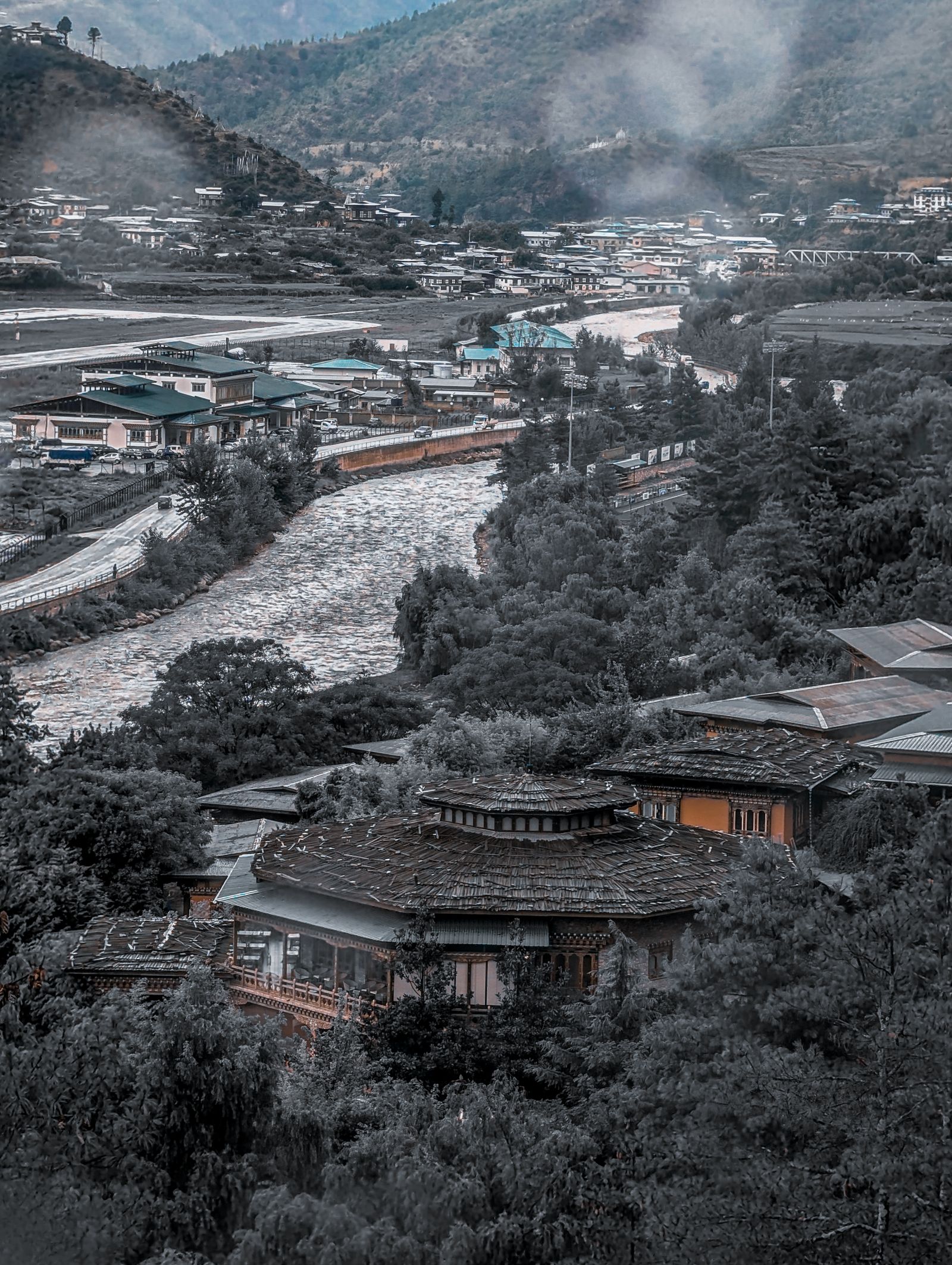
The pine hillside over the Paro river and valley that the hotel looks down on.Thinho 7 / Pexels03
COMO Uma Paro
Hillside hotel · rooms, suites and villas
A ten-minute drive from the runway, on a pine hill above Paro town, with a COMO Shambhala spa and Bukhari, a restaurant fed by its own kitchen garden.
Ask for The COMO Suite for its 180-degree view of the Paro valley, or a Valley Room; Forest Rooms look into the pines.
Getting inForest Rooms are on the main floor close to the lobby
BathroomValley Rooms have a bathtub with a separate shower stall; Forest Rooms have a walk in shower only
Zhiwaling at dusk, the stone walls and painted timber galleries of the Paro valley house.Xiaojun Deng, CC BY 2.0, via Wikimedia Commons04
Zhiwaling Heritage
Heritage hotel · 12 acres in the Paro valley
Stone, timber and a temple of its own, with a meditation house that looks towards Taktsang: for guests who want Bhutan in the walls around them.
Ask for Book the outdoor hot stone bath at the Menlha spa for the evening you come down from Taktsang.
Gangtey Goemba across its courtyard, the monastery the twelve suites look over.Prof Ranga Sai, CC BY-SA 4.0, via Wikimedia Commons05
Gangtey Lodge
Twelve suites · head of the Phobjikha valley, near 3,000 m
Twelve farmhouse suites facing Gangtey Goenpa across the crane valley, each with its own wood-burning bukhari, underfloor heat and a bath deep enough to sit in.
Ask for A valley-facing suite with its own stove, and dates between late October and mid February if you have come for the cranes.
Punakha Dzong on the water downstream, the same river the tented villas stand above.Nilanjan Haldar / Pexels06
Pemako Punakha
Twenty-one tented villas · 60 acres by the Mo Chhu
Tented villas in riverside forest, each with its own temperature-controlled pool, reached over a bridge hung with prayer flags.
Ask for A Luxury Tented Pool Villa, and the evening kept free after the drive down from Dochu La.
The house itself in central Thimphu, photographed while it still traded as the Taj Tashi.Christopher J. Fynn, CC BY-SA 4.0, via Wikimedia Commons07
Pemako Thimphu
City hotel · the former Taj Tashi · central Thimphu
The capital's grand hotel in the middle of Thimphu, renamed from the Taj Tashi in 2023, with hand-painted interiors on every floor.
Ask for A Deluxe Room high up and off the road side, or the Deluxe with a private sit-out if you want a balcony.
The Punakha valley from above the river, the terraces the pine cottages look over.Anil Sharma / Pexels08
Dhensa Resort, Punakha
Six cottages · 24 rooms · the Wolakha ridge
Cottage rooms on the ridge above the rice terraces and the Mo Chhu, every one with a balcony and a bath set beside the window.
Ask for An upper-floor room for the view down the valley to the Mo Chhu, and a late breakfast on the balcony.
Taktsang on its cliff, the climb that starts close to the hotel's door.Sujan Mongar / Unsplash09
Taj Paro Resort & Spa
Resort · opened December 2025 · 45 keys on a 7.6-acre estate
The newest house in the Paro valley, with views towards Taktsang from the estate, a spa and a heated indoor pool to come back to.
Ask for The entry category is fine here: ask for a room on the Taktsang side of the house, which we request when we book.
One place for the numbers
Taktsang, the facts
The Tiger's Nest is the climb every Bhutan week is measured by. This is what it asks of you, checked on 20 September 2026; the journeys give you the hour and the angle, and the figures stay here.
Pema Gyamtsho / Pexels
Taktsang
What is published, and what we do with it
Hours
Open 08:00 to 17:00, with the shrine rooms shut from 13:00 to 14:00 for the monks' lunch. Some operators publish a 16:00 close in the winter months, so we start early and never plan an afternoon climb.
The climb
About 6.4 km there and back, roughly 520 m of ascent to 3,120 m. Most walkers reach the cafeteria in one to two hours; allow five to seven hours for the whole visit, and take poles for the way down.
The cafeteria
A tea house and canteen at about 2,950 m, halfway up, with the monastery in sight across the gorge and still 170 m above you: tea, a vegetarian buffet lunch, lavatories, and the point where anyone riding a pony gets off. Plenty of guests stop here, and it is not a failure.
Ponies
Pre-booked only, uphill only, and no further than the cafeteria. We book them with the day rather than on the morning, because the trailhead cannot always find one.
The fee
Nu 2,000 a head for foreign visitors from 18 September 2026, under-18s half and five and under free. The notice does not say what regional visitors pay, so your quote carries the foreign rate until our office confirms the Indian one.
Dress and lockers
Shoulders and knees covered, so walk in long trousers rather than shorts. Hats, sunglasses and shoes come off inside the temples, and phones, cameras and bags go into lockers at the last gate.
Inside a dzong or a temple
How to get it right without thinking about it
A dzong is a government office, a monastery and a family's parish church at once. Your guide briefs you in the car before the first gate; this is all of it.
Long sleeves, long trousersShorts are not allowed. A dress or skirt should cover the knee, and a collarless shirt needs full sleeves, so a jacket or a light shirt over a T-shirt settles it. Flip flops stay at the hotel.
Caps off at the gate, shoes off at the doorNo hat inside a dzong or a religious complex, and shoes off at the door of each shrine room; socks are fine on cold boards. Nobody smokes inside the grounds.
Clockwise, alwaysWalk clockwise round every chorten, prayer wheel and mani wall. If a prayer flagpole has come down across the path, go round it rather than step over it.
Both hands, open handGive and take anything, a cup of tea or a banknote, with both hands. Point with an open hand rather than a finger, and keep your feet turned away from an altar when you sit.
Never onto the dance groundAt a tshechu the courtyard belongs to the dancers and the families. Stepping onto the ground for a better photograph is the one thing Bhutanese guests will not forgive, so we settle you where the view is already good.
The name for all of itThis courtesy is called driglam namzha. Bhutanese men wear a white kabney over the shoulder into a dzong and women a rachu; a guest is not expected to, and nobody expects you to know the code by heart.
It buys rules no other country in the region has. Visitor numbers stay low, every day comes with a licensed Bhutanese guide and a certified hotel, and the fee itself goes into the government's consolidated account, which the Department of Tourism says pays for schools, free healthcare, youth training, forests and the renovation of the dzongs you walk into. What you get for it is a country still using its own buildings. The rates and what a week costs are in What it costs.
When can we actually get inside a working dzong?
Around the office day, and it changes the visit. Tashichho in Thimphu holds ministries and the throne room, so visitors go in after office hours on weekdays, published as about 17:00, with longer access at weekends and on holidays; your guide must be with you, and we have the hour confirmed with the dzongkhag before your day is fixed. The season matters too: the Je Khenpo and the central monk body winter in Punakha and summer in Thimphu, and a dzong in residence is fuller, louder and partly closed.
May we photograph inside a dzong or at a tshechu?
Outside yes, inside no. Courtyards, walls and dance grounds are open to a camera; the chapels and their statues are not, and at the top of Taktsang everything goes into lockers, as the Taktsang card above sets out. At a festival, never step onto the dance ground for a better angle, which Bhutanese count as the worst of manners. Drones may not be flown anywhere in Bhutan, and Before you travel carries that rule.
Can we ask for a guide who knows birds, or masks?
Yes, and it changes what you see. Bhutan's Tourism Rules and Regulations 2024 ask that a guide suit the nature of the tour, and the specialisations listed include birding, trekking, photography, and Buddhism and iconography. For Phobjikha in January we ask the operator for a birding guide with a spotting scope; and for a tshechu, one who can name each mask as it turns. Your quote names the specialisation once the operator has confirmed it.
When should we book a hot stone bath, and who should sit it out?
Ask in the morning for that evening: the fire that heats the river stones takes hours, and no farmhouse can do it at an hour's notice. You sit at the end away from the stones, and more are lowered in while you soak, so the water keeps getting hotter. Anyone told to avoid hot baths, or worn out by a day at 3,100 m, does better with an early dinner. Zhiwaling's spa has an outdoor tub if a farmyard is not for you.
Is there anything worth an hour in Phuentsholing if we come by road?
Yes, and the border town is the one part of Bhutan you may walk without a guide, because the rule requires one only beyond the checkpoint at Rinchending above the town. Give an hour to the painted Bhutan Gate, the three-storey Zangto Pelri Lhakhang in the middle of town, and a street where Bhutanese and Indian number plates queue together. What a night at the gate costs, and the 24-hour border-zone waiver on the fee, are in What it costs.
Bhutan or Sikkim, if there is only time for one?
Bhutan if you want a living Buddhist state: dzongs in use, a guide every day, a tshechu, and Taktsang at the end of it. Sikkim if you want the mountain itself, Kanchenjunga from your window at 8,586 m, and a shorter, cheaper trip with permits instead of a nightly fee and no flight to catch. Bhutan asks 5 to 7 nights; Sikkim works in four. Both are on Destinations.