In short
Eat sel roti with aloo dum for breakfast, thukpa or hand-torn thenthuk at night, gundruk soup, soft chhurpi in a curry and hard chhurpi chewed for hours, phing and phumbi in Kalimpong, and a Sikkimese plate of dal bhat with dalle achar. Say alikati piro for less chilli.
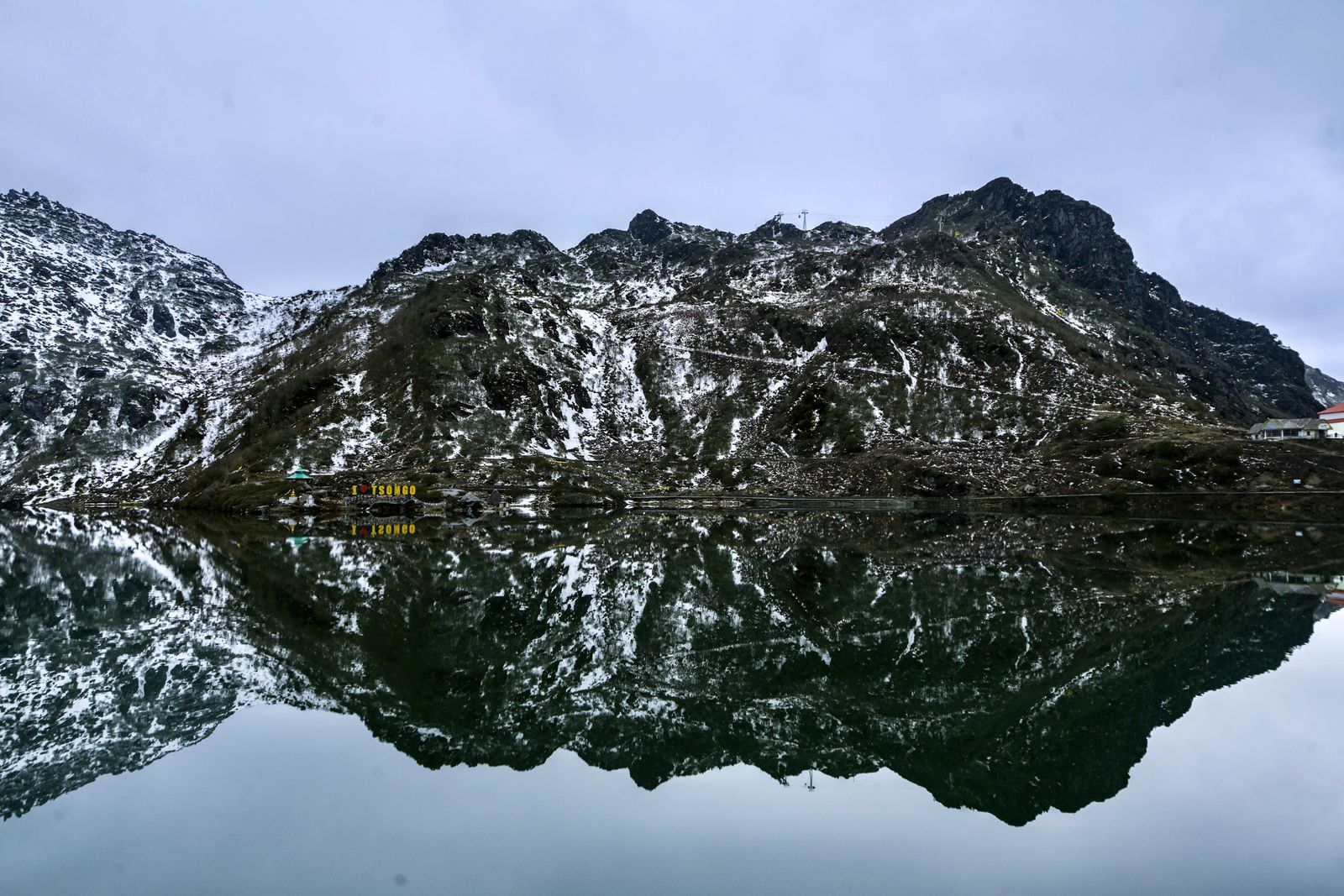
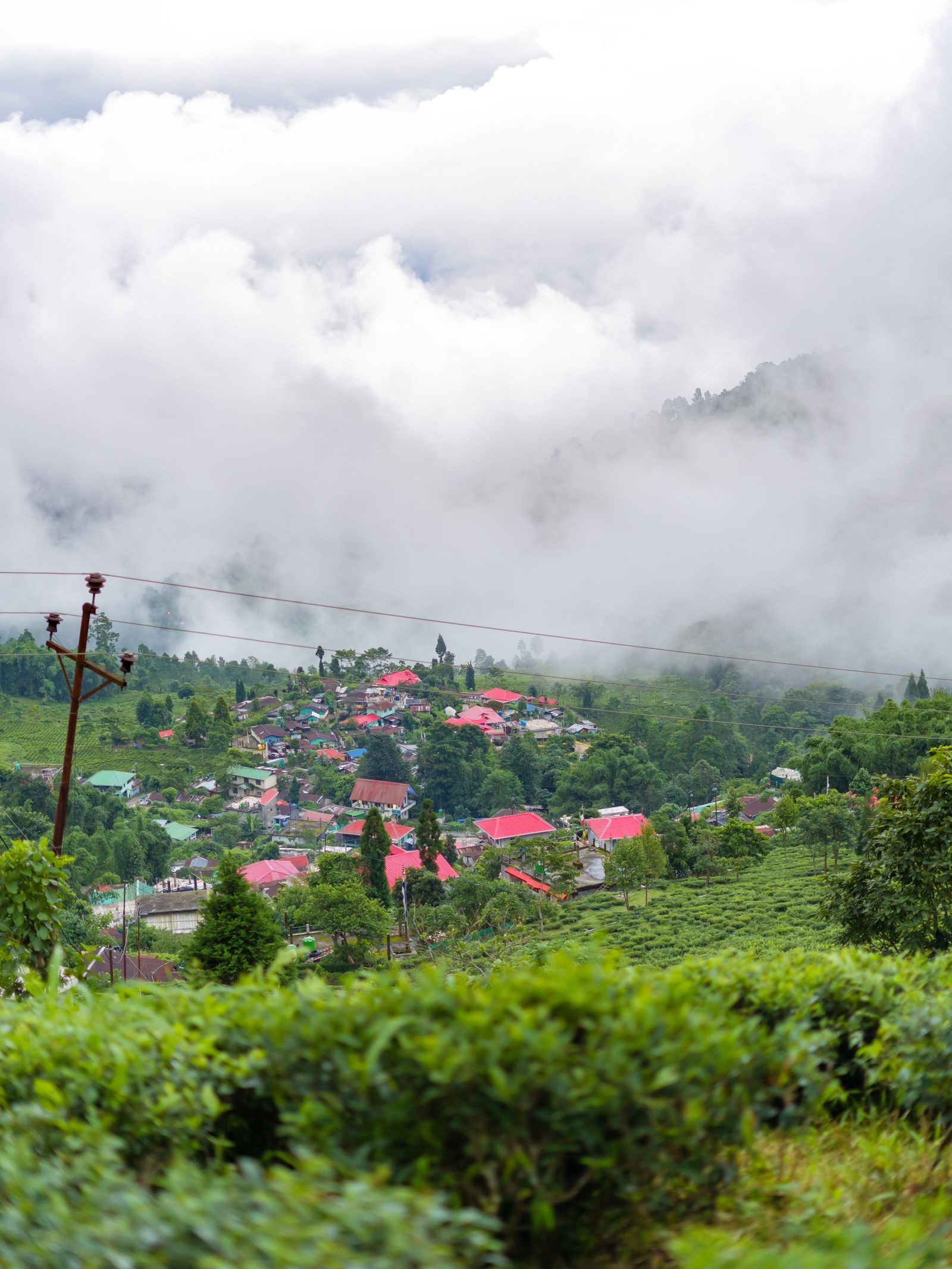
Most visitors eat the same plate of momos five times and go home thinking that is the food of these hills. It is not even the food of one town. Darjeeling takes its breakfast partly from the Raj and its supper from a Nepali kitchen. Kalimpong still eats the way the Tibet trade left it, because for a century the mule caravans unloaded there. Gangtok eats Sikkimese, which means three kitchens at one table, Nepali, Bhutia and Tibetan, with Lepcha dishes behind them. This note is what our own families cook, what the words mean, and where you can eat it without either coming to harm or being handed a hotel buffet.
Morning
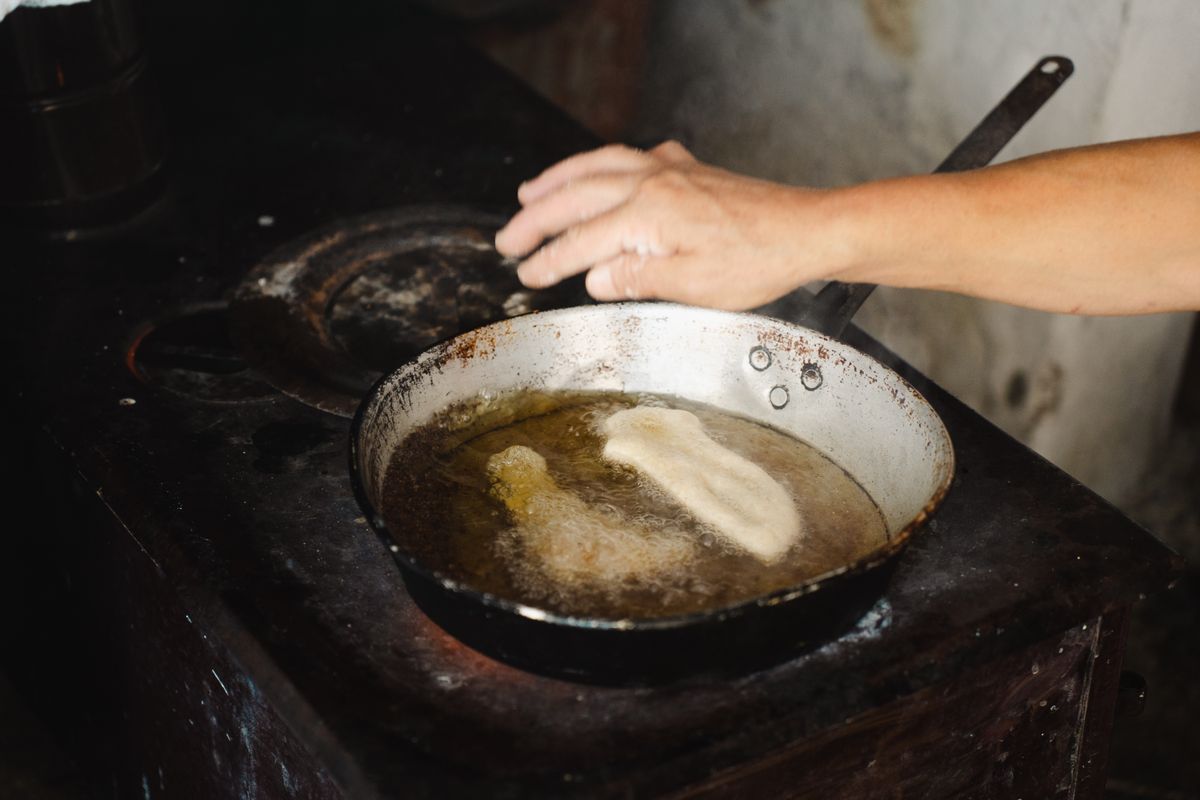
The breakfast we grew up on is sel roti with aloo dum. Sel roti is a ring of rice bread, and the method is the whole point: rice flour, sugar and a little ghee beaten to a batter and left standing for about six hours, so that it ferments on its own yeasts, which is what keeps it from drinking oil. It is poured by hand in a circle straight into hot oil and turned with a stick. It comes out crisp at the edge, soft and faintly sweet in the middle, and here it is often doubled into two rings. Families make it by the basket for Dashain and Tihar and send it round to relatives, because it keeps a fortnight in a tin. Aloo dum is the potato beside it, boiled, then fried with turmeric, chilli and a little tomato. Eat both standing at a stall at about eight in the morning, with sweet milky tea.
The town keeps a second, imported breakfast as well: Keventer's has done a fried plate on Nehru Road since 1911, and Glenary's unlocks its bakery at 07:00 a few doors along. Which of the three mornings suits you is set out on the Darjeeling page.
Soups and noodles, which is most of what we eat
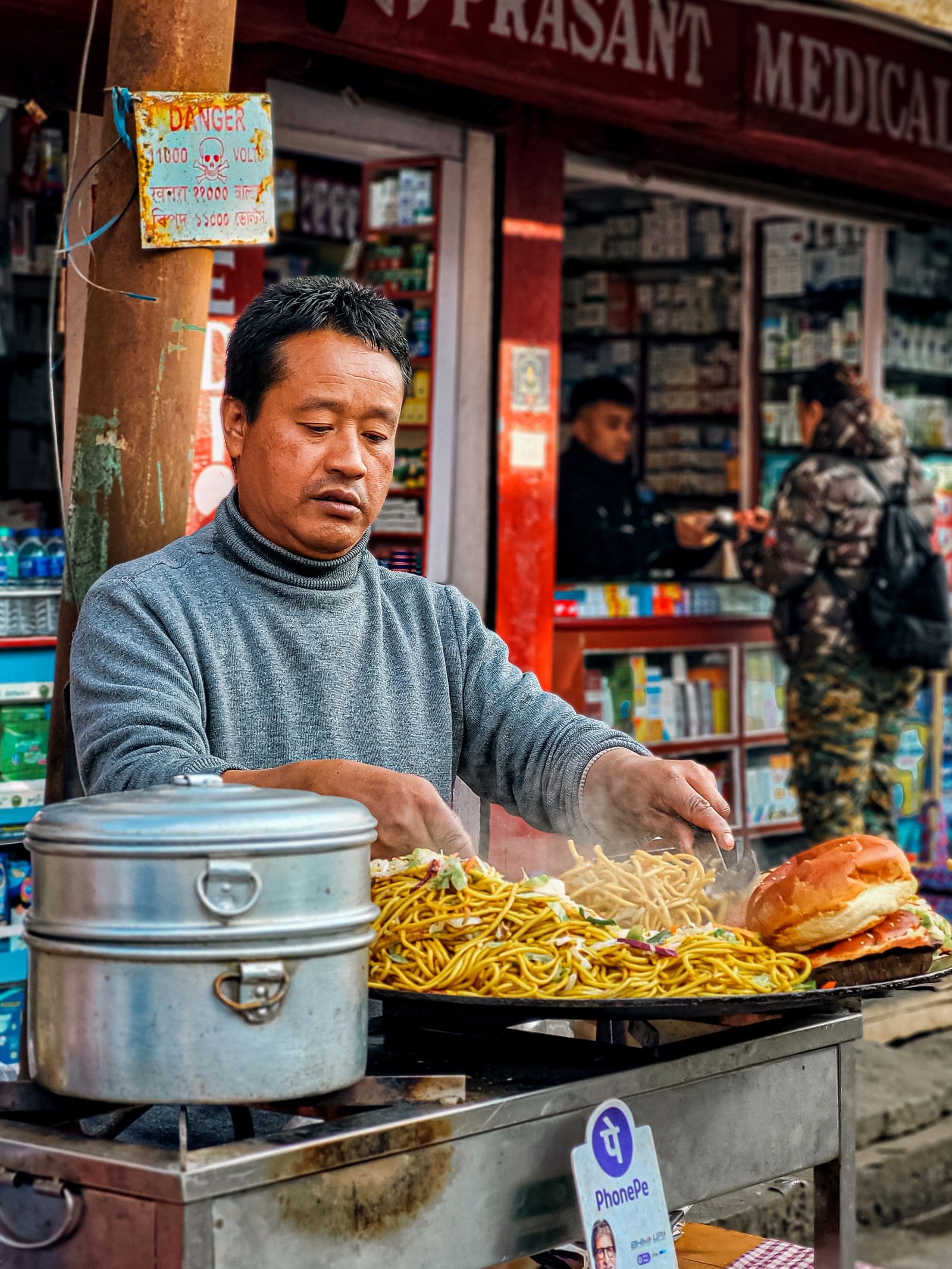
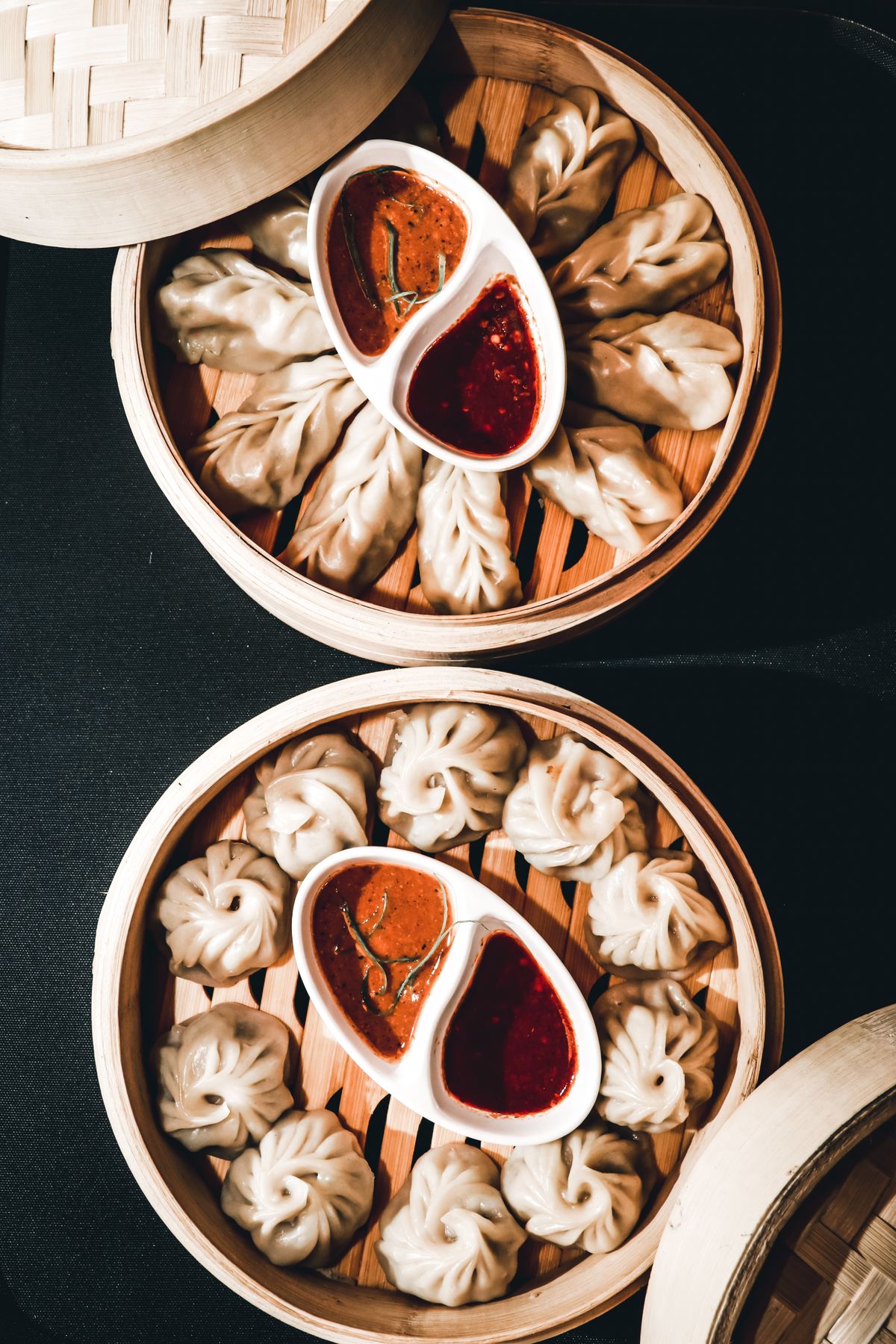
Thukpa is the everyday bowl: a clear or lightly thickened broth with noodles and whatever there is, vegetables or a little meat. Thenthuk is its better-tempered cousin, where the dough is torn into the pot by hand in rough squares, so the pieces are uneven and hold the broth. In a cold house at eight in the evening it is the whole supper, and in Darjeeling we send guests for it to Kunga, a Tibetan family kitchen of about twenty seats on Gandhi Road, which takes cash only. Momos come steamed, fried, or in soup as jhol momo, with a tomato and chilli achar that matters more than the filling; the pork ones at Gompu's by Maharani Chowk in Kalimpong are worth the drive across town.
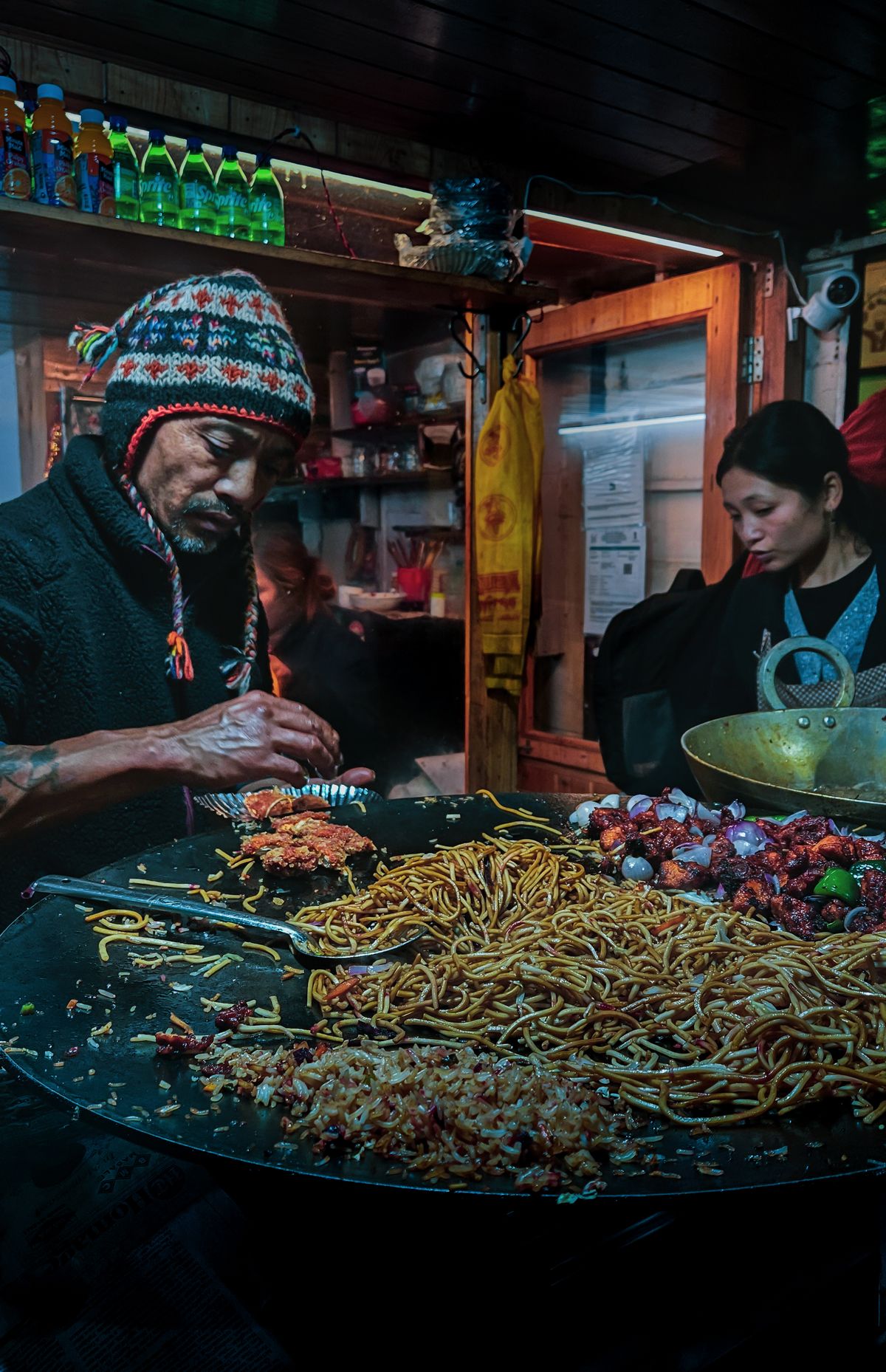
Then there is phing, the grey-white glass noodle made from mung bean, which came down the Tibet trade road and is now cooked with pork or cabbage in half of Kalimpong's kitchens. When phing is made, the starchy liquid left over sets into a pale jelly called phumbi, cut into slabs and tossed with chilli at market stalls. Almost nobody writes it down. The town's noodle trade has a long tail: Gyalo Thondup, the Dalai Lama's elder brother, set up a noodle works at 8th Mile in 1967 and was called the noodle maker of Kalimpong for the rest of his life. Fire took the building in 2019.
The ferments, which are the real cooking
A hill kitchen has no fridge tradition and a long winter, so it ferments. In Sikkim, fermented foods are about an eighth of everything eaten, and roughly two thirds of that is made at home rather than bought, which tells you where the skill lives.
Gundruk is the one to learn. In October and November, when the mustard, radish and cauliflower leaves come in faster than anyone can eat them, the leaves are wilted for a day or two, shredded, pressed hard into an earthen pot with warm water and left about a week, until it smells sour, then dried in the sun and stored. It goes into a soup with onion, tomato and chilli, or into a sharp pickle. Autumn guests taste that year's batch. Sinki is the same idea with radish roots, shredded and buried in a sealed pit for about a month. Kinema is fermented soybean, a Limbu food made at home rather than bought: the boiled beans are cracked, packed into a bamboo basket lined with fern, and left to work for one to three days. It smells formidable and goes into a thick soup with rice.
Chhurpi is the cheese, and there are two, which confuses every visitor. Soft chhurpi is white and mild, sometimes a little sour, and it is treated as a vegetable: cooked with greens, stuffed into momos, or ground with tomato and chilli into a chutney. Hard chhurpi is soft chhurpi pressed dry in a jute bag, cut into cubes and hung above the fire until it is among the hardest foods anyone eats. You do not chew it. You park it in your cheek, let it soften, and work at it for anything from half an hour to most of an afternoon. Every child here has walked to school with a cube in one side of their mouth.

The chilli, and how to ask for less of it
Dalle khursani is the round cherry-sized chilli of these hills, habanero hot, and it holds a Geographical Indication that since September 2021 covers the Darjeeling and Kalimpong hills as well as Sikkim, where it was first registered. The heat and the Sikkimese table it sits on are set out on the Gangtok page. What that page cannot do is order for you. The cook would far rather know before the pan is hot, and there is no shame in eating around it: children here work up to dalle slowly too. Three words do most of the work.
Alikati piro (uh-lee-kuh-tee PEE-roh), only a little spicy, said before the achar comes rather than after. Kati ho? (KUH-tee ho), how much is it, for a market stall. Mitho chha (MEE-tho chhuh), it is delicious, which in a family kitchen is worth more than a tip.
Three towns, three tables
| Town | Eat this | Where we take guests | Timing that matters |
|---|---|---|---|
| Darjeeling | Sel roti and aloo dum, thenthuk, hard chhurpi, plain strong market tea | Chowk Bazaar for the stalls, Kunga on Gandhi Road for the noodles, a Laden La Road merchant for the tea | Most market shops shut on Thursdays; bakeries open at 07:00 |
| Kalimpong | Phing and phumbi, Kalimpong cheese, milk lollipops, pork momos | The Haat Bazaar before breakfast, Lark's Provisions on 10th Mile Road, Gompu's by Maharani Chowk | Haat days are Wednesday and Saturday; cheese depends on whether a wheel is in town |
| Gangtok | Dal bhat with gundruk and dalle achar, phagshapa, shabhaley, kinema, iskus | Lal Bazaar in the morning, Nimtho on MG Marg for a Sikkimese thali, then a lunch cooked with you at a home stove | Lal Bazaar shuts on Thursdays; vegetarian and Jain menus are agreed a month ahead |
Kalimpong's cheese deserves a line of its own. A Swiss canon of St Maurice, Father Andre Butty, founded the Swiss Welfare Dairy near 8th Mile in the 1950s and taught the town to make it; the dairy is long closed and a handful of small makers keep it going in batches, so some weeks there is none. When there is, do what the town does and melt it on toast for breakfast. The same dairy left the town its hand-rolled milk lollipops, still made by former dairy workers. Where to find either is on the Kalimpong page.
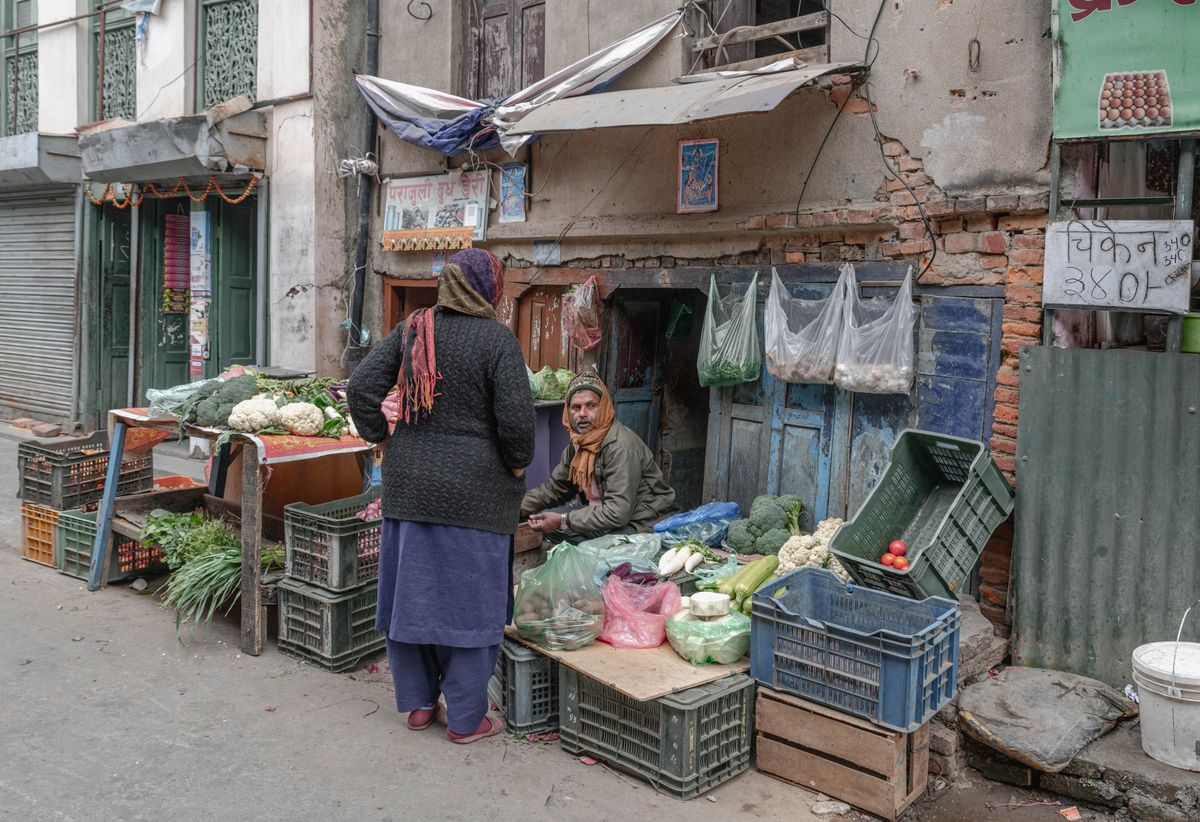
A Sikkimese table is built on rice, dal, one curry, a fermented green and an achar. The curry might be phagshapa, strips of pork fat stewed with radish and dried chilli, which sounds heavy at sea level and is exactly right at 1,650 m in December. Shabhaley is a fried bread pocket of seasoned meat and cabbage from Bhutia and Tibetan homes. Iskus is chayote, the gourd on every fence, and the shoots are better than the fruit. The drink is millet: Limbus call the brew thee and the tall wooden vessel a tongba, and visitors use tongba for both. Lepcha households brew chi from black millet, and a little is poured for the deities before anyone drinks. Sikkim has farmed its whole cultivated area organically since 2016, which here is not a marketing line but simply what the market sells.
Stalls: what we eat, and what we leave alone
We do eat street food, and we are careful in a particular way. The test is turnover and heat. A momo stall whose steamer lid is lifted every two minutes, sel roti coming out of the oil in front of you, roasted corn on a brazier, a pot of thukpa at a rolling boil: these are safer than most restaurant kitchens because nothing sits. What we leave alone is anything that has stood in water or at room temperature: pre-cut fruit, chutneys thinned with tap water, salads washed and waiting, ice in a drink. We do not drink from a tap anywhere on these routes, and the cars and the houses carry filtered water to refill from; the reasoning sits in before you travel. For the first day or two we keep meals to kitchens our chef has briefed in writing, and after that most guests eat wherever they like.
Vegetarians, Jain guests and children
Vegetarians eat very well here, because the ferments are the backbone of the food, not the meat. Gundruk, sinki and kinema are all vegetarian; soft chhurpi and Kalimpong cheese are dairy; momos come filled with chayote or cabbage; and where a family menu centres on pork we agree the substitute with the cook a month ahead, usually kinema curry and iskus. Jain guests need more notice, since onion, garlic and root vegetables run through almost every dish, so we send the kitchen a written note before you land rather than raising it at the table. Children do best on momos, plain thukpa, dal and rice, and any kitchen will hold back the chilli if you ask before the cooking starts, not after.
What to carry home: hard chhurpi, which is indestructible; dried gundruk; and achar, double-bagged in your checked luggage, since jars of pickle in oil may not go in the cabin. If you want the whole of this in one week, Kitchens of the Hills shops three markets and cooks one lunch at a family stove; The Quiet Ridge gives you Kalimpong slowly; and Gangtok and the High Lake is the short way to a Sikkimese table. Tell us what you cannot eat, and what you want to learn to cook, and we will write to the kitchens.
Sources we checked for this note (23)
- Sel roti: rice flour, sugar and ghee batter rested about six hours so natural yeasts ferment it and it absorbs less oil, poured by hand in rings into hot oil, made for Dashain and Tihar, double-ring form in Sikkim and Darjeeling, keeps about two weeks in an airtight tin
- Gundruk: mustard, radish and cauliflower leaves wilted one or two days, shredded, pressed into earthenware with warm water, soured in about a week, then sun-dried; made in October and November; eaten as soup and as pickle; also eaten in Sikkim, Darjeeling and Kalimpong
- Chhurpi: soft chhurpi eaten as a side dish, cooked with vegetables, stuffed in momos or ground with tomato and chilli; hard chhurpi pressed in a jute bag, cubed and hung over a fire, kept in the mouth and chewed for thirty minutes to five hours; eaten in Sikkim, Darjeeling, Nepal and Bhutan
- Sikkimese cuisine: phagshapa (pork fat stewed with radish and dried chillies), sinki (radish roots fermented about a month in a sealed pit), kinema (fermented soybean), sha phaley (fried bread stuffed with meat and cabbage), thukpa, momo with tomato achar, iskus; fermented foods are 12.6 per cent of food consumption and 67.7 per cent home-made; Sikkim became India's first fully organic state in 2016
- Dalle Khursani of Sikkim: 100,000 to 350,000 Scoville heat units, one of the hottest chillies grown in India, granted a Geographical Indication (GI granted 2020; in September 2021 the tag was extended to the Darjeeling and Kalimpong districts, per the Wikipedia entry checked 20 September 2026)
- Tongba is the vessel; the Limbu name for the brew is mandokpenaa thee; brown finger millet cooked with a khesung starter, steeped in hot water and drunk through a bamboo straw at 2 to 5 per cent alcohol, in eastern Nepal, Sikkim and Darjeeling
- Kalimpong cheese introduced by Father Andre Butty, who founded the Swiss Welfare Dairy in the 1950s; white and crumbly when young with an edible rind and mild tang; the dairy has closed and small local makers continue in limited batches. This source calls Butty a Jesuit; the Darjeeling diocese lists him among the Swiss canons of St Maurice, which /destinations/kalimpong/ follows and this note follows too (checked 20 September 2026)
- Phumbi: the jelly set from the liquid left after making phing, the mung-bean glass noodle, cut and tossed in chilli, sold at stalls and at Kalimpong's Wednesday and Saturday haats
- Kalimpong Haat Bazaar on Wednesdays and Saturdays sells chhurpi, butter, phing, kinema, dried dalle and pickles; Lark's Provisions sells the town's cheese and milk lollipops
- Gyalo Thondup, elder brother of the Dalai Lama, started a noodle factory at 8th Mile in Kalimpong in 1967 and was known as the noodle maker of Kalimpong
- Chowk Bazaar, Darjeeling's lower market: most shops closed on Thursdays apart from bakeries, village traders bring most produce at weekends
- Keventer's on Nehru Road, Darjeeling, serving ham, bacon and sausages since 1911
- Dalle Khursani: GI granted in 2020 on an application by NERAMAC and extended in September 2021 to cover Darjeeling and Kalimpong districts; 100,000 to 350,000 SHU; dalle means round chillies in Nepali (checked 20 September 2026)
- Kalimpong milk lollipops: milk and sugar boiled down in a large wok, cooled and rolled by hand into a cigar shape; begun at Father Andre Butty's Swiss Welfare Dairy in the early 1950s; the dairy ceased operations in the 1990s and former workers still make them
- The Kalimpong noodle factory started by Gyalo Thondup at 8th Mile in 1967 was destroyed by fire in May 2019 (checked 20 September 2026)
- Kunga on Gandhi Road, Darjeeling: Tibetan family restaurant of about 20 seats, thenthuk, cash only, open 08:00 to 21:00
- Gompu's beside the Maharani Chowk pavilion, Kalimpong: founded by Gompu Tshering as a bakery, confectionery and tea shop by 1920, later a Tibetan restaurant; known for pork momos and thukpa
- Nimtho, Gangtok: Sikkimese thali and Nepali Thakali food, on MG Marg
- Lal Bazaar, Gangtok: built 1956, now a five-storey plaza selling chhurpi, butter and noodles
- Lal Bazaar, Gangtok, is closed on Thursdays
- Glenary's bakery on Nehru Road, Darjeeling, opens at 07:00
- Kinema is a traditional food of the Limbu people, prepared at home: soybeans boiled, cracked, mixed with a little firewood ash, packed into a bamboo basket lined with local fern and fermented naturally for one to three days; eaten as a soup with rice (checked 20 September 2026). The source does not say that women in particular make it, so this note does not claim it
- Chi, the Lepcha fermented millet drink, made from black millet and fermented three to seven days; offered to the deities during Lepcha religious ceremonies (checked 20 September 2026)
Checked September 2026.