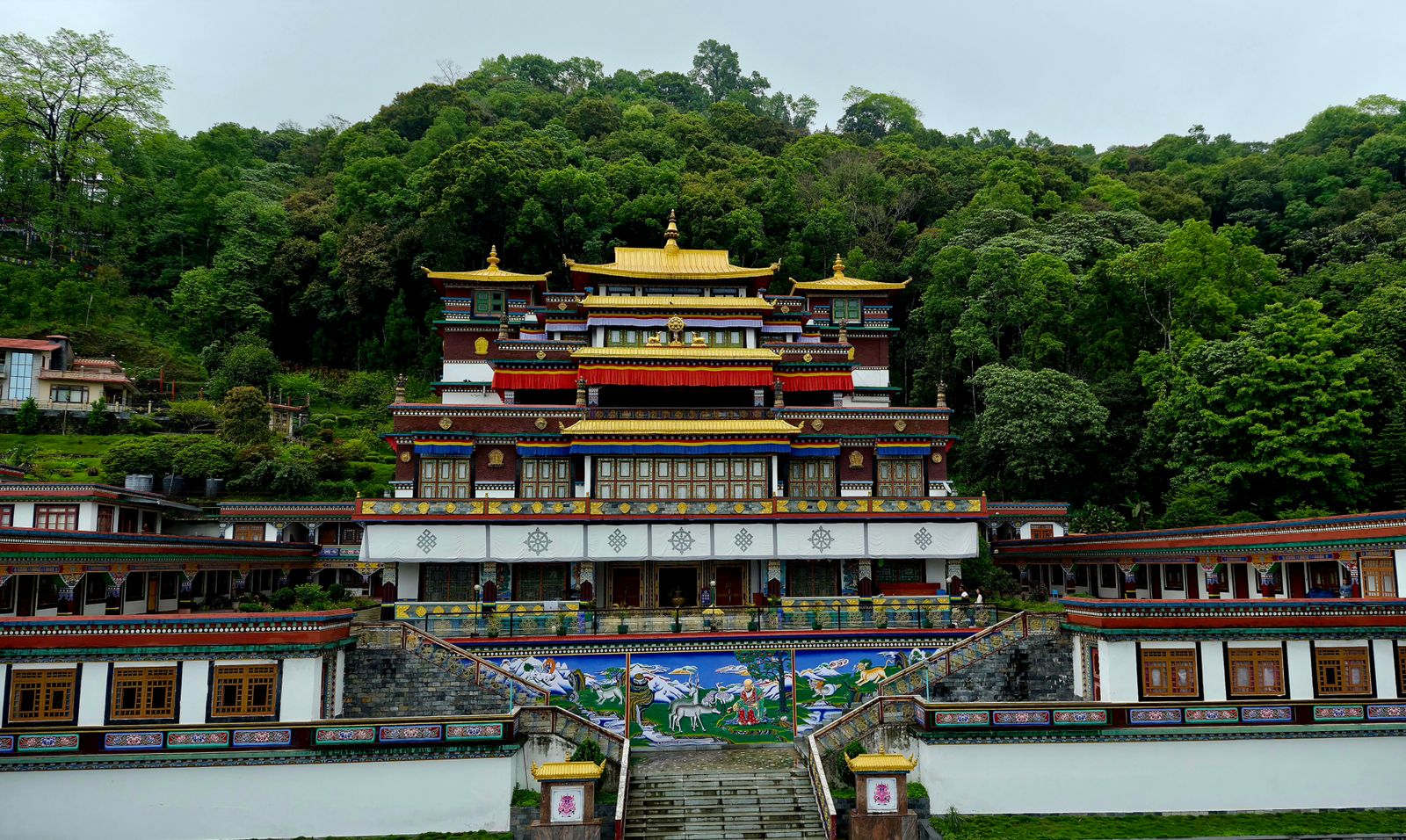
The great courtyard of Rumtek Monastery near Gangtok, the Karmapa's seat, its red and gold main temple under a wide blue sky

27.33° N 88.61° E · 1,650 m

Gangtok & East Sikkim

A capital of monasteries and momos, and the road to the high lakes.

Tashi delek བཀྲ་ཤིས་བདེ་ལེགས Sikkimese and Tibetan. Blessings and good fortune. Said on meeting, and above all at Losar.

In short

What is Gangtok & East Sikkim, and who is it for?

Gangtok is the old royal capital of Sikkim, a steep ridge town at 1,650 m for travellers who want monasteries, Sikkimese kitchens and a morning at a glacial lake without having to sleep high.

Altitude
1,650 m
Getting there
Bagdogra (IXB), about 124 km, 4.5 hours by road, or the helicopter to Burtuk when it runs
Best months
March to May, October to December
Give it
3 to 4 nights
Best for
Monasteries, high lakes, Sikkimese food, a kingdom's living heritage
Spoken
Nepali, Sikkimese, Lepcha, Hindi, English; Tibetan in the monasteries
Permits
Indian citizens need no permit for Gangtok itself. Tsomgo, Nathu La, Zuluk and North Sikkim need one filed through a registered Sikkim operator with photo ID, issued only for children over five. Nathu La and Zuluk are for Indian citizens only, and Nathu La does not open on Monday or Tuesday. Foreign and OCI guests need Sikkim's Restricted Area Permit, filed online through e-FRRO about 30 days before reaching the state, and a protected-area permit, in a group of two or more, for Tsomgo. Full rules: /plan/permits-and-visas/.

The name

སྒང་ཏོག

Sgang-tog: the hill top

From the Tibetan sgang, a hill or spur, and tog, its top; the precise meaning is debated, but most agree on hill top. The earliest record of the place is a hermit's monastery built here in 1716.

Gangtok, written in Tibetan script, as Sikkimese is written

Sikkim was an independent Buddhist kingdom until 1975, and Gangtok still feels like a capital rather than a hill station: clean, orderly, built around the Namgyal Institute of Tibetology and the great Rumtek monastery across the valley. From here the road climbs east to Tsomgo Lake at 3,780 metres and the old trade pass of Nathu La on the Tibetan border.

The road up

126 m to 1,650 m, 124 km in about 4.5 hours

About 124 km and 4.5 hours on NH10 up the Teesta, whose fragile part is the 52 km from Sevoke to Rangpo. When slides close that stretch, the only way round is NH717A through the Kalimpong hills, costed in hours in the panel below.

  1. Bagdogra airport (IXB)126 m · 0 km
  2. Sevoke, Coronation Bridge over the Teesta156 m · 35 km · 1 h
  3. Rangpo, the Sikkim border333 m · 85 km · 2.8 h
  4. Singtam, where the Ranikhola meets the Teesta426 m · 95 km · 3.2 h
  5. Gangtok1,650 m · 124 km · 4.5 h
  6. Tsomgo Lake, on a later morning3,753 m · 164 km · 6.3 h
Altitudes and distances rounded. Times are for a private car in dry weather, without stops.

Gangtok & East Sikkim in six scenes

How a stay here actually unfolds

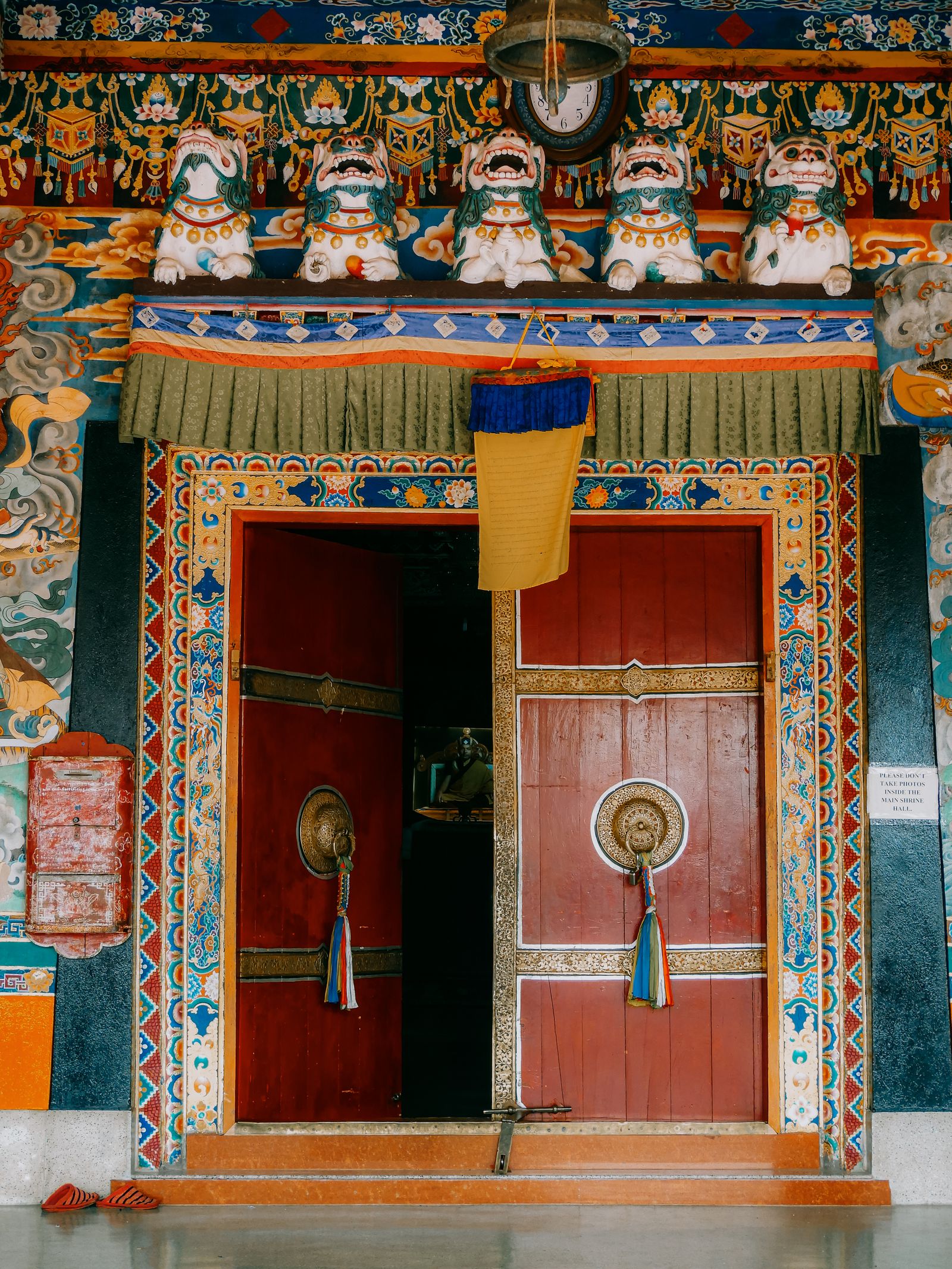
  1. The red doors of Rumtek's main hall, half open under five carved snow lions, sandals left at the step Soumyojit Sinha

    Day 2, 07:30 · Rumtek Monastery, across the valley

    The door with five snow lions, and shoes left at the step

    Rumtek faces Gangtok from across the Ranipool valley, 22 km and about an hour by road. Cars stop below the monastery, so the last stretch is on foot, past the village that lives under its wall. What meets you at the top is the door: five carved snow lions above it, and sandals in a row on the step. Inside is the Karmapa's seat in exile, rebuilt on an eighteenth-century foundation, and /journeys/monasteries-of-the-east/ gives that story and the morning assembly a whole day. Come in the first hour after the gates open, while the courtyard still belongs to the monks' college rather than the stalls. Keep photo ID in your pocket, because the seat is guarded and the guards ask for it. Half a kilometre below stands the older house the Karmapas found here, which almost nobody walks down to; that path is on /journeys/gangtok-and-the-high-lake/.

  2. Tsomgo Lake frozen in January, snow on the brown slopes above it under a hard blue sky Bhaskar Palit

    Day 3, 09:30 · Tsomgo Lake, 3,753 m

    The lake that monks once read like a book

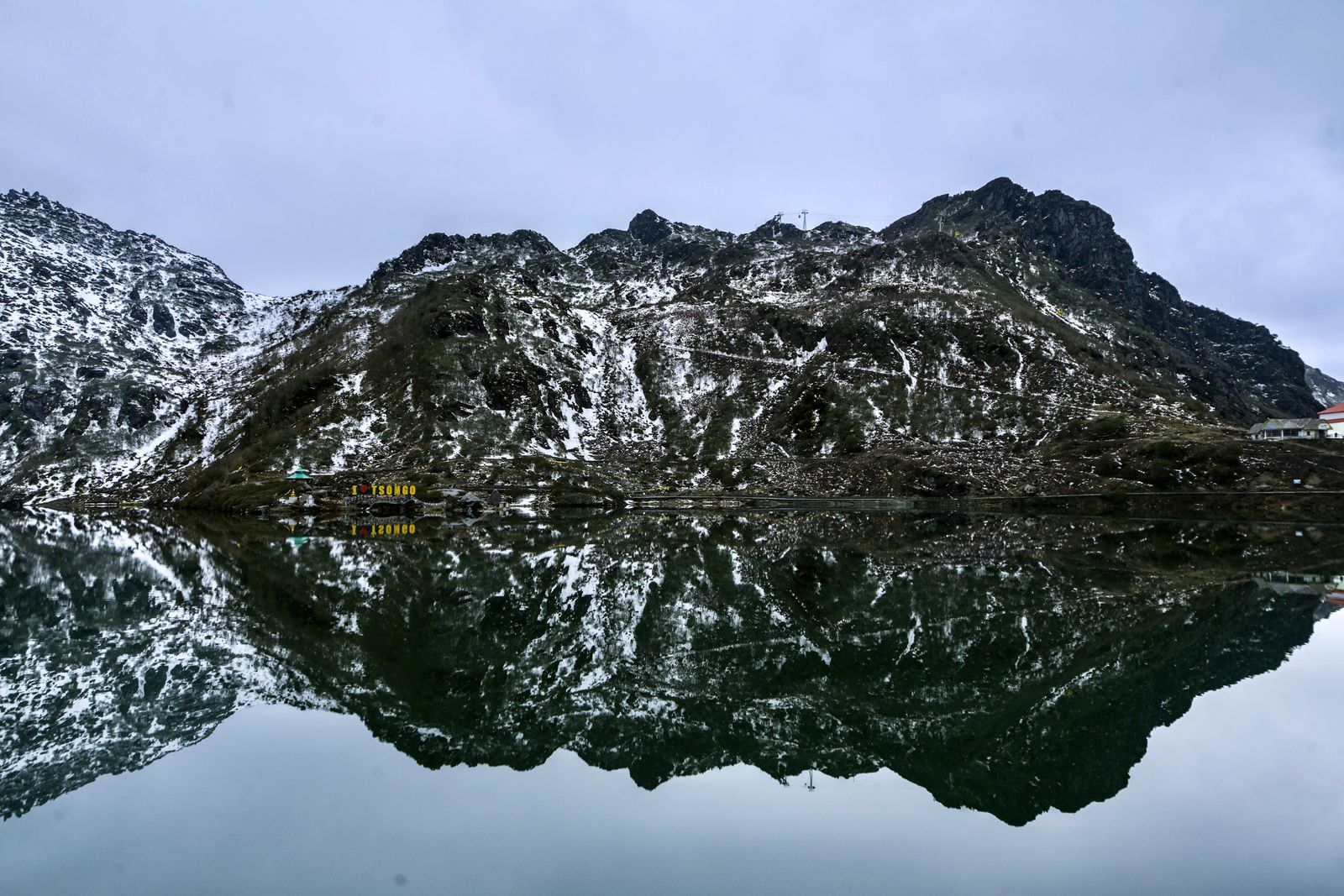
    The lake lies 40 km from Gangtok, and the air at its shore holds roughly a third less oxygen than at sea level. The name is Sikkimese: tso, lake, and mgo, head, the source. The lake is 836 m long and 15 m at its deepest, frozen through winter, sometimes into May. Buddhist monks once foretold events from the changing colour of its water. On Guru Purnima, Sikkim's jhakris, the shaman healers, gather on the shore for its healing water. After mid-May, rhododendrons, primulas and blue poppies flower around it.

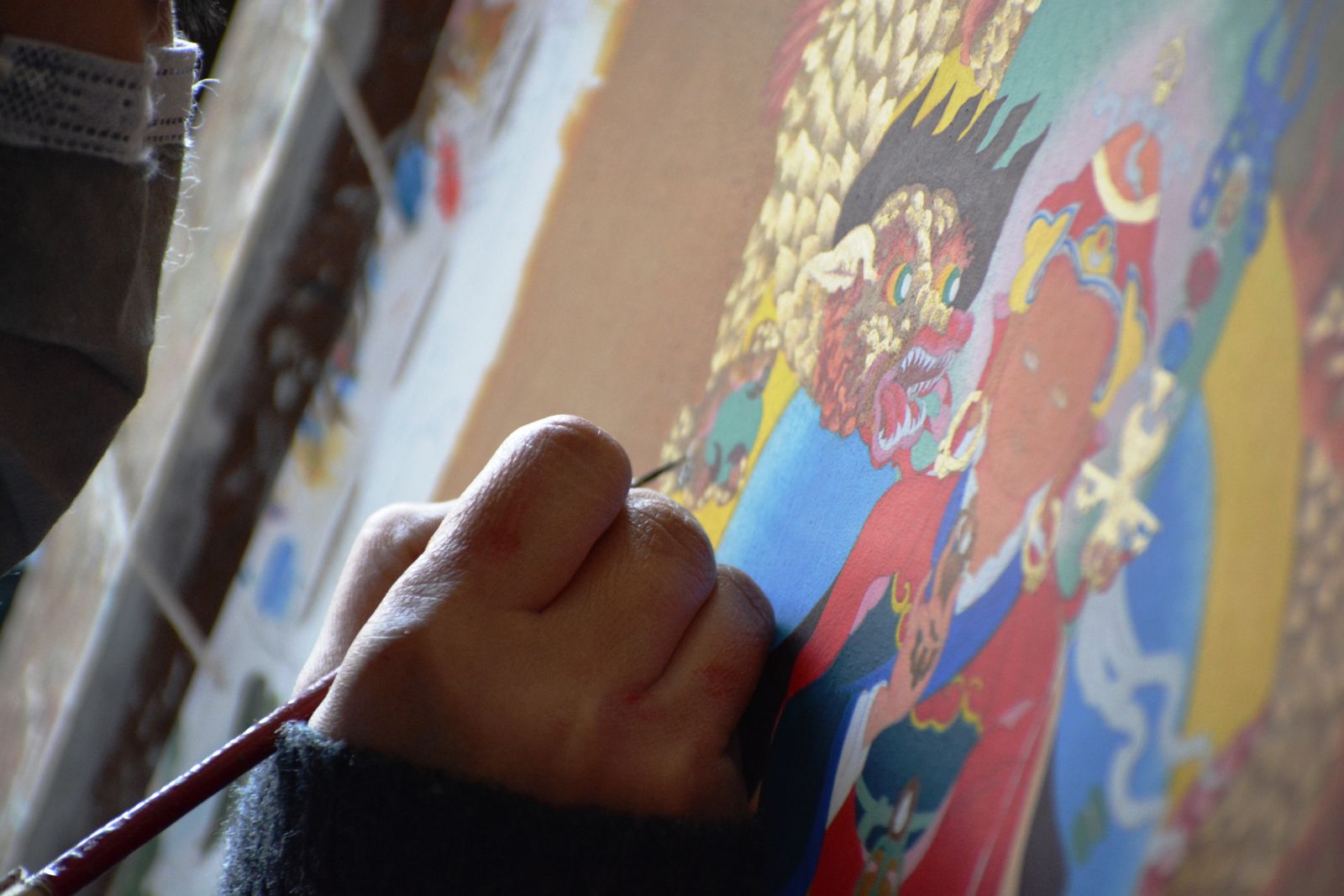
  3. A painter's hand with a fine brush detailing a wrathful deity on a thangka in Sikkim Amol Nakve

    Day 3, 14:30 · Directorate of Handicrafts and Handloom, Zero Point

    Folding tables, bark paper and a thangka brush

    Sikkim set up this institute in 1957, when it was still a kingdom, to train artisans and keep its crafts alive, and it still works that way. The building stands at Zero Point, about 1 km from MG Marg. Visitors may walk the first floor quietly and watch the trainees at work: carpets, masks, thangka painting, choktse, the carved folding tables of Sikkimese homes, and paper made from the bark of the argeli shrub. A museum opened in 2007, and a two-storey emporium sells the work. Its hours and its closing days are in the questions below.

  4. Rain-wet paving on MG Marg in Gangtok, walkers with umbrellas between shopfronts and street lamps Simanta Saha

    Day 3, 18:00 · MG Marg, Gangtok

    A promenade with no cars, and signs against spitting

    When the offices close, Gangtok comes out to walk. MG Marg is about a kilometre of paving where no car may enter, and signs at each end declare it free of litter, spitting and smoke, with fines for anyone who lights up. Benches run down the middle, and the whole town passes twice: Nepali, Bhutia and Lepcha families, students, shopkeepers stepping out for air. The market's two halves rest on different days, so one side is always dark and the other always trading, and the questions below say which is which. Rain turns the stones to a mirror. Just below lies Lal Bazaar, built in 1956 and named for J. Lal, a Dewan of the Chogyal. Our car waits at the end of the street, since it cannot enter.

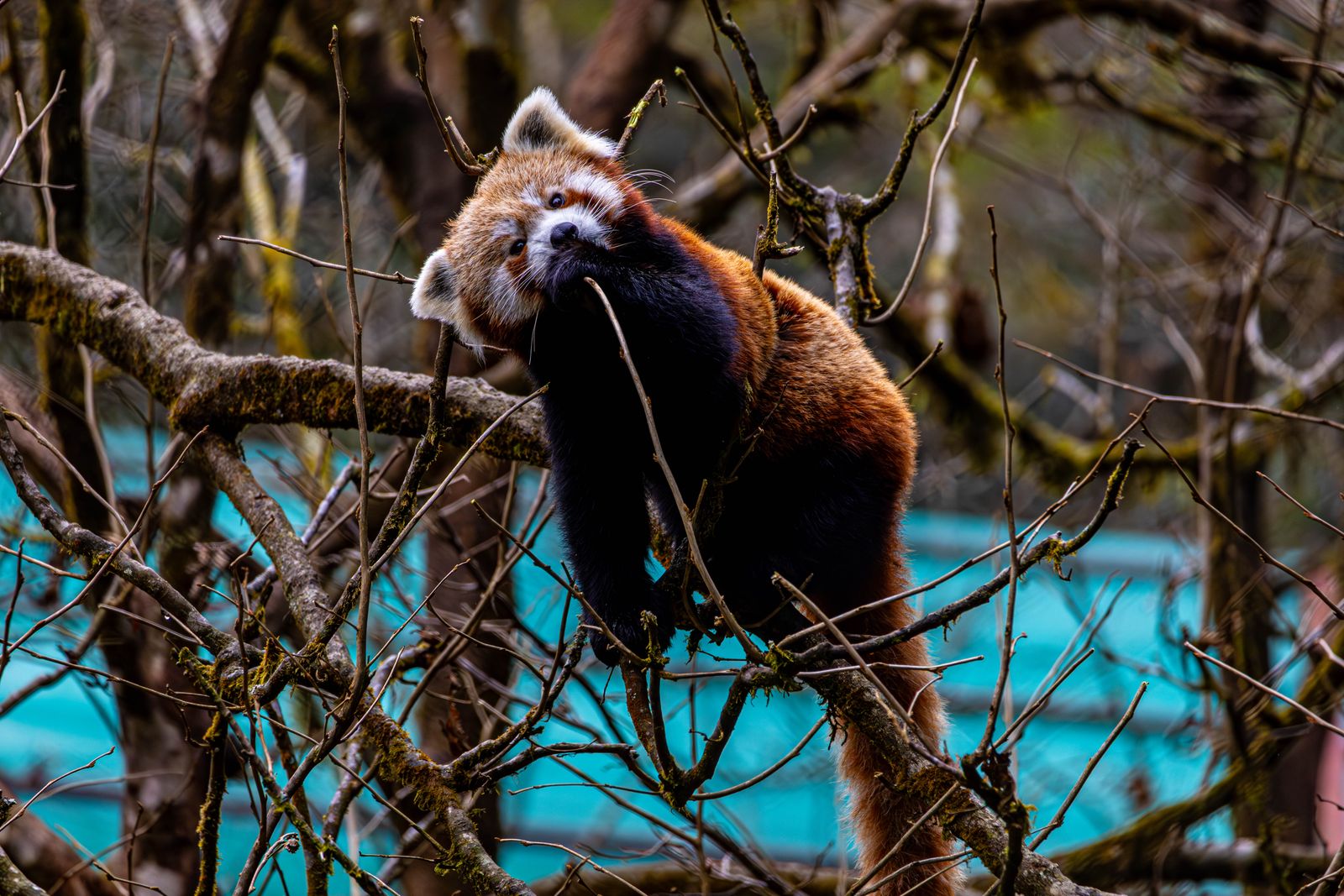
  5. A red panda picking its way along mossy branches in a forest enclosure at a zoological park in Sikkim Regan Dsouza / Pexels

    Day 4, 09:00 · Himalayan Zoological Park, Bulbuley

    Red pandas before their midday sleep

    If children are with you, come here first. The park opens at 09:00 on every day but Thursday, and its paths wind through 205 hectares of real forest at about 1,780 m, so the enclosures are large and the animals keep their own hours. Red pandas, Sikkim's state animal, are easiest to find early, before they curl up high in the trees; snow leopards live here too. The slopes are steep, so allow two hours with rests. After lunch, ride the ropeway from Deorali: 935 m of cable in standing cabins, the town dropping away beneath the glass. End on MG Marg, the kindest walk in town for a grandparent: flat, lined with benches and closed to cars.

  6. A mountain road doubling back in tight loops above Zuluk in East Sikkim, cloud rising off the valleys below Abhisek Hazra / Unsplash

    Day 5, 05:30 · Lungthung, above Zuluk, about 3,700 m

    The wool road to Tibet, and the state bird at first light

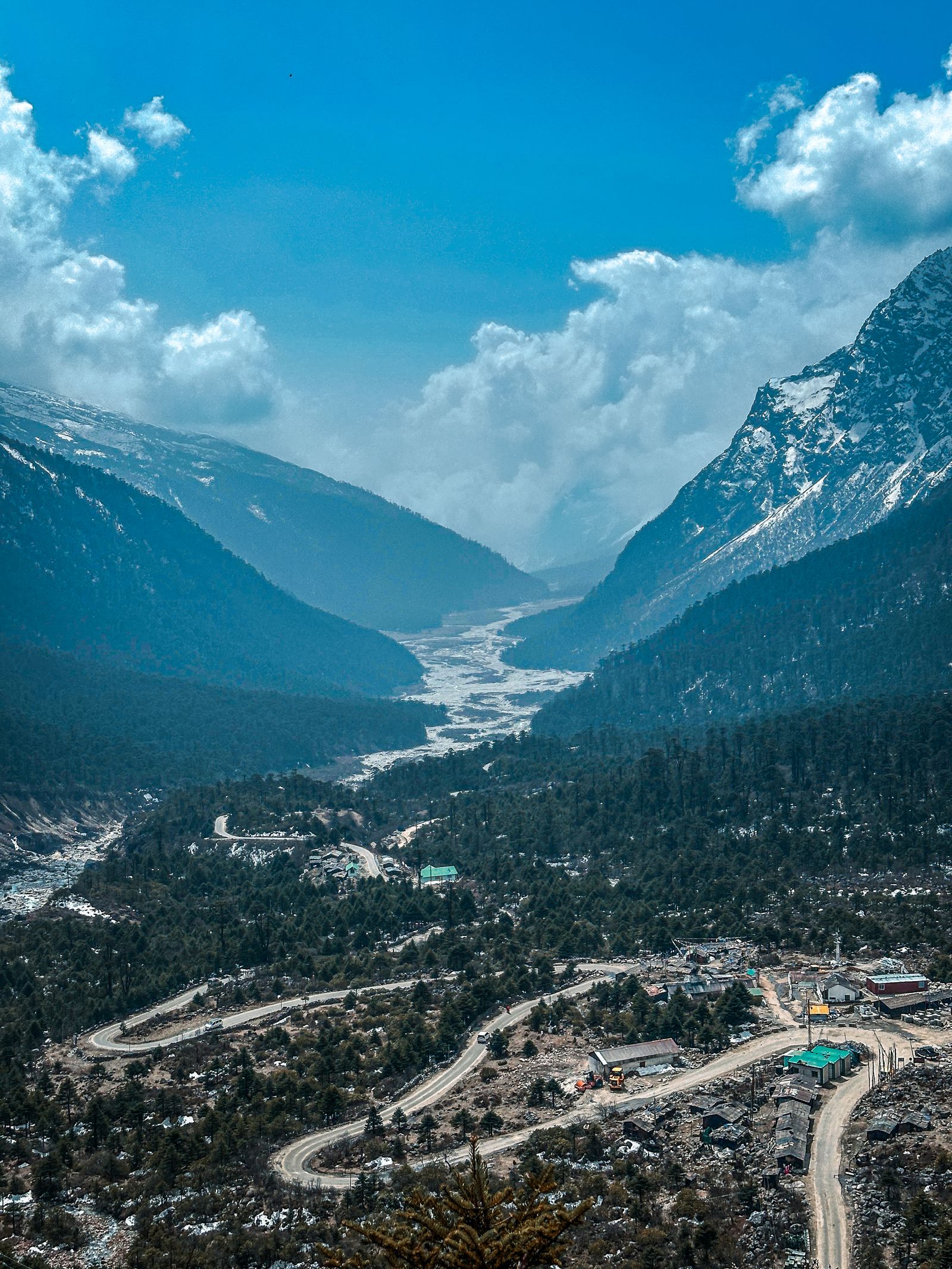
    East of Gangtok, the old trade road climbs past Zuluk to Lungthung, about 3,700 m, where the Kanchenjunga range lies along the horizon at dawn. Mule trains once carried wool up this way between Lhasa and Kalimpong. The whole stretch sits inside the Pangolakha Wildlife Sanctuary, 124 sq km rising to the Bhutan border, and the blood pheasant, Sikkim's state bird, feeds along the verges in the first hour; ask the driver to slow on the upper loops and you will see more of it than any hide would show you. The road is open to Indian citizens only, the homestays are simple, and the mobile signal is patchy: BSNL finds one, and then only sometimes. /journeys/the-old-silk-route/ gives this road two nights.

Beyond the town

What Gangtok is the gate to

Gangtok is where the papers are filed and the permit cars are hired, so everything north and east of it begins in this town. These are the four we are asked for, each with the rule that governs it.

Lachung village beside the boulder strewn Lachung Chu in North Sikkim, green cliffs and a far peak behind
North Bengal Tourism / Unsplash
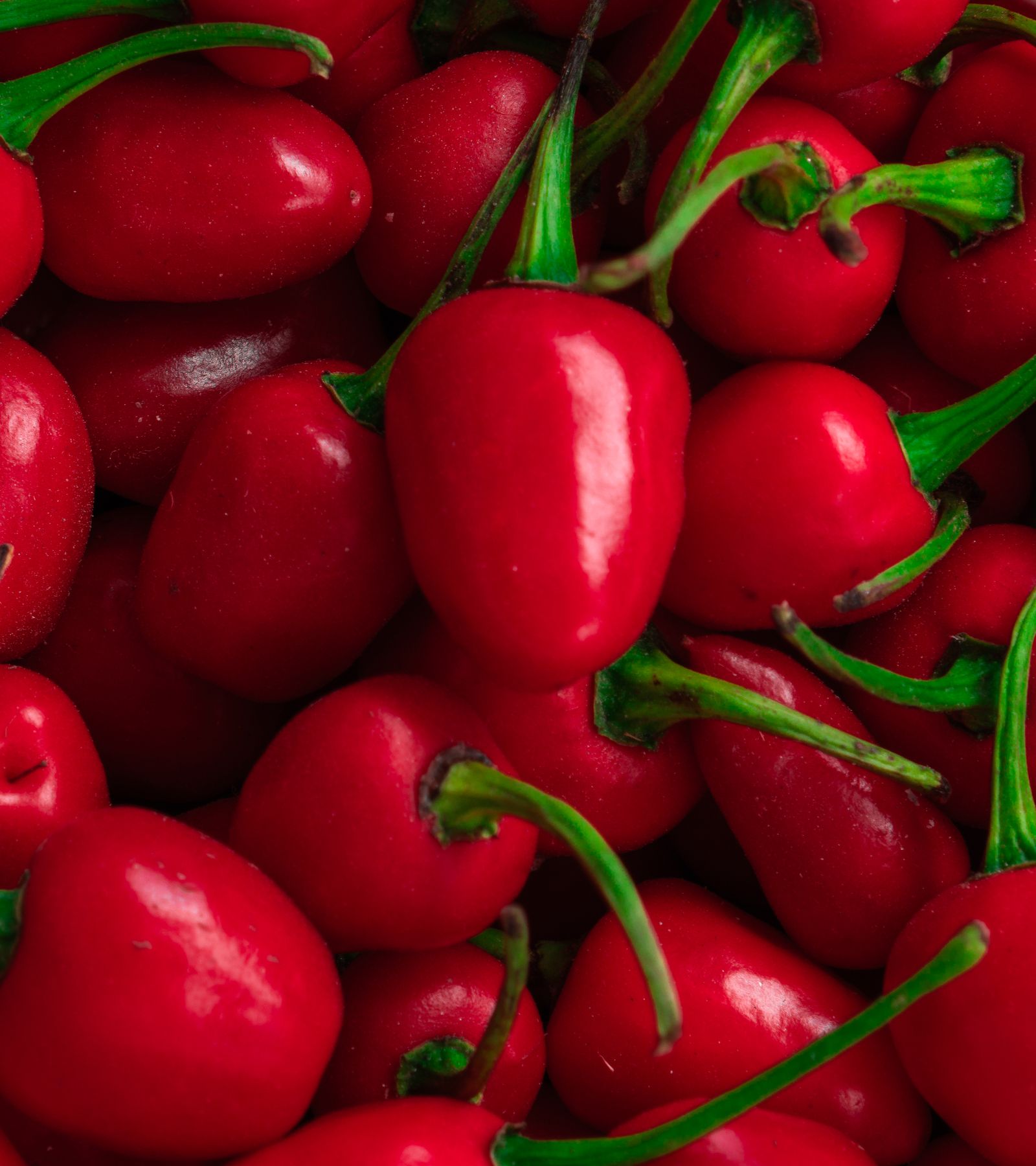
A close heap of glossy, round red chillies with green stalks
डल्ले खुर्सानी

The taste of Gangtok & East Sikkim

Dalle khursani, the round chilli of Sikkim

Dalle means round in Nepali, and this cherry-sized chilli runs from 100,000 to 350,000 Scoville units, habanero heat. Since 2020 it has carried a Geographical Indication for Sikkim. A Sikkimese meal follows rice, dal, curry and achar, and the achar is very often dalle: pickled whole in oil, pounded into chutney for momos, or eaten raw, a bite at a time, beside dal bhat. Ask for one chilli first. The rest of the table draws on more than one kitchen. From Tibetan and Bhutia homes come shabhaley, bread stuffed with seasoned meat and cabbage, and thukpa, the noodle soup. Nepali kitchens bring gundruk and sinki, the fermented greens and radish, kinema, the fermented soybean, and sel roti, the sweet ring of rice bread. Lepcha households cook tuk-tok, a porridge of local rice, for Losoong. Tell us which you want to taste, and we choose the kitchen: a morning in Lal Bazaar, then lunch at that cook's own table.

Lal Bazaar in the morning, then a Sikkimese lunch with dalle achar

Words to carry

Three words that open doors

Spoken here: Nepali, Sikkimese, Lepcha, Hindi, English; Tibetan in the monasteries. These three are Tibetan.

  • ཁ་བཏགས Khada say KAH-dah The white scarf of welcome, laid around your neck on arrival Tibetan
  • अलिकति पिरो Alikati piro say uh-lee-kuh-tee PEE-roh Only a little spicy (say it before the dalle arrives) Nepali
  • སྐོར་ར Kora say KOR-rah The clockwise walk around a monastery or stupa: keep it on your right Tibetan

When to go

Gangtok & East Sikkim, month by month

March, October and November rate best here. July: Wettest month, 655 mm, nh10 slips are common.

  1. Jan Average low 6 °C, high 12 °C. Quiet Coldest month, 6 °C nights; Detor chaam at Enchey, Jan or Feb
  2. Feb Average low 7 °C, high 14 °C. Quiet Cold and dry; Rumtek's Gutor chaam, then Losar (7 Feb 2027)
  3. Mar Average low 10 °C, high 18 °C. Best Clear mornings, 18 °C days, spring flowers begin
  4. Apr Average low 13 °C, high 20 °C. Good Rhododendrons bloom, afternoon storms build
  5. May Average low 15 °C, high 21 °C. Good Rain most days, flowers at Tsomgo; Saga Dawa in May or June
  6. Jun Average low 17 °C, high 22 °C. Monsoon Monsoon sets in, about 650 mm, cloud on the ridge
  7. Jul Average low 18 °C, high 22 °C. Monsoon Wettest month, 655 mm, NH10 slips are common
  8. Aug Average low 18 °C, high 22 °C. Monsoon Heavy rain, orchids and moss; Tendong Lho Rum Faat, 8 Aug
  9. Sep Average low 17 °C, high 22 °C. Monsoon Rain easing late; Pang Lhabsol, late Aug or early Sep
  10. Oct Average low 14 °C, high 20 °C. Best Skies clear, the mountain returns; Dashain tika 21 Oct 2026
  11. Nov Average low 10 °C, high 17 °C. Best Under 40 mm of rain in the month; Tihar, 7 to 11 Nov 2026
  12. Dec Average low 7 °C, high 14 °C. Good Driest month; Kagyed dances, then Losoong, 9 to 13 Dec 2026

BestGoodQuietMonsoon Average daily low and high, °C · source

The town's own year

The Gangtok calendar

Gangtok keeps more than one new year, and most of its days move with the lunar calendar. Tell us your window and we confirm that year's dates with the monasteries before you fix a month.

The red doors of Rumtek's main hall in Sikkim, half open under five carved snow lions, sandals left at the step
Soumyojit Sinha / Pexels
  1. Jan
    • Detor chaamEnchey Monastery, 3 km above the market

      In January or February, the masked dances that clear the old year, in the courtyard at Enchey above the market. The two days move with the lunar calendar and are not published far ahead, so we ask the monastery before you fix a week.

  2. Feb
    • Gutor chaam, then LosarRumtek, then every home

      Two days before the Tibetan new year, Rumtek dances the Gutor chaam, the battle between good and evil. Losar falls on 7 February in 2027.

  3. May
    • Saga DawaThe monasteries of the ridge

      Kept through the whole fourth Tibetan month, in May or June, with the full moon as its day: the Buddha's birth, awakening and passing in one.

  4. Aug
    • Tendong Lho Rum FaatLepcha homes, and Tendong Hill in the south

      8 August, three days of Lepcha prayer to Mount Tendong, which the old story says stood above the flood that drowned Mayel Lyang.

  5. Sep
    • Pang LhabsolTsuklakhang, the royal chapel

      On the 15th day of the seventh Tibetan month, late August or early September: the Pangtoed warrior dance, choreographed by the third Chogyal, honours Kanchenjunga as the guardian of Sikkim.

  6. Oct
    • DashainEvery Nepali household

      Tika day falls on 21 October in 2026. Elders give red tika and jamara, offices shut for days, and the shops on MG Marg trade until late.

  7. Nov
    • TiharThe Nepali quarters below the Marg

      7 to 11 November 2026. Crows, dogs, cows and oxen are honoured in turn, Deusi singers work the lanes after dark, and Bhai Tika closes it.

  8. Dec
    • Kagyed, then LosoongTsuklakhang, Rumtek and Phodong

      The Kagyed dances destroy the year's evil and end with effigies of flour, wood and paper burnt. Losoong, or Namsoong, the Bhutia and Lepcha harvest new year, follows from 9 to 13 December 2026, with the Black Hat dance, archery and family feasts.

Mid June to mid September

What the rains do to this road

July is the wettest month on this ridge, and the figure is in the month strip above. What it means in practice is a decision rather than a number. The ridge spends its afternoons inside a cloud, the Teesta turns the colour of milky tea and rises until the boulders shift, and the road below is held open between slides rather than mended.

So we do not build the north into a monsoon plan. The district can suspend the northern permits after a bad run of rain, and a permit withdrawn in Mangan is a stay rebuilt from Gangtok outwards. We say that before you book rather than after.

What is left is worth having. Orchids flower on garden walls, moss covers the chorten steps, and the courtyard at Rumtek or Enchey at seven in the morning holds the monks and nobody else. The town is at work rather than on show. If you come now, we put the high days late in the stay, when your body and the road have both settled, keep a spare day before your flight and plan that flight for the afternoon. We would still rather you came in October.

Rain wet paving on MG Marg in Gangtok, walkers with umbrellas between shopfronts and street lamps

Solved before you arrive

What nobody warns you about in Gangtok & East Sikkim, and what we do about it

Permits for the lake, a steep and crowded town, a river road that slips in the rains: the things that trip up a Gangtok stay, and how we plan round each before you land.

  1. The problem

    Tsomgo and Nathu La mean permits, checkposts and a line of jeeps up one road

    What we do

    We file the permit through a registered Sikkim operator the day before, with photo ID for every guest, and leave Gangtok early so you reach the lake ahead of the mid-morning traffic. Nathu La admits Indian citizens only, and not on Monday or Tuesday, so we build the week around its open days, and we confirm the pass is open the evening before: snow and Army orders can close it. The lake day, hour by hour: /journeys/gangtok-and-the-high-lake/.

  2. The problem

    Tsomgo is at 3,753 m, and we are travelling with a grandparent and a six-year-old

    What we do

    The road climbs about 2,100 m in 40 km, so we never send you up on your first morning. Tsomgo permits are issued only for children over five, and a six-year-old qualifies. We carry warm layers, water and an oxygen canister in the car, keep the stop at the lake under an hour, and turn back at Tsomgo, rather than climb to Nathu La at 4,310 m, if anyone has a headache. Guests with heart or lung conditions should ask their doctor first.

  3. The problem

    Four and a half hours on NH10, and the Teesta road closes with landslides

    What we do

    When it is flying, we book the Sikkim Tourism Development Corporation helicopter from Bagdogra to Burtuk heliport in Gangtok: ₹3,100 a seat one way, the fare STDC set from 1 December 2025, with 7 kg of luggage free, so your cases follow by car. By road, our driver checks NH10 each morning. Its slide points have names every hill driver uses: 20th Mile at Bardang, 29th Mile, Kali Jhora, Seti Jhora, Birik Dara, Likhuveer and Melli. When the highway shuts, the diversion is NH717A through Odlabari, Gorubathan, Lava, Pedong and Rhenock, about 160 km and seven hours against three and a half, on a narrow road that slips too. In June 2024 slides closed or restricted it for about a month; in August 2025 it reopened after six days; in July 2026 it shut for three days while 20th Mile was rebuilt. So from mid June to mid September we plan your flight home for the afternoon and keep the last Gangtok evening free.

  4. The problem

    Our foreign friends hear the Sikkim permit is no longer issued at the Rangpo border

    What we do

    Since January 2026, foreign nationals, OCI cardholders included, receive Sikkim's Restricted Area Permit only online, through the e-FRRO portal, and must hold it before reaching the state: Rangpo checks permits but no longer issues them. We prepare the application with you and a registered Sikkim agent about 30 days ahead: passport and visa scans, the itinerary and local sponsor details. The full rules: /plan/permits-and-visas/.

  5. The problem

    Gangtok town is steep and crowded, and the view is often of the next building

    What we do

    We choose the house by what you want from the town: in the middle of it, or out of it in forest, and the houses below say which is which. Wherever you sleep, the car brings you in for planned hours, drops you at one end of MG Marg, where cars cannot go, and waits at the other. Early mornings, when the lanes are empty, are when we walk you through the old town.

  6. The problem

    We are vegetarian, one of us eats Jain, and we fear it is all momos and pork

    What we do

    It is not. A Sikkimese meal is rice, dal, a vegetable curry and achar, and much of it is vegetarian by nature: the fermented greens, radish and soybean set out further down this page are all meatless, as is iskus, the local chayote. We brief each kitchen before you arrive, ask for Jain cooking without onion, garlic or root vegetables, and pack food for the Tsomgo road.

Where we would put you

The right house matters more than the town

Room types and rates are confirmed for your dates in your quote.

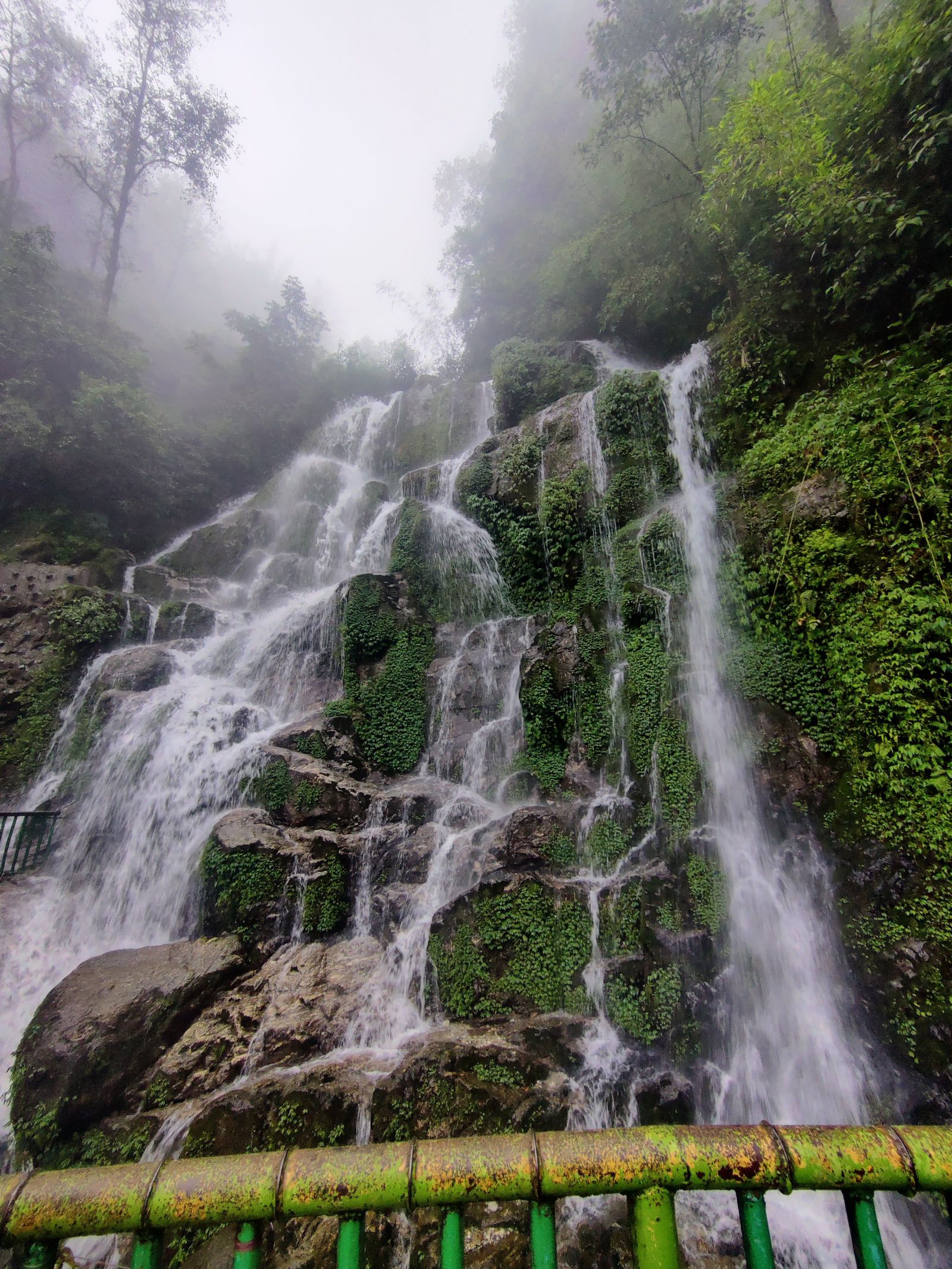
  1. The Bakthang waterfall near Gangtok, water spreading over mossy green rock on a misted Sikkim hillside
    The Bakthang falls on the road north out of Gangtok.Gaurav Purohit / Pexels
    01

    Taj Guras Kutir Resort & Spa, Gangtok

    Taj resort at Pangthang, north of Gangtok · J Wellness Circle spa

    Guras is the Nepali word for rhododendron, Sikkim's state tree. Out of the traffic, with a Taj spa: the calm base for couples and honeymoons.

    Ask for a room category that faces the mountains that season, and spa time booked with the room, not on arrival.

  2. The MAYFAIR resort at Gangtok lit up after dark, its steep gabled roofs above a paved court and a lit fountain
    The MAYFAIR below Gangtok after dark, from its fountain court.Yakrita, CC BY-SA 4.0, via Wikimedia Commons
    02

    MAYFAIR Spa Resort & Casino, Gangtok

    Resort on 48 forested acres at Ranipool · private-pool villas · spa

    A resort in its own forest below Gangtok, with a spa and villas that have private pools: the easy answer for families and guests who want space.

    Ask for a Crown or Oriental Villa with a private pool; for families, the Family Room, 74 sq m with connecting bedrooms.

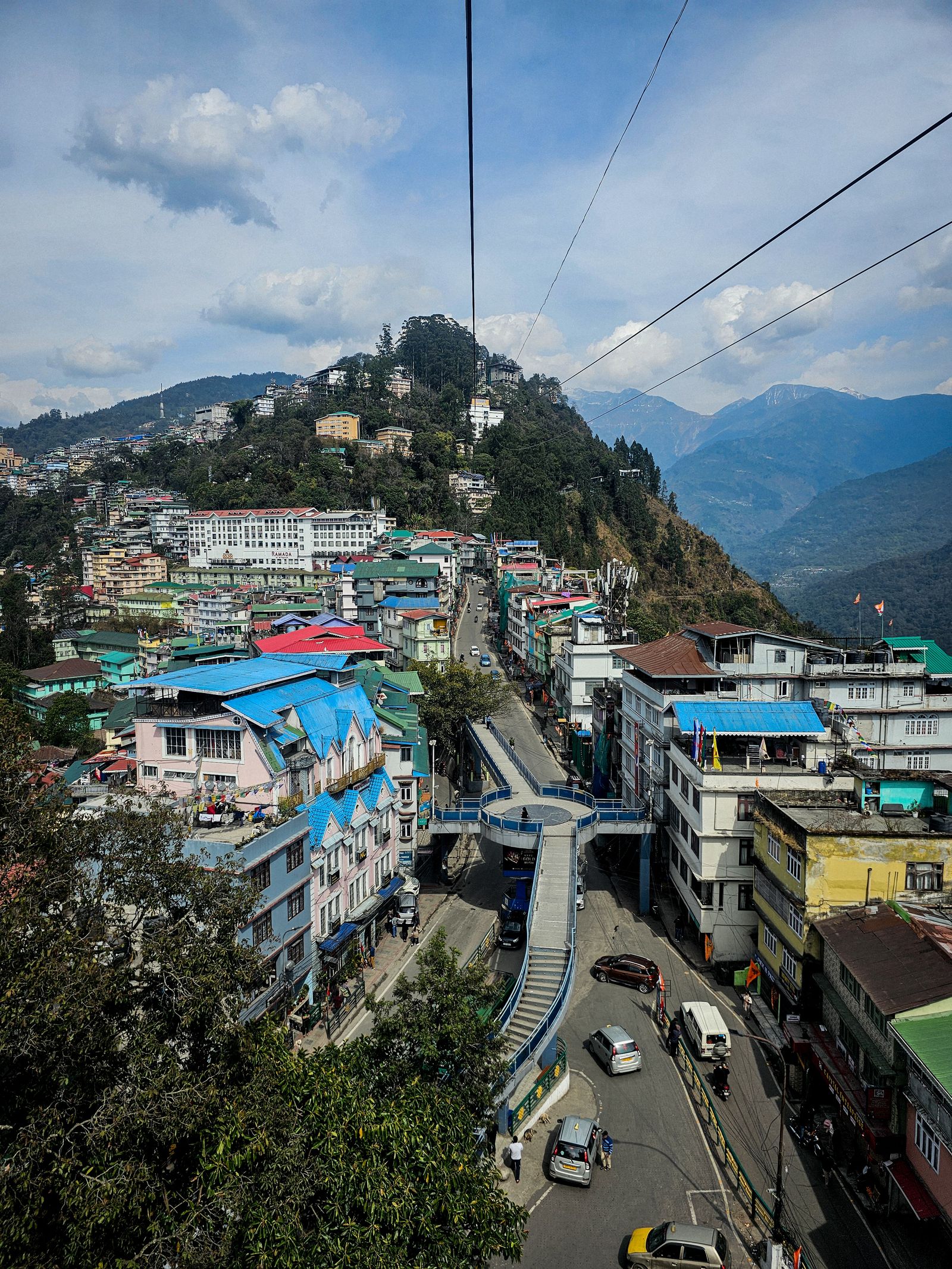
  3. Gangtok seen from above, coloured buildings stacked down the ridge with a footbridge over the road and hills beyond
    Gangtok from above, the town the Nor-Khill sits in the middle of.Ahad Hasan / Pexels
    03

    The Elgin Nor-Khill, Gangtok

    Built in 1932 for the Chogyal's guests · a hotel since 1934 · 25 rooms and suites · spa

    Nor-Khill means house of jewels. Sikkimese architecture in the heart of town, and a welcome with a khada scarf and a glass of cherry liquor.

    Ask for a suite rather than a deluxe room, and tea in the Kanchen garden, where the Chogyal used to set up his easel.

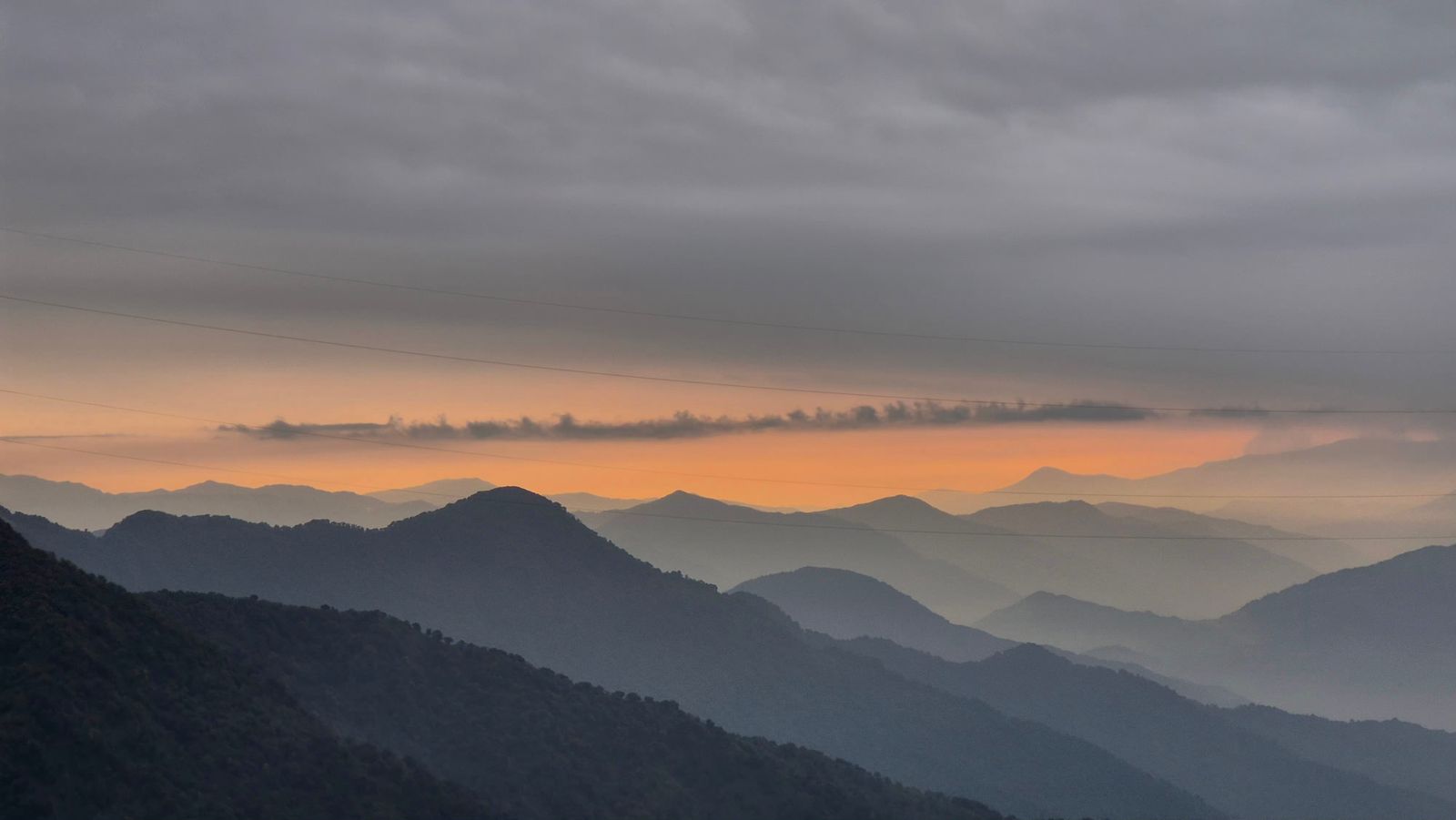
  4. Sunset over the ranges at Zuluk in East Sikkim, layered blue ridges fading back under an orange band of sky
    Sunset over the ranges at Zuluk, from the old Silk Route.Mehul / Pexels
    04

    Dil Maya Homestay, Zuluk

    Family homestay at about 2,800 m on the old Silk Route · since 2005 · Indian citizens only

    The first homestay on the Silk Route, run by one family near Zuluk's Shiva Mandir: attached baths, geysers, heavy quilts and home cooking. Warm and honest, not a luxury house.

    Ask for a room in the newer building with a balcony, and the heater booked ahead at ₹500 a night; it runs only while the power does.

  5. The Yumthang valley in North Sikkim from above, a braided river below snow streaked peaks with a village on the flat
    The Yumthang valley above Lachung, the morning drive from the resort.Ayush Paul / Pexels
    05

    Udaan Metho Pelri Resort, Lachung

    Riverside resort at Sarchok, Lachung, about 2,650 m · 35 rooms · generator · pure vegetarian kitchen

    Gangtok is the gate to the north, and this is the house we use for the two nights at Lachung: heated rooms, a generator for the power cuts, and a kitchen that cooks Jain on request. Simple by city standards, and warm.

    Ask for a mountain-view room with a balcony, and heaters and extra quilts confirmed the day before.

In the prayer halls

How to stand in a Sikkimese monastery

Your guide says all of this at the gate. It is here so you can read it first, because guests who know the manners are welcomed rather than tolerated.

  • No monastery here prints its prayer timesRumtek, Enchey and Tsuklakhang set the morning assembly by their own calendar, and none of them publishes it. We ring each house the evening before and build the car around the answer, rather than arriving at a hall that emptied an hour ago.
  • Sit at the back, and mind your feetCome into an assembly quietly and take the place at the back or along the side wall. Stand when the assembly stands. Keep the soles of your feet from pointing at the altar or at a lama, which is easier cross-legged than with your legs stretched out in front of you.
  • Ask before the camera comes outCourtyards, doors and rooflines, yes. During prayers, almost never anywhere in Sikkim, and no flash near an altar at any hour. A monk is a person before he is a photograph, so ask first and take no for an answer.
  • Hats off, and point with an open handTake off hats and sunglasses at the door of a hall. Indoors, show someone a mural or an image with a flat open hand rather than one finger, and keep your hands off the paintings, the texts and the drums.
  • What you give, and what you leaveA note for the altar or the box goes with both hands, never tossed. Do not step over a text or a cushion, or sit on either. Nothing is carried away from a shrine, not a flower and not a stone, and what you brought up the hill comes back down it with you.

Journeys through Gangtok & East Sikkim

What each journey does in Gangtok & East Sikkim

All Sikkim journeys
The Zuluk switchbacks stacked down a brown hillside in East Sikkim, cloud rising off the blue ridges behind Expedition journey 5 nights

The Old Silk Route

Kalimpong1Zuluk2Gangtok2

4 nights here at Dil Maya Homestay, Zuluk, day 2: down to the Reshi, up through the clouds to Zuluk

October to mid November, April to May from₹90,000
Lingdum Monastery in Sikkim, its gold roofs and white walls rising in tiers above a painted stair and forest Signature journey 7 nights

Monasteries of the East

Gangtok3Ravangla1Pelling3

3 nights here at The Elgin Nor-Khill, day 2: the Karmapa's seat, and a chorten of 108 wheels

October to mid December, March to May from₹1,40,000
The Paro valley in Bhutan at harvest, rice fields and farmhouses on the floor below Rinpung Dzong and the Ta Dzong on the slope Signature expedition 11 nights

Two Kingdoms: Sikkim to Bhutan by Road

Gangtok3Phuentsholing1Thimphu2Punakha2Paro3

3 nights here at The Elgin Nor-Khill, Gangtok, day 2: rumtek at morning, and the institute of old books

October to December, March to May from₹5,30,000
A row of golden prayer wheels on monastery steps above the wooded hills at Gangtok in Sikkim Signature journey 8 nights

The First Time: Darjeeling and Sikkim

Gangtok3Pelling2Darjeeling3

3 nights here at The Elgin Nor-Khill, day 2: rumtek at prayer, then Gangtok on foot

October to early December, March to May from₹1,75,000
Snow dusted ridges above Tsomgo Lake in East Sikkim mirrored whole in its still water under a grey sky Long weekend, Sikkim 3 nights

Gangtok and the High Lake

Gangtok3

3 nights here at The Elgin Nor-Khill, day 2: rumtek at the morning session, lunch in a Sikkimese kitchen

October to mid December, March to May from₹70,000
A black yak grazing on the Yumthang meadow in North Sikkim, small purple flowers in the grass and snow peaks behind Grand journey 10 nights

Sikkim, End to End

Gangtok2Lachung2Gangtok1Ravangla2Pelling3

3 nights here at Taj Guras Kutir Resort & Spa, Gangtok, day 2: tsomgo at 3,753 m: a rehearsal for the north

April to May, October to November from₹2,25,000
The giant Chenrezig statue on its hilltop above Pelling, the long stair and walkway climbing to it through forest and cloud Family journey 6 nights

Sikkim for Families

Gangtok3Ravangla1Pelling2

3 nights here at MAYFAIR Spa Resort & Casino, Gangtok, day 2: red pandas, folded momos and a cable car

March to May, October to early December from₹95,000
Kanchenjunga turning soft pink at sunrise above a pale blue haze, the view from the hills of the Eastern Himalaya Honeymoon or anniversary 7 nights

A Himalayan Honeymoon

Glenburn Tea Estate3Kalimpong2Gangtok (Pangthang)2

2 nights here at Taj Guras Kutir Resort & Spa, Gangtok, day 6: across Rangpo into Sikkim, and two hours of Nidra

October to April, clearest October to December from₹2,65,000
Boudhanath stupa at dusk in Kathmandu, its white dome, gilded tower and prayer flags seen from a rooftop under a pink sky Grand journey 14 nights

Three Kingdoms

Kathmandu3Darjeeling3Gangtok2Phuentsholing1Thimphu2Paro3

2 nights here at The Elgin Nor-Khill, Gangtok, day 7: down to the Teesta, up to the Chogyals' capital

October to mid December, March to April from₹5,70,000

Questions

Six questions about Gangtok & East Sikkim

Ask on WhatsApp
Can you see Kanchenjunga from Gangtok itself?

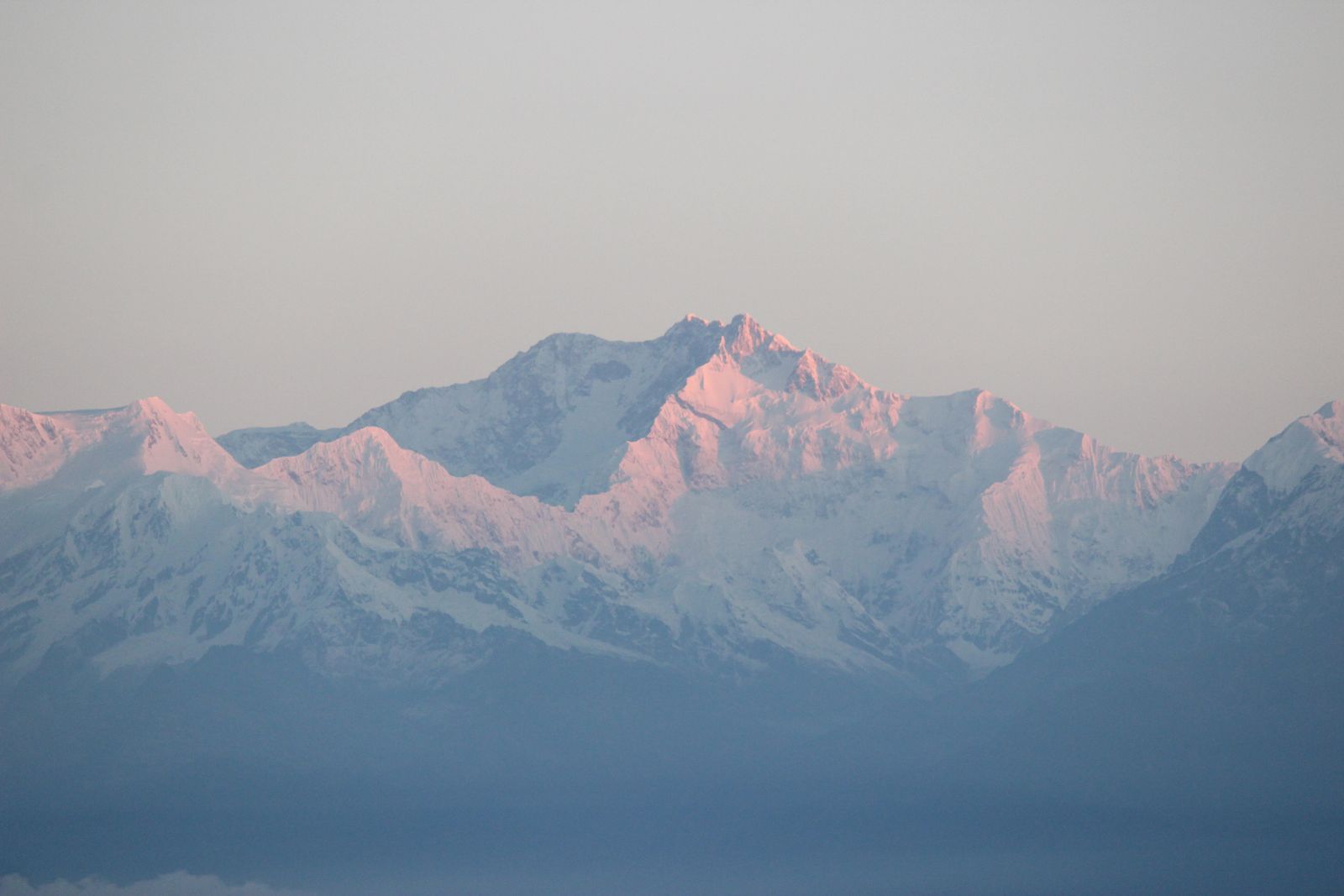
Yes, on clear mornings, most often from October to December, with the snows to the north-west of town. For sunrise, go up to Tashi View Point. On the Tsomgo road, Hanuman Tok, about 11 km out and some 2,200 m up, has a wider view, and it is where we turn if snow shuts the lake road. Cloud tends to build by late morning, so look early. The Tashi View Point dawn is an add-on on /journeys/gangtok-and-the-high-lake/.
What is Tsuklakhang, and can we go inside?

It is the royal chapel of the Chogyals, where Sikkim's kings were crowned, and it is still a working chapel, not a museum. Its courtyard opens for festivals, above all Pang Lhabsol in late August or early September and the Kagyed masked dances in early December. On other days we walk you to its gate and tell its story there. The year's dates are in the Gangtok calendar on this page.

Which days do Gangtok's sights close?

Plan the week round these rules. MG Marg's two halves rest on different days, the New Market on Tuesday and the Old Market on Sunday, so one is always trading. Lal Bazaar and the zoo both close on Thursday. The Handicrafts Directorate opens Monday to Saturday, 10:00 to 16:20; the Namgyal Institute adds the second Saturday of the month to Sundays and government holidays. Nathu La, for Indian citizens, does not open on Monday or Tuesday. We set your days around all of it before you land.

Is Gangtok itself a good base for older parents?

Yes, with the right house. The town sits at about 1,650 m, which most people manage well, but its lanes are steep and its traffic slow, so we keep walking to the places that are level. MG Marg is the best of them: flat, closed to cars and lined with benches, and the car drops you at one end and waits at the other. Whether a parent should go up to Tsomgo is answered on /plan/questions/.

Can we see a red panda in the wild near Gangtok?

Rarely, and we never promise it. Red pandas feed around dawn and dusk and rest high in the canopy. The sure sighting is at the Himalayan Zoological Park at Bulbuley, early in the morning. For the wild, the better odds are in the Neora Valley forest near Lava, walked with a naturalist on /journeys/red-pandas-and-rhododendrons/, and even there most guests see birds and the red panda's habitat rather than the animal.

What is the ₹50 fee the hotel adds in Sikkim?

Since March 2025 Sikkim has charged every tourist aged five and over ₹50 towards sustainable tourism. The hotel collects it at check-in rather than the border post, and it is valid for up to 30 days, so you pay it once however many houses you stay in. The journeys on this site include it in their price.

Sources we checked for this guide (62)
  1. Coordinates 27.33 N 88.62 E, elevation 1,650 m, name meaning 'hill top' (Tibetan sgang tog), hermit's monastery 1716, capital moved from Tumlong 1894, merger with India 1975, IMD 1991 to 2020 climate table
  2. IMD climatological normals 1991 to 2020 used for the Gangtok climate table
  3. Tsomgo Lake 3,753 m, 40 km from Gangtok, name from tso (lake) and mgo (head), 836 m long, 15 m deep, frozen in winter, jhakris gather on Guru Purnima, flowers after mid-May
  4. Nathu La 4,310 m, open to Indian citizens only with permits obtained in advance in Gangtok
  5. Rumtek: first monastery built under the 12th Karmapa in the mid-18th century; 16th Karmapa arrived 1959, relics from Tsurphu installed, new seat inaugurated on Losar 1966; golden stupa with his relics and the college opposite it; armed Indian security after the 2003 clashes
  6. Namgyal Institute of Tibetology: foundation stone 1957, opened 1 October 1958
  7. Tsuklakhang, royal chapel of the Chogyals, used for coronations; Pang Lhabsol in September and Kagyed in December
  8. Pang Lhabsol commemorates the Bhutia and Lepcha blood-brotherhood with Kanchenjunga as witness; Detor Cham at Enchey in January or February; Losoong and Losar
  9. Chogyal monarchy founded 1642; Sikkim fully organic between 2003 and 2016, first in India; rhododendron is the state tree
  10. Foreign nationals obtain Sikkim RAP and PAP only online via e-FRRO from 12 January 2026; physical permits no longer issued; groups of two or more with a registered agent for restricted zones (Travel And Tour World, 15 January 2026)
  11. Rs 50 tourist fee from 14 March 2025, collected at the accommodation, for tourists aged five and over, valid up to 30 days
  12. STDC Gangtok to Bagdogra helicopter fare cut to Rs 3,100 one way, 7 kg luggage free, Burtuk heliport (November 2025)
  13. MI-172 helicopter service Burtuk to Bagdogra with Sky One Airways, 20 seats (March 2024)
  14. Pakyong Airport, about 31 km from Gangtok, has no scheduled commercial flights; zero movements April 2025 to March 2026
  15. Bagdogra airport 124.5 km from Gangtok, about 4 hours; NJP 125 km
  16. NH10 blocked by landslides at Sevoke on 27 June 2026; traffic diverted via Moonsong and Gorubathan
  17. Route distances Bagdogra to Sevoke 35 km and on via Rangpo and Singtam to Gangtok
  18. Rangpo at 333 m, the border checkpoint on NH10
  19. Singtam at 426 m, about 30 km from Gangtok, at the Teesta and Ranikhola confluence
  20. Sivok (Sevoke) station elevation 156 m
  21. Coronation Bridge at Sevoke over the Teesta, completed 1941
  22. Dalle khursani means round chilli in Nepali, 100,000 to 350,000 SHU, eaten as achar, momo chutney and with dal bhat; GI for Sikkim
  23. Dalle khursani GI application accepted by DPIIT, filed by NERAMAC (September 2020)
  24. Sikkimese meal pattern of rice, dal, curry and achar; gundruk, sinki, kinema; iskus (chayote); organic state 2016
  25. Lal Market built in 1956, named after J. Lal, a Dewan of the Chogyal; since rebuilt as a five-storey shopping complex (Sunday village market described in the past tense only)
  26. Directorate of Handicrafts and Handloom established 1957 at Zero Point, visitors watch artisans on the first floor, choktse, argeli bark paper, open 10:00 to 16:00 except Sundays and government holidays
  27. MG Marg is a pedestrian-only zone about 1 km long, free of smoke, litter and spitting, with fines for smoking; shops 08:00 to 19:00, closed on Tuesdays (re-read September 2026)
  28. Taj Guras Kutir Resort & Spa, Gangtok, at Pangthang; offer pages live in May 2026
  29. MAYFAIR Spa Resort & Casino, Lower Samdur Block, Ranipool, 48 forested acres, private-pool villa categories, spa and casino
  30. The Elgin Nor-Khill, since 1934, 25 rooms and suites, Nor-Khill means house of jewels, Kanchen garden favoured by the Chogyal, khada welcome
  31. Tashi delek (bkra shis bde legs): Tibetan greeting also used in Bhutan and Northeast India, associated with Losar
  32. Second source for online-only RAP via e-FRRO from January 2026, no permits on arrival at the border, OCI cardholders treated as foreign nationals (29 April 2026)
  33. Road distances: Bagdogra to Gangtok about 125 km via Sevoke (36 km), Rangpo (87 km) and Singtam (98 km); MG Marg to Rumtek about 21 km (OSRM routing, September 2026)
  34. Khata (Tibetan ཁ་བཏགས, kha btags), the ceremonial white scarf
  35. Kora (Tibetan སྐོར་ར, skor ra): circumambulation of a sacred site
  36. Taj Guras Kutir Resort & Spa, Gangtok: street address Pangthang, Gangtok 737103, J Wellness Circle spa (archived tajhotels.com page, February 2026)
  37. Rumtek open 06:00 to 18:00, entry ₹10, daily morning prayers (used on Monasteries of the East)
  38. MG Marg: pedestrian only, about 1 km, shops open 08:00 to 19:00 and closed on Tuesdays
  39. Himalayan Zoological Park, Bulbuley: 09:00 to 16:00, closed Thursday, 205 hectares at 1,780 m, red pandas and snow leopards (2026)
  40. Gangtok ropeway 935 m, Deorali to Tashiling, standing cabins
  41. Pangolakha Wildlife Sanctuary, Pakyong district: 124 sq km, 1,760 to 4,390 m, includes Dzuluk, Phadamchen, Lingtam, Gnathang and Kupup, Bhutan on its east, blood pheasant recorded (no mammal is listed, so the page names no red panda here)
  42. Jelep La 4,390 m on the Lhasa to Kalimpong wool route, closed after 1962
  43. Zuluk and the Old Silk Route open to Indian citizens only; Lungthung dawn view of Kanchenjunga; only BSNL signal
  44. The blood pheasant is the state bird of Sikkim
  45. Dil Maya Homestay, Zuluk: established 2005, first homestay on the Silk Route, attached bathrooms, geysers, room heater ₹500 extra (used on The Old Silk Route)
  46. The Elgin Nor-Khill built in 1932 by the Chogyal as the royal guest house; the Chogyal set up his easel and painted in the Kanchen garden; B.R. Oberoi acquired the property in 1975 (this page does not say it became a hotel in 1975, and the Elgin's own Nor-Khill page dates the hotel to 1934)
  47. Hanuman Tok about 11 km from Gangtok with Kanchenjunga views; Tashi View Point for sunrise
  48. Sikkim festivals: Gutor chaam at Rumtek before Losar; Saga Dawa the 4th Tibetan month with prayers throughout; Pang Lhabsol 15th day of the 7th month, late August or early September; Tendong Lho Rum Faat a three-day Lepcha festival in August; Kagyed dance destroys evil; Losoong a December harvest festival
  49. Sikkim holidays 2026: Losar 18 February, Bhumchu 3 March, Tendong Lho Rum Faat 8 August, Lhabab Duechen 1 November, Losoong/Namsoong 9 to 13 December; 2027: Losar 7 February
  50. Sikkim holidays 2027 list: Losar 7 February, Tendong Lho Rum Faat 8 August
  51. Losoong on the 1st day of the 11th Tibetan month, in December, preceded by masked dances at Phodong and Rumtek; the effigy of the demon king is burnt
  52. Dashain 2026: Ghatasthapana 11 October, tika day 21 October; Tihar 7 to 11 November 2026 (as used on /plan/when-to-go/)
  53. NH10 closed or restricted for about a month in June 2024; the NH717A diversion through Odlabari, Gorubathan, Lava, Pedong and Rhenock takes about 7 hours against 3.5 on NH10 (cited by the Gangtok local reviewer)
  54. NH10 reopened after six days of landslide disruption in August 2025 (cited by the Gangtok local reviewer)
  55. Lachen reopened to tourists on 11 September 2026; all vehicles must cross Tung checkpost by 16:00 in both directions
  56. Kabi Lungchok, 17 km north of Gangtok: stone pillars mark the treaty of Thekong Tek and Khye Bumsa; the name means stone erected by our blood
  57. NH10 roadblocks reported at 29 Mile, Kali Jhora, Seti Jhora, Selfie Dara, Birik Dara, Likhuveer, Melli and Bhalu Khola; the fragile stretch runs 52 km from Sevoke to Rangpo (Business Standard, 24 June 2025, read 20 September 2026)
  58. Udaan Metho Pelri Resort, Sarchok, Lachung: 35 rooms, room heaters, generator, Grains Pure Veg restaurant, Jain requests met, reviews to September 2026 (the house used on Sikkim, End to End)
  59. Gangtok market days: the New Market side of MG Marg closes on Tuesdays and the Old Market side on Sundays, so one section is always open; Lal Bazaar and the shops on Lal Bazaar Road close on Thursdays (read 20 September 2026)
  60. Namgyal Institute of Tibetology opens 10:00 to 16:30 Monday to Saturday and closes on Sundays, government holidays and the second Saturday of each month; the Directorate of Handicrafts and Handloom opens Monday to Saturday 10:00 to 16:20, museum opened 2007 (read 20 September 2026)
  61. NH10 shut for three days from 17 to 19 July 2026 for emergency work at 20th Mile (Bardang) between Rangpo and Ranipool
  62. STDC cut the Gangtok to Bagdogra helicopter fare to ₹3,100 one way with effect from 1 December 2025, down from ₹4,500, with one piece of luggage up to 7 kg free

Facts checked against official and published sources, September 2026. Roads, permits and fees change: we confirm every detail again for your dates.

First sunlight turning the summits of the Kanchenjunga range gold above the dark ridges of West Sikkim, seen from Pelling at dawn Continue the journey Pelling & West Sikkim Sikkim, from the Limbu su khyim: the new house

Plan my journey

Gangtok & East Sikkim, your way

Tell us the month and who is travelling. A designer in the hills replies within 24 hours with a first route and a straight price.

At its best
March to May, October to December
Stay
3 to 4 nights
Fly into
Bagdogra (IXB), about 124 km, 4.5 hours by road, or the helicopter to Burtuk when it runs
+91 86178 24110 Message a designer Support 24×7, every day of your journey
With country code if outside India. Either this or email is enough.
Who is coming, the pace you like, the occasion. A sentence is fine.
Add more detail
Their ages help: add them in your note
Permits in Sikkim and fees in Bhutan depend on it
A week in the hills starts around ₹1.4 lakh per person, and Bhutan around ₹3.25 lakh.
Calls from our office, 8am to 9pm IST (GMT+5:30)
Darjeeling, Kalimpong, Gangtok, Pelling, Bhutan, Nepal

No deposit to begin, and nothing is booked until you say yes.