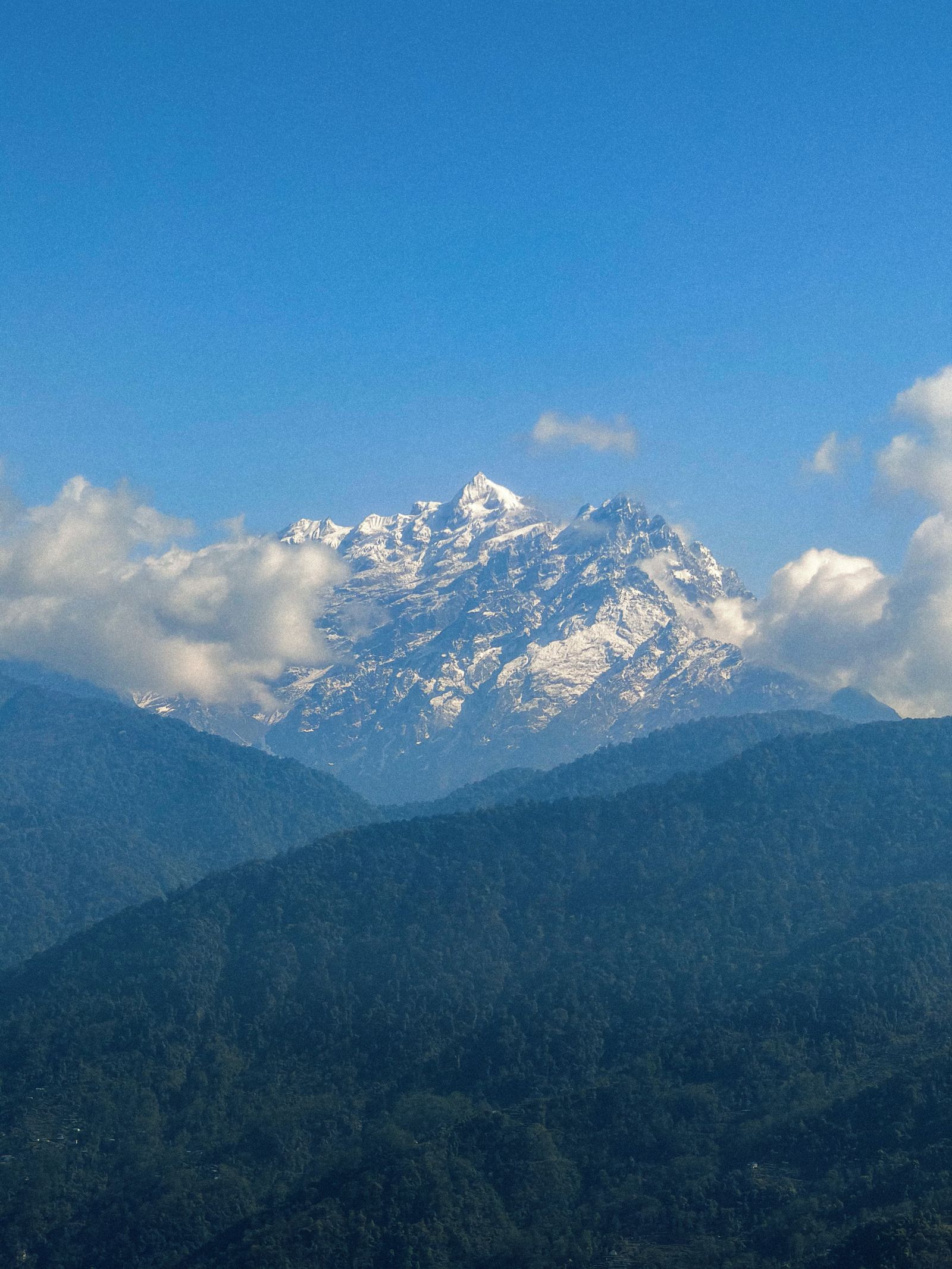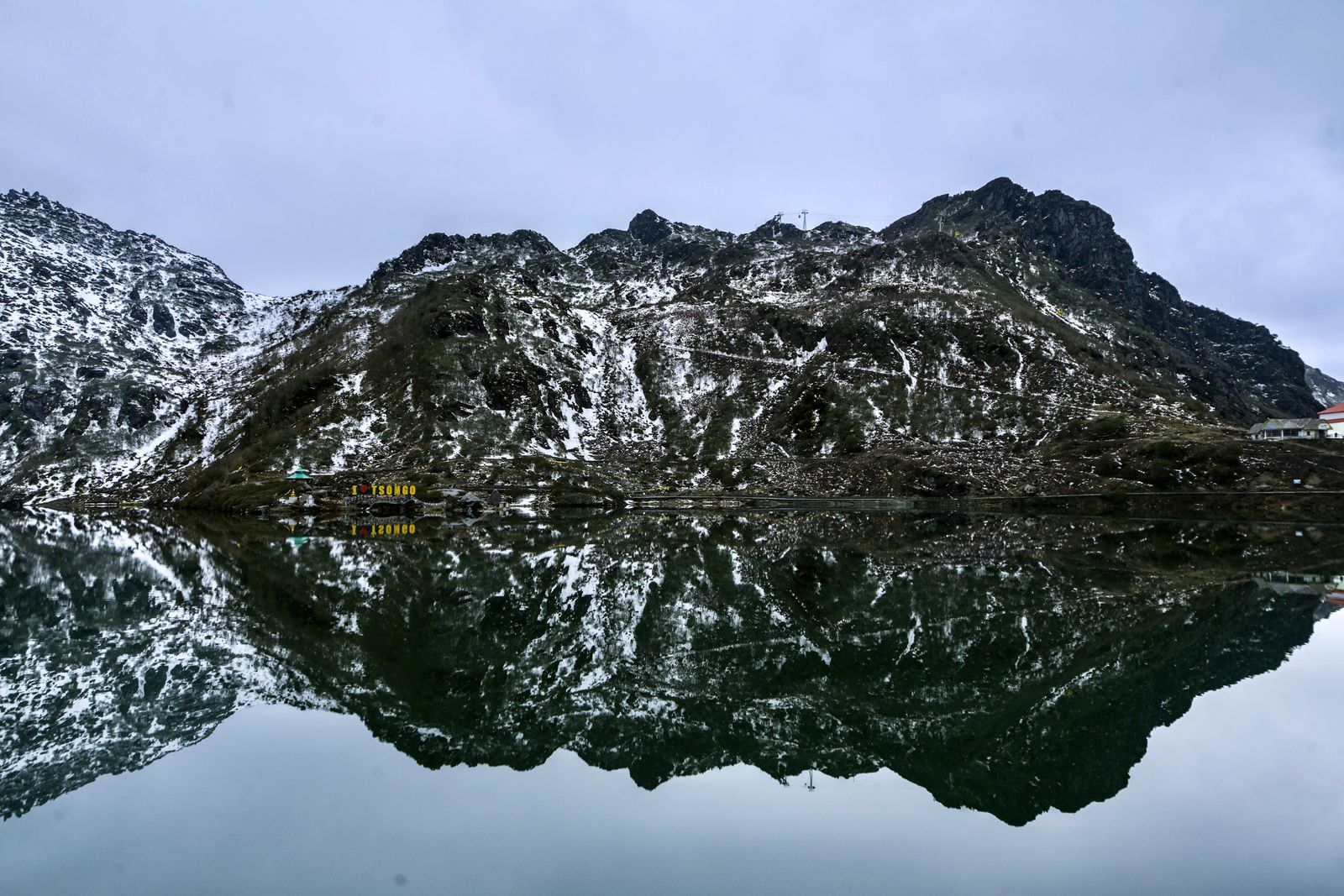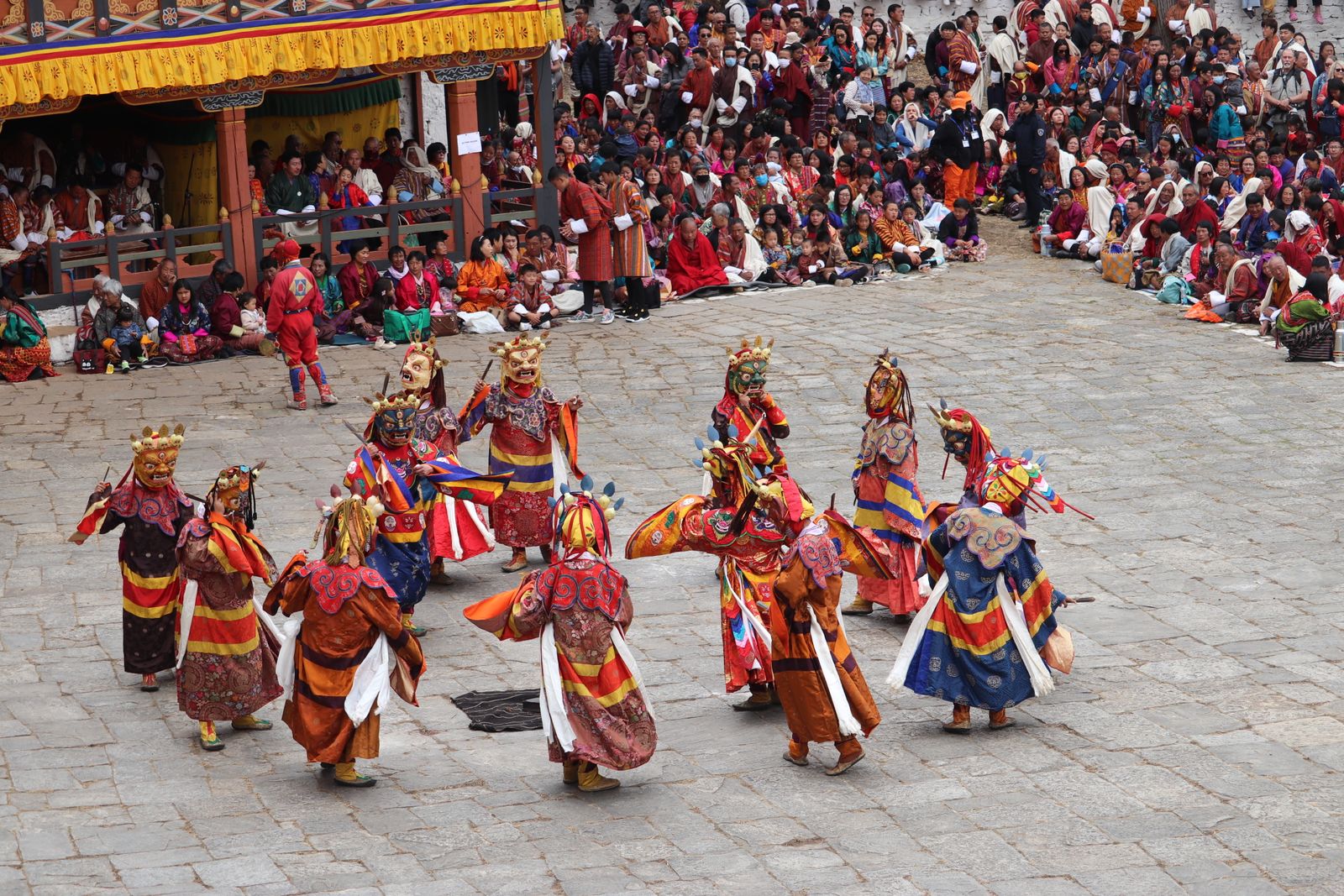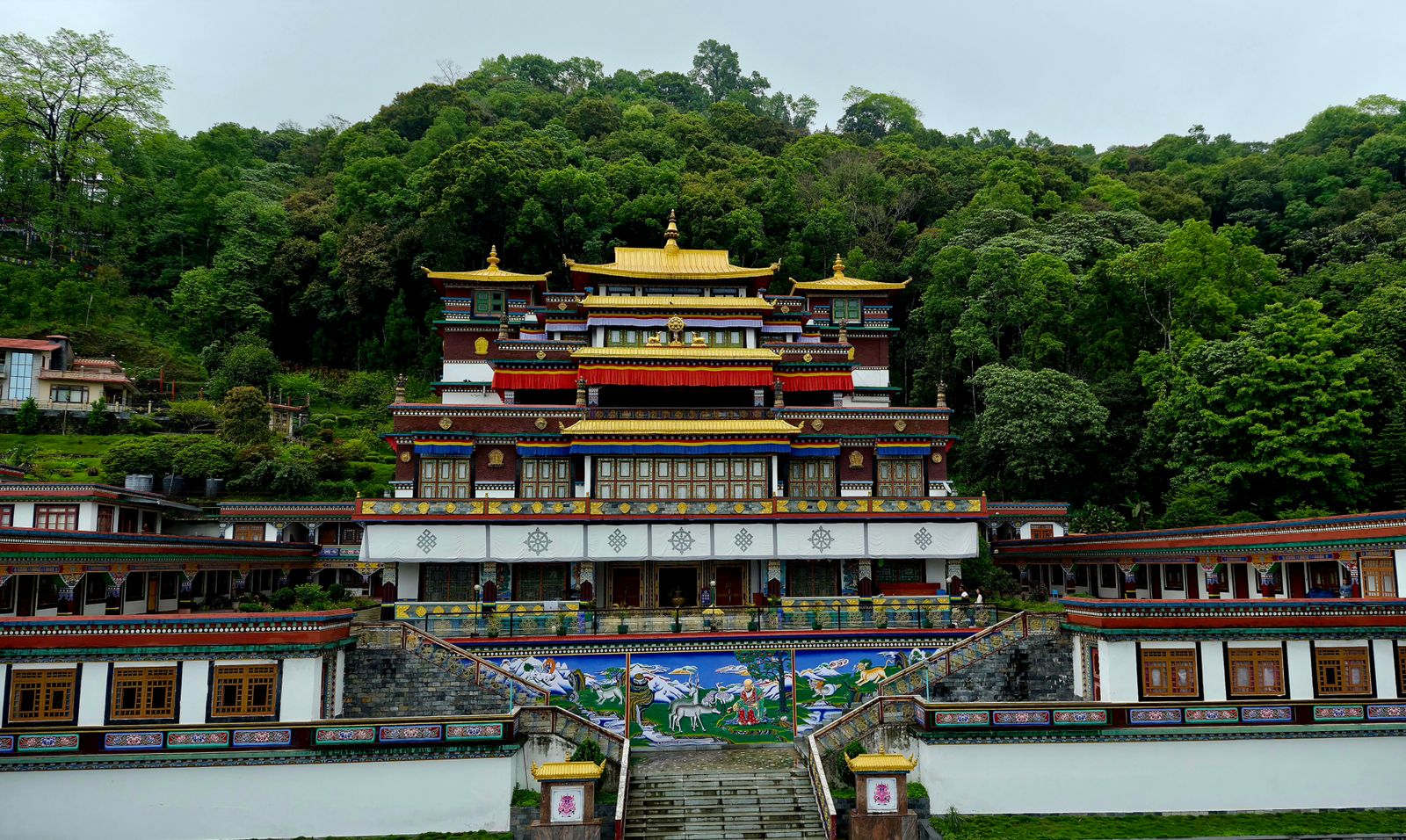
Lingdum Monastery in Sikkim, its gold roofs and white walls rising in tiers above a painted stair and forest

Signature journey · 7 nights

Monasteries of the East

Sikkim's great monasteries from east to west, one a day, with time to sit through the prayers.

  • 7nights, private
  • 3bases
  • 2,150 mhighest point
  • ₹1,40,000from, per person, twin share

In short

Is Monasteries of the East right for you?

Monasteries of the East is a seven-night private journey through Sikkim's great monasteries, from Bagdogra (IXB) up to Gangtok and then west as far as Yuksom. You spend three nights in Gangtok for Rumtek, Enchey and the ruins at Tumlong, one at Ravangla for Ralang and Doling, and three at Pelling for Tashiding, Pemayangtse, Sangachoeling and Dubdi.

Made fortravellers drawn to Tibetan Buddhism, couples who prefer history to shopping, families with teenagers, second visits to Sikkim and photographers content to keep the camera down in the halls.

Not for you ifyou want snow, a high lake or North Sikkim, choose Sikkim, End to End; with three nights to spare, Gangtok and the High Lake gives you Rumtek and Tsomgo.

Sikkim was made by monks. Three lamas crowned its first king, and for three centuries the kingdom's story was written as much in its monasteries as in its palaces. It is still kept there: in the prayer halls, the carved thrones and the chortens, more than in any museum. This journey reads that story backwards. The monasteries grow older as you travel, from the Karmapa's Rumtek of 1966 to houses raised before the kingdom had a fixed capital, so each day explains the one before it.

It is a slow week by design. One great house a day, with time to sit through the assembly instead of photographing the door. We ring each monastery the evening before to ask when prayers begin, send word to Dubdi's lone monk that you are coming, and give you guides who can tell a Kagyu hall from a Nyingma one at a glance. By the end you will know why you walk round Rumtek's stupa one way and the Bon chortens at Kewzing the other.

Length
7 nights, 8 days
Starts and ends
Bagdogra airport to Bagdogra airport
Best months
October to mid December, March to May
Avoid
Mid June to mid September (monsoon)
Pace
Moderate
Longest drive
About 5.5 hours, 688 km in all
Highest point
Pelling ridge, 2,150 m
Group
Private, 2 to 6 guests

The route

Why Gangtok comes first

East to west is both the road and the story told in reverse. Gangtok comes first because its monasteries are the best documented, the Namgyal Institute explains everything that follows, and three nights at about 1,550 m make the early starts easy. Ravangla splits the 115 km run to Pelling and puts Ralang and Tashiding on the way. Pelling comes last, for three nights beside the oldest houses. The price is the longest drive on the final morning, so the car leaves at 06:00.

Sikkim Kanchenjunga 8,586 mJomolhari 7,326 m Bagdogra airport 1 Gangtok · 3 nights 2 Ravangla · 1 night 3 Pelling · 3 nights
your bases, in orderby roadborders not drawn

Where the nights go

Read the place guidesGangtok & East SikkimPelling & West Sikkim

The shape of the journey

From 126 m to 2,150 m, day by day

You sleep between 1,550 m and 2,015 m. The highest you go is 2,150 m, on day 6 at Pelling ridge, and you come down again to sleep.

Built around

Gangtok, Ravangla and Pelling at their best

  • Morning prayers at Rumtek, the Karmapa's seat since 1966, at the hour its office gives us the night before

  • Labrang near Tumlong, on its original frame since the 1840s, above the ruins of a royal capital

  • Sunset at Doling Gompa, founded in 1718 and still looked after by the family of its first lama

  • Tashiding's 41 chortens on a heart-shaped hill between the Rathong Chu and the Rangeet

  • Three nights at a king's 1942 retreat, a few minutes on foot from Pemayangtse's morning assembly

  • Dubdi, Sikkim's oldest standing monastery, opened for you by its only resident monk

Day by day

Day by day, Gangtok to Pelling

The longest drive is day 8, Pelling to Bagdogra airport, about 5.5 hours with stops.

  1. Day 1 · Bagdogra airport Gangtok

    From the plains to Sikkim's last royal capital

    • 124 km, about 4.5 h
    • High point 1,650 m
    • Sleep at 1,550 m
    • Easy
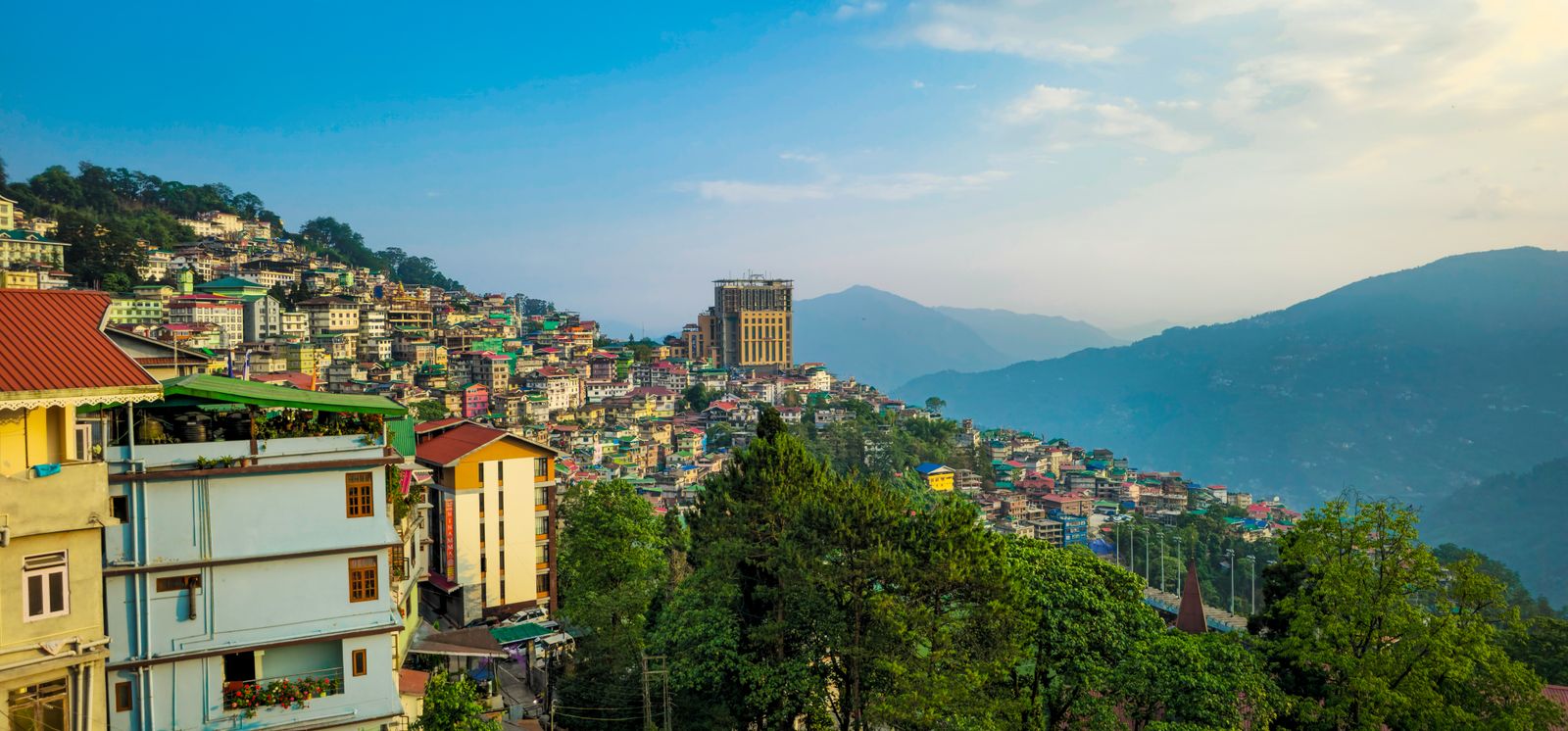
    Gangtok's painted houses stacked along a green ridge in evening light, with the hills of East Sikkim fading into haze

    Your driver meets you at the Bagdogra arrivals exit, name board in hand, beside a Sikkim-registered Innova Crysta stocked with chilled water and a lunch box, vegetarian or not as you told us. Gangtok is four and a half hours away up the Teesta, the state line crossed at Rangpo. Near 17:15 you reach The Elgin Nor-Khill, which a Chogyal built as his guest house in 1932. At 18:30 your guide joins you for tea and sets out the manners of the week, which are simple and worth learning once. Shoulders and knees covered in every hall. Shoes off where others take theirs off, and thick socks, because the floors are cold at dawn. A khada, or anything you give, offered with the right hand or with both. Stupas, chortens and prayer wheels kept on your right, except at the Bon house on day 5. Never point at a sacred image with one finger, and ask before a camera comes out. While you dine, we confirm tomorrow's prayer hour with Rumtek's office.

    The momentTea with your guide and a first lesson: how to offer a khada, and why nearly every stupa this week stays on your right.

    InsiderSikkim's ₹50 tourist fee is collected by the hotel at check-in, not at the border. We have paid it ahead, so the desk has nothing to ask of you tonight.

    If the weather turnsIf slides close NH10, police divert traffic by Moonsong and Gorubathan. It is slower, so we put dinner in the car and move tomorrow's Rumtek start to 07:00.

    Meals
    Lunch, Dinner
  2. Day 2 · Gangtok

    The Karmapa's seat, and a chorten of 108 wheels

    • 50 km, about 2 h
    • High point 1,690 m
    • Sleep at 1,550 m
    • Easy
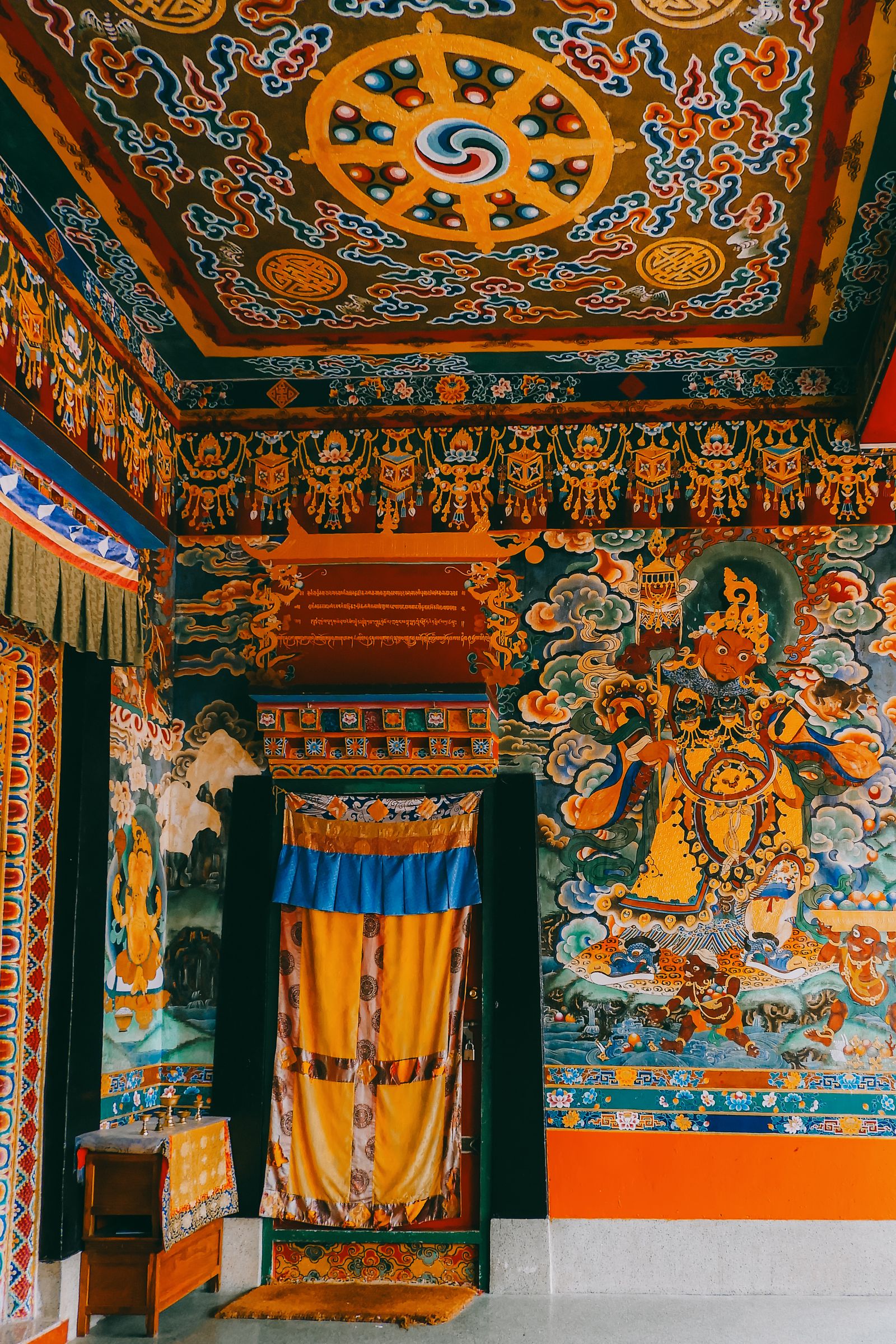
    The porch of Rumtek Monastery, a painted ceiling mandala above a guardian king mural and a curtained door to the hall

    A flask of tea rides with you at 06:00 on the 22 km to Rumtek, which faces Gangtok from across the Ranipool valley. Photo ID at the gate. The 16th Karmapa reached Sikkim from Tibet in 1959, bringing relics and sacred objects out of Tsurphu, his seat there, and opened this monastery as his seat in exile on Losar in 1966. You arrive for the morning prayers at the hour the office gave us and sit along the back wall while the assembly chants. Afterwards your guide leads you to the golden stupa that holds the Karmapa's own relics, about four metres of gold, turquoise and coral. Facing it across the courtyard is the monks' college, the Karma Shri Nalanda Institute for Higher Buddhist Studies; ask your guide what its students are reading this term. Breakfast at the house by 09:30, then a quiet late morning. At 14:30, on any day but a Sunday or a government holiday, the Namgyal Institute of Tibetology opens its museum: shoes off, cameras away, a silver Manjushri and painted scrolls of the Namgyal kings. At 16:00 climb the lane, about 500 m, to Do-drul Chorten, raised in 1945 and 1946 by Trulshik Rinpoche to quiet a haunting, and set its 108 wheels turning as the light goes.

    The momentThe chant rising and falling in Rumtek's hall while you sit against the back wall, and nobody hurries you out.

    InsiderThe Namgyal Institute's painted scrolls of the kingdom's history are the best primer for the week. Nearly every king in them reappears at a monastery or ruin to the west.

    If the weather turnsIf Rumtek's assembly is away at a ceremony, we sit in on prayers at Lingdum, the Zurmang Kagyu house at Ranka completed in 1999, and see Rumtek's stupa after lunch.

    Meals
    Breakfast, Lunch, Dinner
  3. Day 3 · Gangtok

    Enchey at dawn, then north to Tumlong

    • 97 km, about 3.5 h
    • High point 1,976 m
    • Sleep at 1,550 m
    • Easy
    Painted rafter ends and carved brackets in blue, gold and red under the eaves of Enchey Monastery in Gangtok

    At 06:30 you are at Enchey, 3 km above the market, for the morning prayers of a Nyingma house of about 90 monks under a gilded roof. Its founding lama, the story goes, flew here from Maenam Hill, the ridge you will see from Ravangla. Breakfast at 07:45, and at 08:45 the car turns onto the North Sikkim Highway. Phodong, 38 km and about 1 hour 40 minutes away, was the leading Karma Kagyu monastery in Sikkim until Rumtek rose, and your guide walks you through its old murals. Two kilometres above stands Labrang, completed in the 1840s by a king's son in memory of Lhatsun Chempo, the lama who crowned the first Chogyal. It keeps its original frame and a bronze of Guru Rinpoche in wrathful form. A picnic on the flat ground outside, then the palace ruins at Tumlong, capital of the kingdom until 1894. Back at the Nor-Khill by 16:00.

    The momentLabrang's original timber pillars, braced with steel, holding up a hall that has stood since the 1840s.

    InsiderEvery Nyingma monastery in Sikkim, Enchey included, falls under Pemayangtse, 110 km west, where you sit on day 6. The week ends at the head of the family.

    If the weather turnsIf a slide shuts the road north, we keep to Gangtok: thangka painters at work in the Directorate of Handicrafts, except on Sundays and government holidays, and MG Marg before dinner.

    Meals
    Breakfast, Lunch, Dinner
  4. Day 4 · Gangtok Ravangla

    Ralang's two monasteries, and Doling at dusk

    • 105 km, about 4 h
    • High point 2,040 m
    • Sleep at 2,000 m
    • Easy
    Copper prayer wheels tied with white khadas in a green painted frame at a Buddhist shrine in Ravangla, South Sikkim

    Breakfast at 08:00, bags in the car by 08:45. The road drops to the Teesta at Singtam, then climbs over the Temi ridge to Ravangla, about 70 km and three hours. Lunch at The Barfung Retreat at 12:30. At 13:45 you drive 10 km to Ralang. The new monastery, Palchen Choeling, was raised in 1995 by the 12th Gyaltsab Rinpoche, one of the senior lamas of the Karma Kagyu, and houses several hundred monks; inside, a gilded Buddha rises almost two storeys. A kilometre away, among Bhutia houses and small gardens, stands old Ralang of 1768. Legend says the Karmapa, blessing the fourth Chogyal's return at Tsurphu in Tibet, threw a handful of grain into the air, and it came down here. An hour before sunset, near 15:45 in November and 17:00 in April, the car takes you the short way from the house to Doling Gompa, founded in 1718, which descendants of its first lama still look after. Sunset from its steps.

    The momentSunset from the steps of Doling Gompa, built in 1718 and still in the care of its founding lama's family.

    InsiderBelow Ralang lies the hot spring where the third Chogyal, Chakdor Namgyal, was bled to death in 1716 on his half-sister's orders. Guides rarely tell it unless asked.

    If the weather turnsIf rain settles on Ralang, we stay inside the great hall through the afternoon session and move Doling to 07:00 tomorrow, before the drive west.

    Tonight
    The Barfung Retreat, Ravangla
    Meals
    Breakfast, Lunch, Dinner
  5. Day 5 · Ravangla Pelling

    A Bon house, then Tashiding on its hill

    • 80 km, about 3.5 h
    • High point 2,114 m
    • Sleep at 2,015 m
    • Moderate
    Prayer flags above a glacial lake and snow peaks in the Sikkim Himalaya

    At 09:00 you are at the gate of Buddha Park as it opens, inside the old Rabong monastery grounds, where the Dalai Lama consecrated the great copper Buddha in 2013; give the spiral gallery beneath it half an hour. At 10:30 stop near Kewzing, 9 km on, at the Bon monastery known as Yung Dung, one of very few in Sikkim, where the older faith of Tibet is still taught to young students. Then down to the Rangeet at Legship. Reshi, by the river, is the starting point for Khandro Sangphuk, the Secret Cave of the Dakini, about 6 km away: the southern of the four sacred caves around Tashiding, where pilgrims pray for long life. It needs a spare hour or two, so tell us at booking if you want it. At 12:30 a picnic in Tashiding's bazaar. The last stretch is on foot: a gentle path past mani walls and prayer wheels to the monastery on its hill between the Rathong Chu and the Rangeet. Ngadak Sempa Chempo, one of the three lamas of the coronation, founded it in 1641. Walk slowly among its 41 chortens and the flagstones carved with Om Mani Padme Hum. By 16:30 you are at Pelling.

    The momentStanding before Thongwa Rangdrol at Tashiding, the chorten that tradition says frees anyone who simply looks at it.

    InsiderAt Kewzing, walk the circuit anticlockwise. Bon pilgrims traditionally turn the opposite way to Buddhists, and here the old direction is the polite one.

    If the weather turnsIf the Legship road runs slow after rain, we drop Kewzing and keep Tashiding. If Tashiding's hill sits in cloud, its chortens are as fine in mist as in sun.

    Meals
    Breakfast, Lunch, Dinner
  6. Day 6 · Pelling

    Pemayangtse at prayer, Sangachoeling by forest path

    • 15 km, about 1 h
    • High point 2,150 m
    • Sleep at 2,015 m
    • Moderate
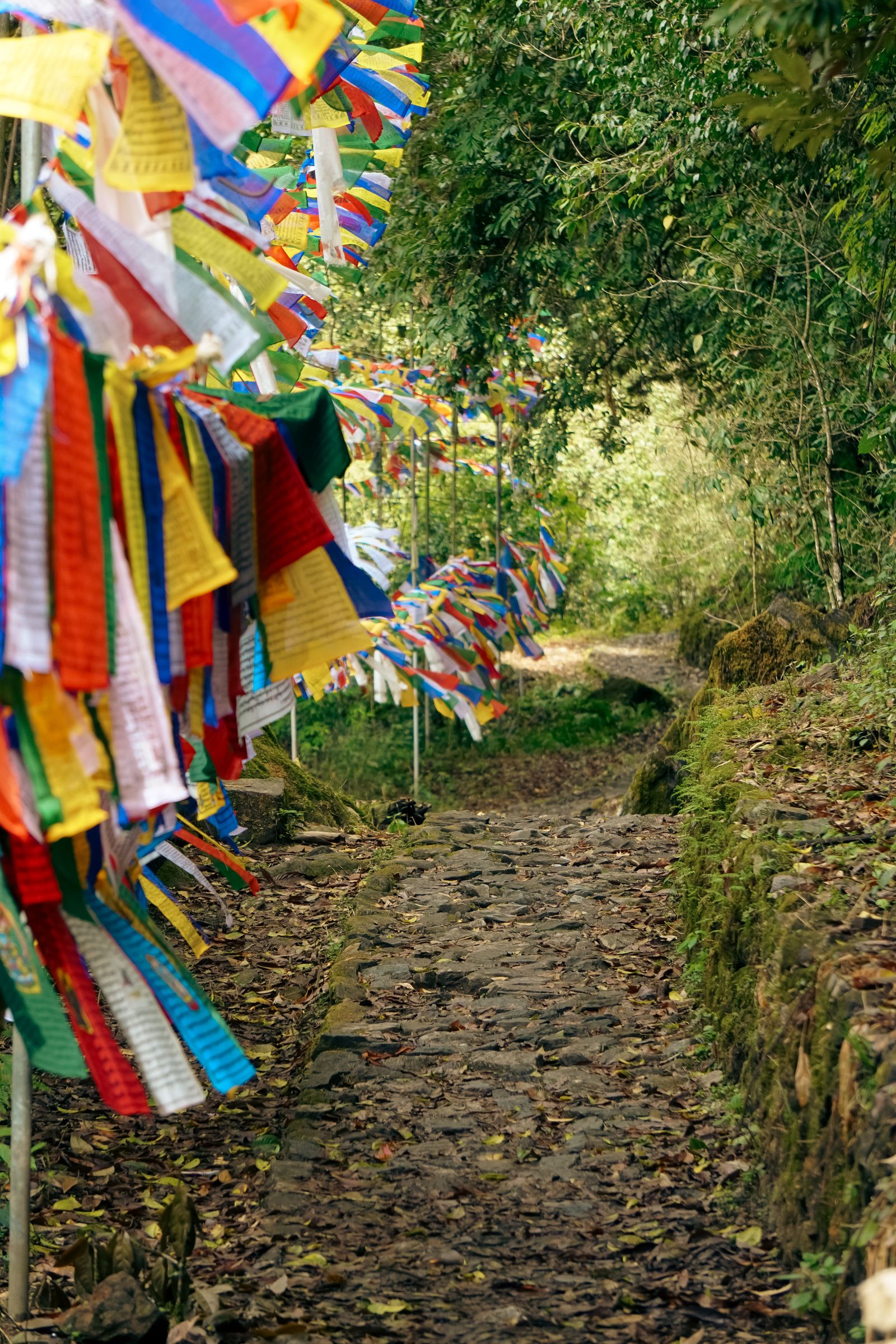
    A stone footpath through forest in Sikkim, lined on one side by hundreds of prayer flags in five colours

    At 06:30 you walk the few minutes from the house to Pemayangtse, head of Sikkim's Nyingma monasteries, and sit through the morning assembly at the hour we asked about yesterday. Afterwards your guide climbs with you to the top floor, where Zangdok Palri, a carved wooden palace of Guru Rinpoche, fills the room. Breakfast at 08:30. At 10:30 walk fifteen minutes through forest to Rabdentse, the capital from 1670 to 1814: the palace to the north, three royal chortens on a single platform. Lunch at the house. At 14:30 the car takes you to the trailhead, and a forest path of 45 minutes to an hour climbs to Sangachoeling, founded in 1697, with clay statues from that century. By custom only men enter the hall; everyone may sit in the courtyard above the valley.

    The momentThe forest opening at the top of the path onto Sangachoeling's prayer flags, with Pemayangtse small on the ridge below.

    InsiderLook at Pemayangtse's rear left corner: the roof is chained down to a concrete floor against the monsoon winds. Most visitors walk straight past it.

    If the weather turnsIf the path to Sangachoeling is wet and slippery, we drive to the Chenrezig statue, where a shorter forest trail leads to the monastery, or book the house spa instead.

    Meals
    Breakfast, Lunch, Dinner
  7. Day 7 · Pelling

    Dubdi, the coronation throne and Khecheopalri

    • 82 km, about 3.5 h
    • High point 2,100 m
    • Sleep at 2,015 m
    • Moderate
    A stone path between flowerbeds and chortens leads to Dubdi Monastery above Yuksom, West Sikkim

    Leave at 07:30 for Yuksom, 34 km and about 1.5 hours north, where Sikkim began. At 09:15 you start up the path to Dubdi, an hour's climb of about 3 km through cardamom and oak, and its one resident monk, told of your visit yesterday, opens the hall for you: statues of the three lamas who made the first king, and a green image of Lhatsun Chempo. Down by 11:30 to Norbugang, the coronation throne under its old pine, and little Kathok Lake a short walk away. Lunch at 12:45 in a Yuksom home kitchen. At 15:30 you reach Khecheopalri, 21 km away. The Lepcha story of the lake begins with a couple stripping nettle bark who saw two conch shells fall from the sky; the ground shook, and spring water rose to fill the hollow. In October, after the cardamom harvest, the villages give thanks here at Chho-Tsho. Walk the covered jetty turning the prayer wheels as the forest darkens. Farewell dinner at the house at 19:30.

    The momentThe top seat of the Norbugang throne, kept for Lhatsun Chempo and set higher than the king he crowned.

    InsiderNorbugang's chorten was built from soil and stones carried from every corner of the kingdom, then consecrated for 21 days. One circuit takes in all of Sikkim.

    If the weather turnsIf rain makes the Dubdi path unsafe, we stay low: Norbugang, Kathok Lake and tea in a Yuksom home, with Khecheopalri moved earlier while the light holds.

    Meals
    Breakfast, Lunch, Dinner
  8. Day 8 · Pelling Bagdogra airport

    Pelling to Bagdogra, leaving at 06:00

    • 135 km, about 5.5 h
    • High point 2,015 m
    • Easy
    The Kanchenjunga range catching first sun above dark ridges, seen from Pelling under a clear deep blue dawn sky

    Tea at 05:30 and a breakfast box for the road; your bags went into the car last night. The driver has already heard from others on the road how Melli looks this morning. You leave at 06:00 as the light reaches the range, drop through Gyalshing to the Rangeet at Legship, 611 m, and follow the river down to Jorethang. At Melli you cross out of Sikkim, where foreign guests may be asked for their permit. From there NH10 keeps company with the Teesta to Sevoke and the plains. You reach Bagdogra between 11:30 and 12:00, so book a flight that leaves from 14:00: Pelling is the week's furthest point from the airport, and 135 km of river road allows no shortcuts. Before you go, your guide hands you one sheet listing every monastery you sat in, its school and its year.

    The momentThe range turning pink behind the car as it drops off the Pelling ridge at 06:00, the week's monasteries somewhere below.

    InsiderBooking apps sometimes still offer Pakyong, near Gangtok, as Sikkim's airport. In September 2026 nothing was on sale from it, so fly into and out of Bagdogra, and ask us before you pay for any other route.

    If the weather turnsIf NH10 is shut below Melli, we turn at Jorethang for the Darjeeling road, climb through Ghum and descend by Kurseong, leaving at 05:30 to keep the flight.

    Tonight
    Homeward
    Meals
    Breakfast

Where you will stay

Where you sleep, three houses

The Elgin Nor-Khill, The Barfung Retreat and The Elgin Mount Pandim. Prefer a different house on any night? Say which and we re-price it.

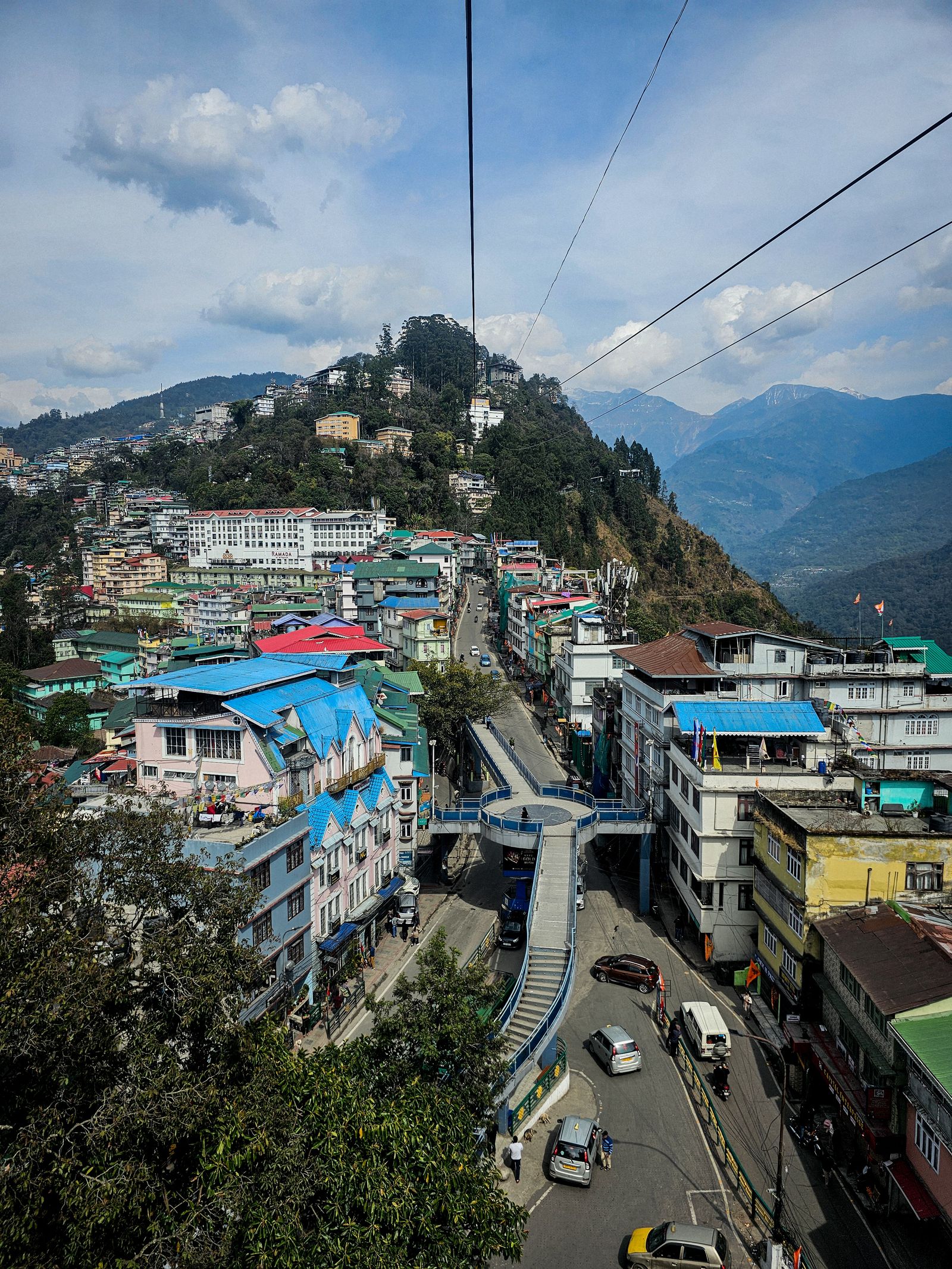
  1. Gangtok seen from above, coloured buildings stacked down the ridge with a footbridge over the road and hills beyond
    Gangtok from above, the town the Nor-Khill sits in the middle of.Ahad Hasan / Pexels
    3 nights

    The Elgin Nor-Khill

    Gangtok

    A Chogyal built it in 1932 for his kingdom's guests: the fitting base for a week among the monasteries his family endowed.

    Ask for A Deluxe Double/Twin with breakfast and dinner; a Deluxe Suite for a sitting room before 06:00 starts

  2. The snow summit of Kangchenjunga rising above dark forested Sikkim ridges with white cloud along its flanks
    The snows above the Ravangla hills, the range this side of Sikkim looks to.Subhrajyoti Paul / Pexels
    1 night

    The Barfung Retreat

    Ravangla

    A family-run house of cottages at Barfung, below Ravangla and close to Doling Gompa of 1718. Plain, warm and cooked for by hand.

    Ask for The Suite or a Deluxe room, with heaters and extra quilts arranged before you arrive

  3. Wicker chairs and a low table on the lawn at The Elgin Mount Pandim in Pelling, with cloud on the wooded ridge behind
    The lawn at Mount Pandim, looking into the cloud on the Pelling ridge.flowcomm, CC BY 2.0, via Wikimedia Commons
    3 nights

    The Elgin Mount Pandim

    Pelling

    The royal retreat of 1942 on the slope facing Pemayangtse: dawn prayers are a short walk away, not a drive.

    Ask for A Deluxe Double/Twin in the main building, near the dining room and the gate for early walks

Price and what it covers

from₹1,40,000

per person, twin share. How our prices are built

About £1,090 or US$1,460 at the rates of 19 September 2026.

Included

  • One Innova Crysta or similar on Sikkim plates for all eight days, with a driver from the hills; fuel, tolls, parking and his allowances paid
  • A Pelling taxi-syndicate car and driver for the local round on day 6, as Pelling's rules require for sightseeing
  • Seven nights with breakfast and dinner: The Elgin Nor-Khill (3), The Barfung Retreat (1) and The Elgin Mount Pandim (3), in the rooms named above
  • Lunch every day, from the packed box on day 1 to the Yuksom home kitchen on day 7
  • A licensed guide in Gangtok on days 2 and 3, and one for South and West Sikkim on days 4 to 7, both chosen for how well they read a monastery
  • Entry at Rumtek, the Namgyal Institute museum, Buddha Park and Pemayangtse, and Sikkim's ₹50 tourist fee
  • A white khada for each guest, and butter lamps at each monastery where lamps are offered
  • Calls to each monastery for its prayer times, and word sent ahead to Dubdi's resident monk and to the family who look after Doling
  • For foreign and OCI guests, Sikkim's permit filed with you on e-FRRO, printed for the posts at Rangpo and Melli
  • A name board at the Bagdogra arrivals exit, and a 24x7 line to your designer from landing to take-off

Not included

  • Flights to and from Bagdogra
  • Travel insurance
  • Tips for your driver and guides
  • Donations beyond the offerings we include, and camera fees where a monastery charges them
  • Drinks, laundry, spa treatments and room service
  • Tsomgo Lake, Nathu La and the helicopter, all optional

Make it more Arranged on request, priced in your quote

  • Tsomgo Lake, with a fourth Gangtok nightThe glacial lake at 3,753 m on a morning of its own, permit filed for you. Tsomgo permits go only to children over five.
  • Time it to a masked danceThe Kagyed chaam at Rumtek and Tsuklakhang, and the dances at Phodong, come just before Losoong (9 to 13 December 2026); the Gutor chaam at Rumtek falls two days before Losar, and Pemayangtse dances in the same February week; Ralang dances for Mahakala in November.
  • Thangka painters at workAn hour at Gangtok's Directorate of Handicrafts, set up in 1957, watching students paint and carve. Closed on Sundays and government holidays.
  • Fly up by helicopterThe state service from Bagdogra to Burtuk heliport, on days it flies, with your cases following by car.

Before you go

Before you go on this route

Choose another journey ifIf you want snow, a high lake or North Sikkim, choose Sikkim, End to End; with three nights to spare, Gangtok and the High Lake gives you Rumtek and Tsomgo.

  1. Dress for the halls: shoulders and knees covered, and shoes that slip off easily. Floors are stone or timber and cold at 06:30, so wear thick socks.
  2. Photography: ask before you raise a camera, and expect many halls to say no. The Namgyal Institute museum allows no shoes, no photographs and no video.
  3. Sangachoeling admits only men to its hall, by long custom. Women walk up with us and sit in the courtyard, where the view is the same for everyone.
  4. Indian guests need only photo ID on this route. Foreign and OCI guests file Sikkim's permit online through e-FRRO about 30 days before reaching the state; the rules in full are at /plan/permits-and-visas/.
  5. Weather: the halls are unheated at 06:30 in every month, and Pelling nights fall to about 3 °C in December. Bring layers, a warm hat and, from November, a down jacket.
  6. Walking: Dubdi is an hour uphill, Sangachoeling 45 minutes to an hour, Tashiding a gentle path. Shoes with grip matter more than fitness.
  7. Carry cash for offerings, canteens and village kitchens; cards work at both Elgin houses. Mobile signal is patchy around Yuksom and Tashiding.
  8. Tipping is your choice, and the offerings at each hall are already in your price. Our suggested ranges for drivers and guides are at /plan/before-you-travel/#tipping.

Questions

Six questions about Monasteries of the East

Ask on WhatsApp
Monasteries of the East or Sikkim, End to End?

Choose this journey if the halls themselves are the point: seven nights, never going above about 2,150 m, with an assembly most mornings and no climb longer than an hour. Sikkim, End to End spends ten nights on the whole state, with Tsomgo at 3,753 m, two nights in Lachung for Yumthang, a walk up Tendong and simpler rooms in the north. It passes Pemayangtse, but gives no morning to sitting through prayers.

How many steps and climbs are there?

Most days bring short walks and plenty of monastery steps, often on cold floors in socks. The real climbs are two: Dubdi, about an hour uphill for some 3 km through cardamom and oak, and Sangachoeling, 45 minutes to an hour through forest. Tashiding's path is gentle, and Rabdentse is fifteen minutes through the trees. Anyone who prefers not to climb can keep to Norbugang and the Pemayangtse halls while we keep the car close.

Can we sit in on the morning prayers, and what if the monks are away?

Usually, yes, if you are quiet and dressed for it. Assemblies begin early, but the hour moves with the season and the ritual calendar, and monks are sometimes away at ceremonies elsewhere, so we ask each monastery the evening before and seat you at the back. If Rumtek's assembly is away, you sit in at Lingdum instead; if rain settles on Ralang, you stay through its afternoon session. Photography during prayers is almost never allowed.

Can women go into every hall on this route?

All but one. By long custom only men enter the hall at Sangachoeling, and its inner sanctum is kept for the local Bhutia and Lepcha communities. Women walk up the forest path with us and sit in the courtyard, where the view over the valley is the same for everyone. Rumtek, Enchey, Ralang, Tashiding, Pemayangtse and Dubdi welcome every visitor inside, and we tell each couple and family before they book.

Which weeks put a masked dance on the route?

The dances follow the Tibetan calendar, so they move each year. In 2026 the Kagyed chaam at Rumtek and Tsuklakhang, and the dances at Phodong, come just before Losoong, 9 to 13 December. Two days before Losar, Rumtek dances the Gutor chaam, the battle of good and evil that ends with evil burnt. Enchey holds Detor Cham in January or February, Pemayangtse dances on the 28th and 29th days of the twelfth month, before Losar, and Ralang dances for Mahakala in November. Tell us your window and we check that year's dates.

Will teenagers enjoy a week of monasteries?

Most do, because the week is not only halls. There is a 40 m copper Buddha at Ravangla, a ruined royal capital in the forest at Rabdentse, a stone coronation throne at Yuksom, an hour's climb to a monastery opened by its only monk, and a lake whose prayer-wheel jetty they can walk at dusk. Mornings start early, so afternoons stay slow. Teenagers who want snow or a high lake will be happier on Sikkim, End to End.

Sources we checked for this itinerary (48)
  1. Rumtek: 16th Karmapa arrived from Tibet in 1959, seat inaugurated on Losar 1966, golden stupa with his relics; opposite it the Karma Shri Nalanda Institute for Higher Buddhist Studies; armed security
  2. Rumtek open 06:00 to 18:00, entry ₹10, 22 km from Gangtok, daily morning prayers, golden stupa thirteen feet high with turquoise and coral
  3. Namgyal Institute of Tibetology: foundation stone 1957, opened 1 October 1958
  4. Namgyal Institute museum open 10:00 to 16:30, no shoes, no photographs or video; silver Manjushri; thangkas on the history of Sikkim and the Namgyal dynasty; open on Sundays and Sikkim government holidays only in the peak tourist seasons
  5. Do-drul Chorten built 1945 to 1946 by Trulshik Rinpoche to dispel a haunting, 108 prayer wheels, about 500 m above the Namgyal Institute
  6. Enchey: built 1909, Nyingma, about 90 monks, gilded cupola, founding lama Drupthob Karpo said to have flown from Maenam Hill; under Pemayangtse's jurisdiction; Detor Cham in January or February; 3 km from the market
  7. Phodong 38 km and about 1 hour 40 minutes from Gangtok, the leading Karma Kagyu monastery until Rumtek; Tumlong palace ruins close by; Kabi and Seven Sisters on the same highway
  8. Phodong: about 260 monks and a collection of old murals
  9. Labrang: built 1826 to 1843 by Gyalshe Rigzing Chempa, son of King Tsugphud Namgyal, in memory of Lhatsun Chempo; original structure retained, pillars reinforced with steel, bronze Karma Guru, museum; 2 km from Phodong
  10. Tumlong, capital before Gangtok; capital moved to Gangtok in 1894
  11. New Ralang (Palchen Choeling) built 1995 by the 12th Gyaltsab Rinpoche; old Ralang nearby
  12. Ravangla: Buddha Park 09:00 to 17:00, ₹50 Indians and ₹100 foreigners; New Ralang about 500 monks, open 08:00 to 17:00, Mahakala dance each November; old Ralang 1768 and the Karmapa's grain legend; Doling Gompa 1718 near the Barfung Retreat, kept by the founding lama's descendants; Gangtok 66 km
  13. Chakdor Namgyal killed in 1716 by bloodletting at the Ralang hot spring; Rabdentse capital 1670 to 1814, destroyed by Gurkha armies, ASI monument
  14. Buddha Park of Ravangla: 40 m statue of 60 tonnes of copper, consecrated 25 March 2013 by the 14th Dalai Lama, within the Rabong monastery complex, spiral gallery museum
  15. Kewzing has a Bon monastery (this stub's founder and year, 1974 and Gomchhen Ongden, conflict with other sources and are no longer used in the copy)
  16. Bon pilgrims traditionally circumambulate counterclockwise
  17. Tashiding: founded 1641 by Ngadak Sempa Chempo, extended 1717, hill between the Rathong Chu and the Rangeet at 1,465 m, 41 chortens, Thongwa Rangdrol, carved mani flagstones, gentle footpath past mani and prayer wheels, Bumchu in the first Tibetan month
  18. Pemayangtse: planned 1647, enlarged 1705, pure-lineage monks, head lama anointed the Chogyals, 108 monks, Zangdok Palri by Dungzin Rinpoche over five years, rear roof corner chained to concrete, cham on the 28th and 29th of the 12th month, heads Sikkim's Nyingma monasteries, second-son decree
  19. Sangachoeling founded 1697, uphill walk of about 4 km and 45 minutes, 17th-century clay statues, only men inside and the inner sanctum for Bhutia and Lepcha; a path also runs from the Chenrezig statue; Pelling local car rules
  20. Sanga Choeling reserved for men only, Nyingma, 'island of the secret mantra teachings'
  21. Dubdi founded 1701, an hour's walk (3 km) above Yuksom, the only resident monk must be informed in advance, statues of the three lamas and a green image of Lhatsun Chempo, 2,100 m
  22. Norbugang throne of four seats under a pine, top seat for Lhatsun Chempo; chorten of earth and stones from all Sikkim consecrated over 21 days; Kathok Lake water used for the anointing
  23. Khecheopalri Lake with a covered jetty lined with prayer wheels; the Lepcha legend of a couple peeling nettle bark who saw two conch shells fall before the spring rose; Chho-Tsho held in October after the cardamom harvest
  24. Room rates checked with The Elgin Nor-Khill's published sheet for 2025-26 (Deluxe Double/Twin, MAP)
  25. The Elgin Nor-Khill built in 1932 by the Chogyal as the royal guest house
  26. Room rates checked with The Elgin Mount Pandim's published sheet for 2025-26 (Deluxe Double/Twin, MAP)
  27. The Elgin Mount Pandim built 1942 by the King of Sikkim as a royal retreat, opposite Pemayangtse
  28. The Barfung Retreat ranked first in Ravangla, 4.6 from 289 reviews (September 2026)
  29. The Barfung Retreat: above Barfung Primary School, Ravangla subdivision; Standard, Deluxe, Super-Deluxe and Suite rooms
  30. The Barfung Retreat: 11 rooms in 3 cottages, reviews to June 2026; room rates checked for 2026
  31. Vehicle rates checked against a Sikkim operator's published 2026 point-to-point fares
  32. Foreign nationals and OCI holders obtain the Sikkim RAP online through e-FRRO from January 2026
  33. Sikkim ₹50 tourist fee from March 2025, collected at the accommodation
  34. NH10 landslide diversion via Moonsong and Gorubathan (June 2026)
  35. Pakyong Airport: zero movements in 2025-26 and no scheduled commercial flights in operation or open for booking (read September 2026)
  36. Sunset at Ravangla (27.31 N, 88.36 E) computed with the NOAA equations: about 16:45 in mid November and mid December, 17:08 in mid October, 18:00 in mid April
  37. STDC helicopter Bagdogra to Burtuk: service and fare checked (November 2025)
  38. Directorate of Handicrafts and Handloom founded 1957, closed Sundays and government holidays
  39. Road distances (OSRM, September 2026): Gangtok to Rumtek 22 km; Gangtok, Enchey, Phodong and Labrang loop 97 km; Gangtok via Temi to Ravangla and Ralang 99 km; Ravangla via Buddha Park, Kewzing and Tashiding to Pelling 74 km; Pelling, Yuksom and Khecheopalri loop 82 km; Pelling to Bagdogra 134 km
  40. Elevations from the Copernicus DEM: Rumtek about 1,690 m, Labrang about 1,976 m, Ralang about 1,942 m, Buddha Park about 2,114 m, Elgin Mount Pandim about 2,015 m
  41. Bon monastery (Bon Yung Dung) about 3.2 km from Kewzing in southern Sikkim, offering Bon teachings to young students
  42. Khandro Sangphuk, the Secret Cave of the Dakini in the South, about 6 km from Reshi, one of the four caves around Tashiding; a pilgrimage for longevity
  43. Losoong preceded by masked dances at the Phodong and Rumtek monasteries; celebrated in December
  44. Losoong/Namsoong 2026 in Sikkim: 9 to 13 December
  45. Tsuklakhang, royal chapel of the Chogyals; Kagyed dances in December
  46. Bagdogra: the ground-floor arrivals exit leads to a covered taxi pick-up area (June 2025)
  47. Sikkim's festivals page: two days before Losar the Gutor Chaam is performed at Rumtek monastery, the battle between good and evil ending in the ritual destruction of evil; Tendong Lho Rum Faat is a three-day August festival
  48. New Ralang (Palchen Choeling): built 1995 by the 12th Gyaltsab Rinpoche, a two-storey-high golden Buddha with a blue alms bowl in the temple, more than 300 monks

Checked September 2026. We confirm permits, fees and flights again for your dates.

Plan my journey

Monasteries of the East, shaped around you

At its best October to mid December, March to May. Tell us your month and who is travelling, and we reply within 24 hours with this journey priced for your dates.

Length
7 nights
From
₹1,40,000 per person
At its best
October to mid December, March to May
Bases
Gangtok, Ravangla, Pelling
+91 86178 24110 Message a designer Support 24×7, every day of your journey

AboutMonasteries of the East, 7 nights

With country code if outside India. Either this or email is enough.
Who is coming, the pace you like, the occasion. A sentence is fine.
Add more detail
Their ages help: add them in your note
Permits in Sikkim and fees in Bhutan depend on it
This journey starts at ₹1,40,000 per person. Your band tells us which rooms to price.
Calls from our office, 8am to 9pm IST (GMT+5:30)
Darjeeling, Kalimpong, Gangtok, Pelling, Bhutan, Nepal

No deposit to begin, and nothing is booked until you say yes.