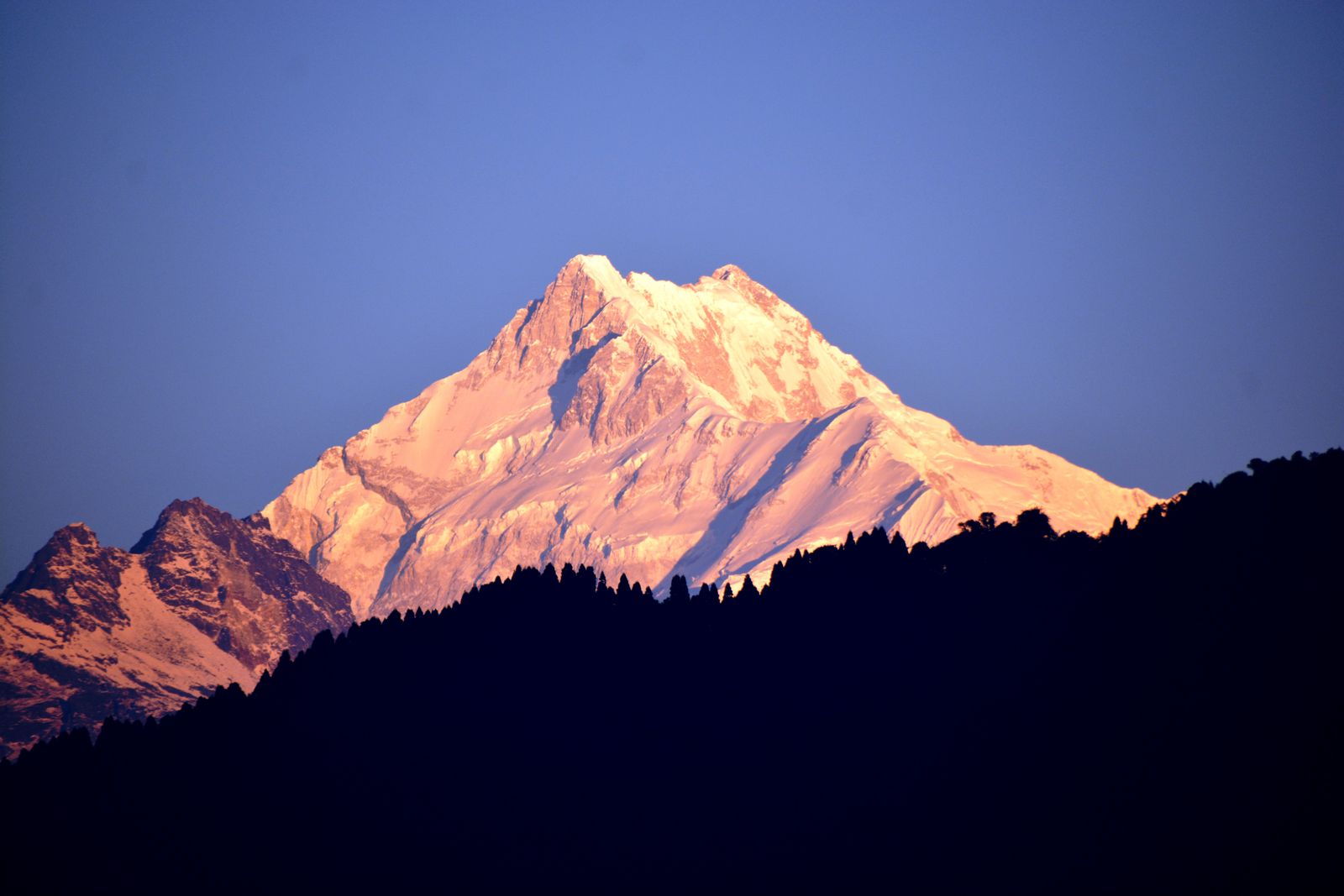
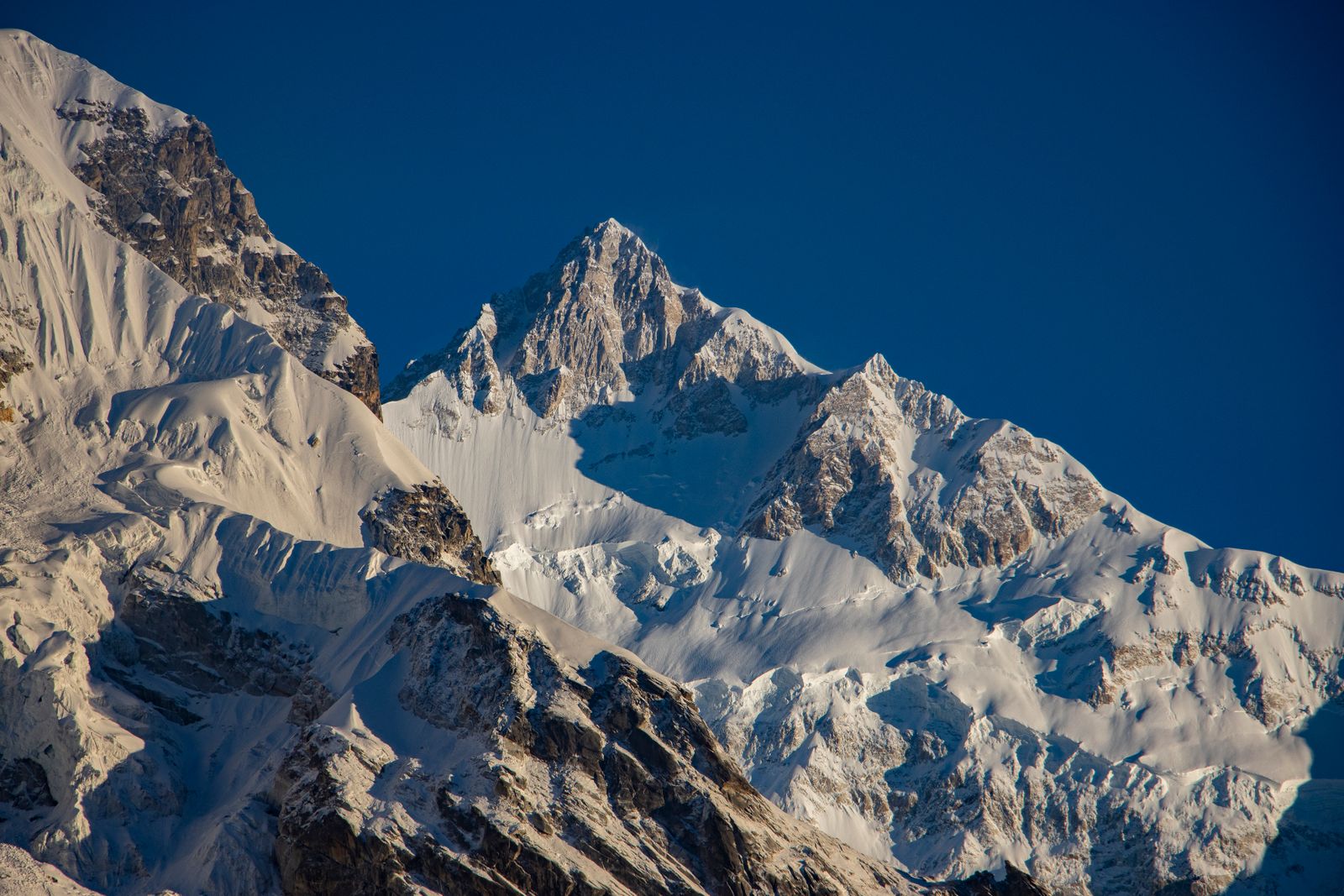
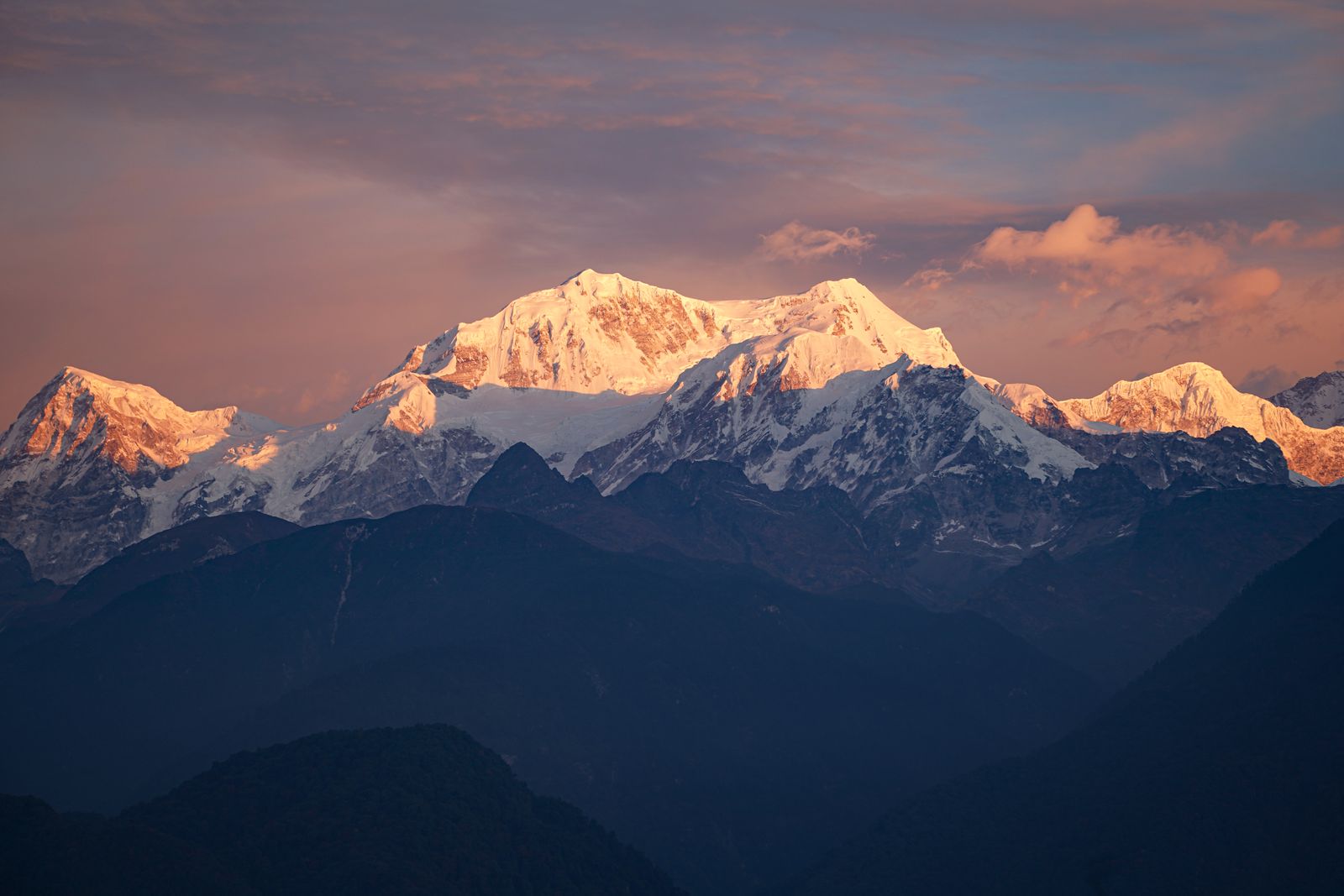
First sunlight turning the summits of the Kanchenjunga range gold above the dark ridges of West Sikkim, seen from Pelling at dawn

27.30° N 88.24° E · 2,150 m

Pelling & West Sikkim

The closest bed to the Kanchenjunga, and the oldest monasteries in the state.

Sewaro ᤛᤧᤘᤠᤖᤥ Limbu. The Limbu greeting. Say it to a Limbu host before the thee is poured.

In short

What is Pelling & West Sikkim, and who is it for?

Pelling is one ridge at 2,150 m in West Sikkim, close enough to Kanchenjunga that on a clear morning the mountain arrives before your tea does.

Altitude
2,150 m
Getting there
Bagdogra (IXB), about 135 km, 5 to 6 hours by road
Best months
October to December, March to May
Give it
2 nights on a longer route, 3 to 4 for the mountain
Best for
Kanchenjunga at dawn, Sikkim's oldest monasteries, heritage walks
Spoken
Nepali, Sikkimese (Bhutia), Limbu, Lepcha, Hindi, English
Permits
Indian citizens need no permit for Pelling, Yuksom or anywhere in West Sikkim, only photo ID. Since January 2026 foreign nationals and OCI cardholders must obtain the Sikkim Restricted Area Permit online through e-FRRO before reaching the border, and treks beyond Yuksom need further permits through a registered operator. Full rules: /plan/permits-and-visas/.

The name

पेलिङ

Sikkim, from the Limbu su khyim: the new house

Pelling's own name has no settled etymology. Sikkim's does: it is believed to join the Limbu words su, new, and khyim, house or palace, and Limbu families still farm these western hills.

Pelling, written in Nepali

West Sikkim is where the kingdom began. Yuksom, a village at the end of the road, is where the first Chogyal was crowned in 1642; Pemayangtse and Tashiding are the monasteries that legitimised him. Pelling's ridge, at 2,150 metres, faces the Kanchenjunga massif across a single valley, so the mountain fills the window rather than the horizon. It is also the trailhead for the Goecha La trek.

The road up

126 m to 2,150 m, 135 km in about 5 hours

About 135 km, 5 to 6 hours: NH10 up the Teesta to Melli, the Rangeet valley to Legship, then a climb of about 1,500 m to the ridge. If NH10 shuts, we come via Darjeeling and Jorethang.

  1. Bagdogra airport (IXB)126 m · 0 km
  2. Sevoke, where the Teesta leaves the hills156 m · 35 km · 1 h
  3. Melli, Sikkim checkpost on the Teesta250 m · 69 km · 2.2 h
  4. Jorethang, on the Rangeet322 m · 94 km · 3 h
  5. Legship, Kirateshwar temple by the Rangeet610 m · 118 km · 3.9 h
  6. Gyalshing, district headquarters1,540 m · 129 km · 4.5 h
  7. Pelling ridge2,150 m · 135 km · 5 h
  8. Yuksom, first capital of Sikkim1,780 m · 169 km · 6.5 h
Altitudes and distances rounded. Times are for a private car in dry weather, without stops.

Pelling & West Sikkim in six scenes

How a stay here actually unfolds

  1. Kanchenjunga's snow peaks catching pink first light above dark forested ridges, seen from Pelling Soumik Ghosh

    Day 2, 05:45 · Pelling ridge, 2,150 m

    The summit Sikkim asked climbers to leave untouched

    Set an alarm for 05:20 between October and December and open the curtains before you dress. The summits turn rose, then gold, while the valleys below are still blue. Across the trees Pemayangtse, whose lamas anointed the kings, is already lit for its morning prayer. The name was read by the Schlagintweit brothers as the five treasures of the high snow, and Lhopo families still name the five: salt; gold; turquoise and precious stones; the scriptures; and armour with grain and medicine. The Sikkimese honour the mountain as their guardian at Pang Lhabsol, in August or September, which also keeps the oath sworn at Kabi Lungchok between the Lepcha chief Thekong Tek and the Bhutia Khye Bumsa, with Kanchenjunga standing witness. When Joe Brown and George Band reached the top on 25 May 1955 they stopped just short of the true summit, as promised to the Chogyal Tashi Namgyal. Cloud often climbs to meet it by mid-morning.
  2. Day 2, 07:30 · Pemayangtse Monastery, 2,085 m

    Where the kings of Sikkim were anointed

    Pemayangtse means perfect sublime lotus. Lhatsun Chempo planned it in 1647 and it was enlarged in 1705, for ta-tshang: monks of pure lineage, celibate and whole in body. Its head lama anointed the Chogyals with holy water, and every Nyingma monastery in Sikkim, as far east as Enchey above Gangtok, still answers to this house of about 108 monks. Come early, when the halls are quiet and the coaches are still at breakfast. On the top floor stands Zangdok Palri, the heavenly palace of Guru Rinpoche, carved in wood by Dungzin Rinpoche over five years. We ask ahead for a monk to show you the detail. Its cham, the masked dances, falls in February, and the calendar below gives the two days.

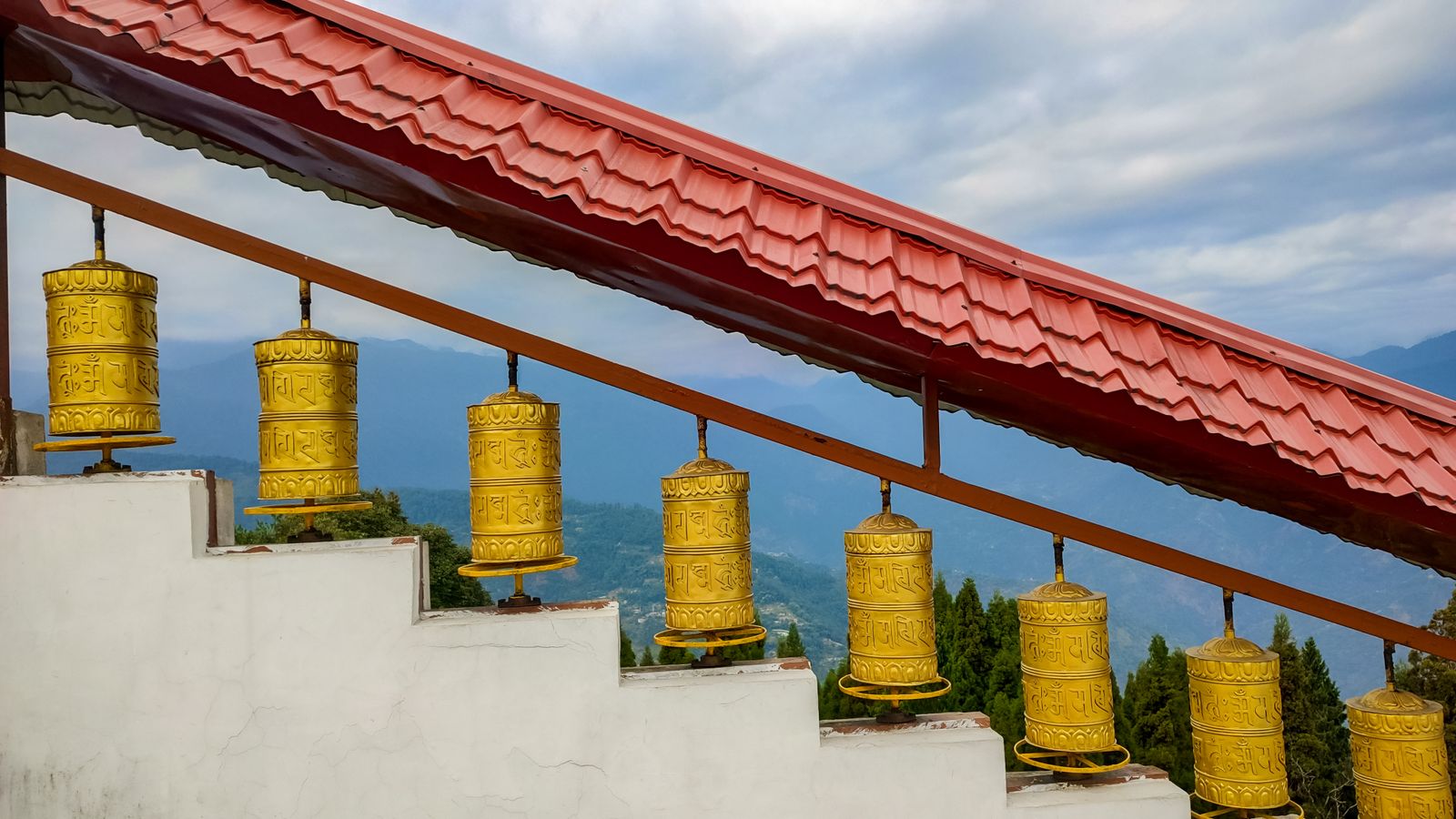
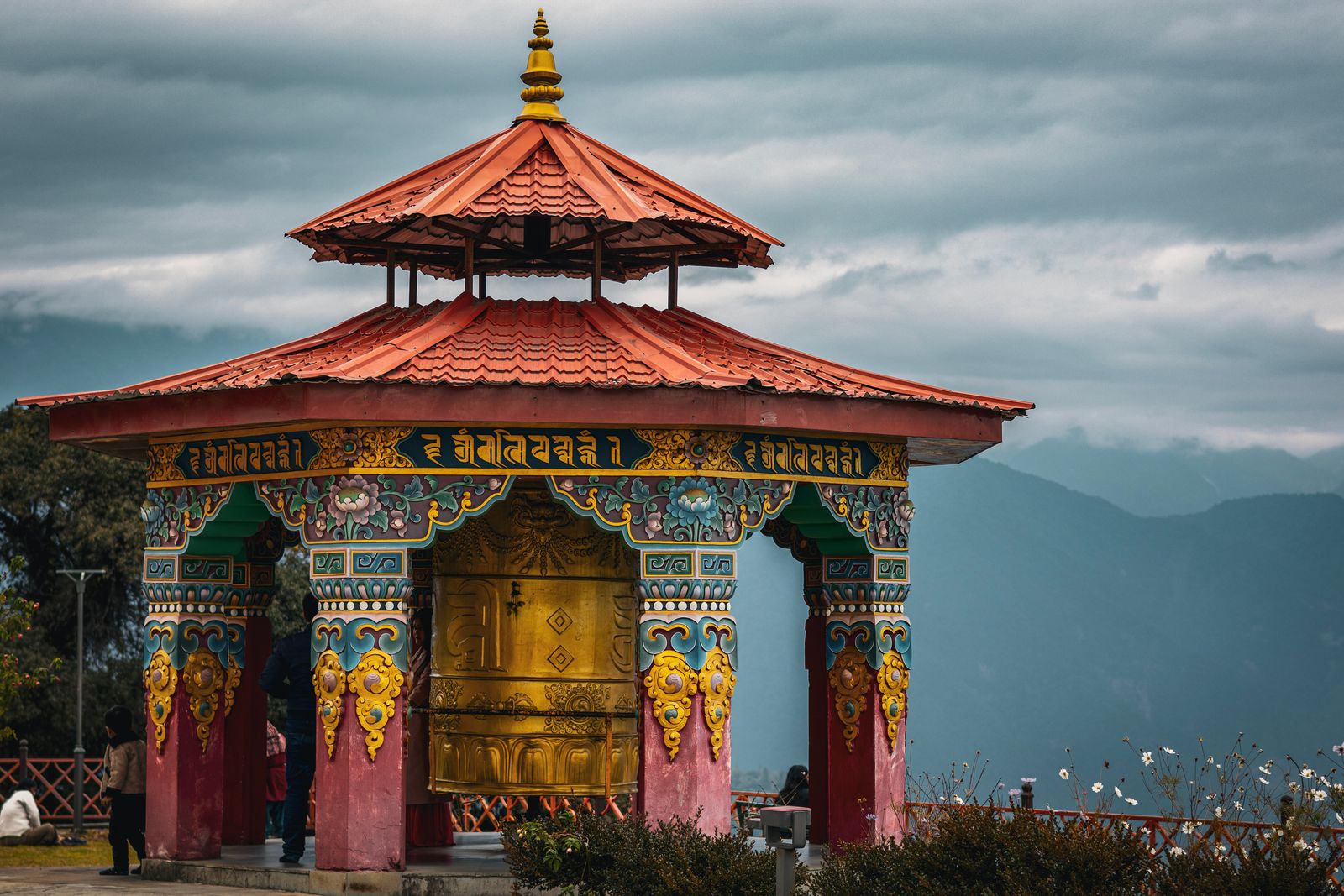
  3. A painted pavilion housing a large golden prayer wheel at Pelling, clouded hills behind Soham Kundu

    Day 2, 15:30 · Above Pelling: the statue, then the ruins

    A glass floor, and the capital the Gurkhas broke

    Two things stand within three kilometres of the town, and they could not be less alike. The first is new: a statue of Chenrezig, the bodhisattva of compassion, 137 ft tall on the hill that also carries Sanga Choeling, with prayer-wheel pavilions and a stairway below it, and a glass skywalk running out from its feet over the drop. Children like it, and whether it is worth an hour of yours is answered in the questions above. The second is old, and reached fifteen minutes on foot through forest from a gate on the Pemayangtse road: Rabdentse, where three royal chortens stand on one platform with the palace walls to the north. Come at the end of the afternoon, when the light comes level through the trees and you will most likely have the platform to yourself.

  4. A stone path between flowerbeds and chortens leads to Dubdi Monastery above Yuksom, West Sikkim Labun Hang Limboo

    Day 3, 10:30 · Yuksom, 1,780 m

    The stone throne under the pine

    Yuksom is only 8 km north of Pelling as the crow flies, and about 35 km by road. Its name means the meeting place of three learned monks, and in 1642 they crowned Phuntsog Namgyal, aged 38, as the first Chogyal at Norbugang. The throne is a stone seat under a pine that still stands; a footprint in the rock is said to be a lama's. The chorten beside it was raised from soil and stones carried here from every corner of the kingdom, so one slow circuit takes in the whole of Sikkim. Water for the anointing came from little Kathok Lake nearby, a short walk through the village. An hour's walk uphill is Dubdi, founded in 1701 and the oldest surviving monastery in Sikkim.

  5. A covered wooden jetty lined with prayer wheels running out onto a forest lake in Sikkim Sahil Pandita

    Day 3, 16:30 · Khecheopalri Lake, 1,700 m

    A lake the birds keep clear

    On the drive back, turn off for Khecheopalri, a small lake in a bowl of forest, sacred to Buddhists and Hindus alike. Its old name, Kha-Chot-Palri, means the heaven of Padmasambhava; locals also call it Sho Dzo Sho, oh lady, sit here. Legend reads the lake itself as the footprint of the goddess Tara. Leaves are said not to rest on the water for long, because birds lift them off. Walk out along the boardwalk as the light goes, turning each prayer wheel, and you will find that voices drop on their own. The manners the lake asks for are set out further down this page.

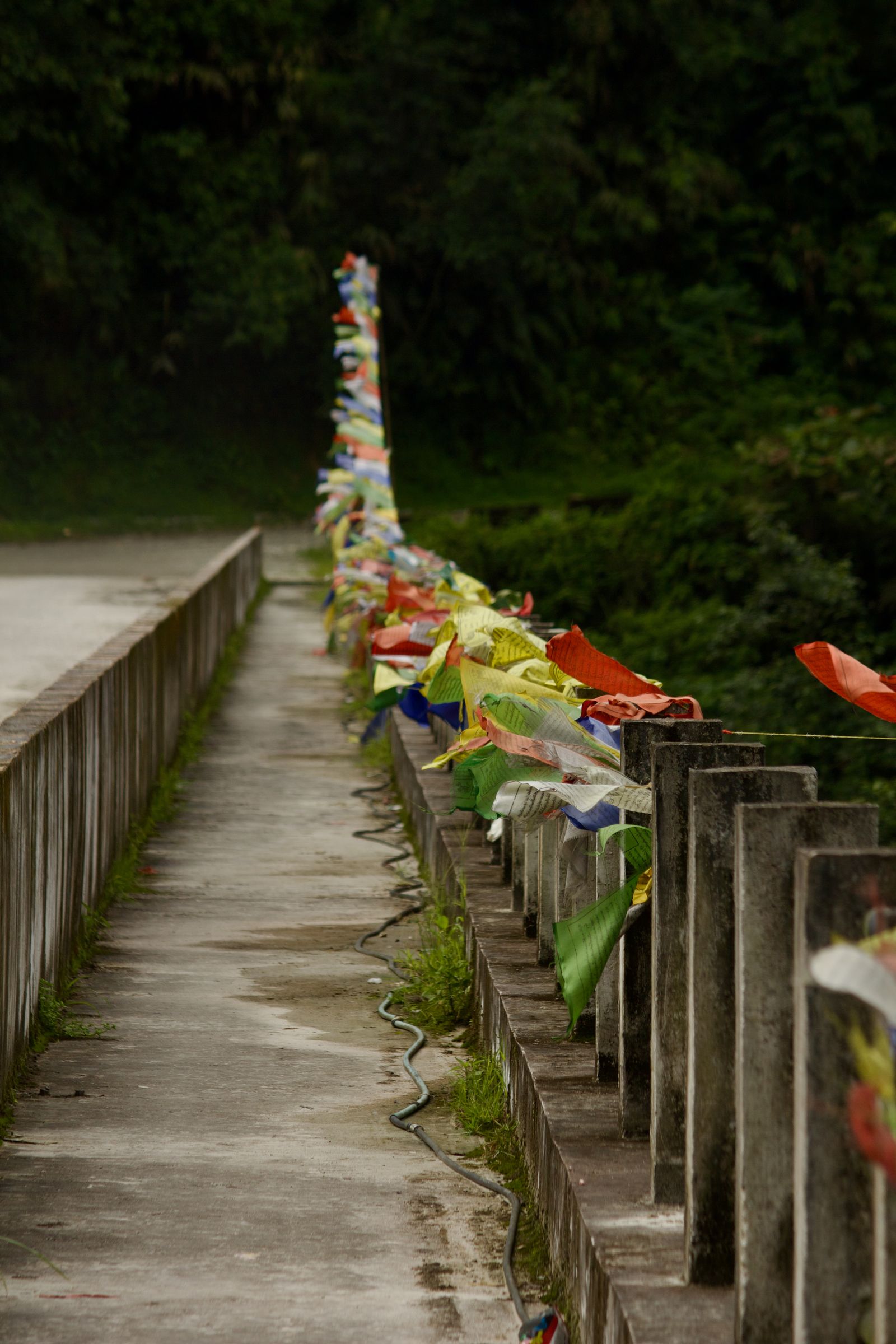
  6. Prayer flags strung along the walkway of a bridge on the wooded approach to Tashiding in West Sikkim Renjith Ponnappan / Pexels

    Day 4, 10:00 · Tashiding, 1,465 m

    The hill at the heart of the hidden valley

    Four caves stand at the quarters of the hidden valley, and this hill is its centre: Sharchok Bephug in the east, Khandro Sangphuk in the south above the hot springs at Reshi, Dechen Phug in the west near Dzongri on the Goecha La trail, and Lhari Nyingpo in the north, three days' walk and the holiest of them. Why Sikkim is called hidden at all is in the questions above. Ngadak Sempa Chempo, one of the three lamas of the coronation, built here in 1641, on the ridge between the Rathong Chu and the Rangeet. The last stretch is on foot, past mani walls and prayer wheels kept on your right, to 41 chortens and Thongwa Rangdrol, raised by the first Chogyal and said to free anyone who simply sees it.

Beyond the ridge

Four places we add for a fourth night

Pelling is three days of work. When a stay has a spare day, or when the ridge has already given you its dawn, these are the four we drive to, each with the reason to go.

The great gilded Buddha above the terraced lawns and steps of Buddha Park at Ravangla in South Sikkim
Close-up of whole reddish-brown finger millet grains, the grain fermented for tongba
तोङ्बा

The taste of Pelling & West Sikkim

Thee in a tongba: the Limbu millet brew

Limbus call the brew thee; tongba is the tall vessel it is served in, and the name visitors use for both. Sikkim's Tribal Research Institute writes the pair as Thi-Tongba. Finger millet, kodo in Nepali and ragi in India, is cooked, mixed with a starter and left to ferment. The grain is packed into the vessel, filled with hot water and drunk through a bamboo straw with a filtering tip that holds back the seeds. It is milky, mild and faintly bready, at about 2 to 5 per cent alcohol, and your host will keep topping it up. The food matters as much, and almost none of it reaches a hotel menu. A Limbu table brings kinema, sticky fermented soybean; khareng, a roti of finger millet, barley, maize or buckwheat; yangben, a tree lichen cooked as a curry, and yangben faaksa, the same lichen with pork; sargemba, also written sargyangma, a sausage of pig blood, yangben and rice; and for a feast, wachipa, rice cooked with minced chicken and the charred feather follicles. Vegetarians eat well on kinema and khareng and should wave away the last three. We ask a household at Darap, a Limbu village at 1,800 m below the ridge, to have you in for a cold evening, with tea for anyone who does not drink.

At a Limbu hearth in Darap after dark; at its best on cold nights, November to February

Words to carry

Three words that open doors

Spoken here: Nepali, Sikkimese (Bhutia), Limbu, Lepcha, Hindi, English. These three are Nepali.

  • हिमाल Himal say hi-MAAL The snow peaks: in Pelling, it means Kanchenjunga Nepali
  • Thee say thay The millet brew in the tongba: ask for it by name at a Limbu table Limbu
  • Demazong say DAY-ma-zong The hidden valley of rice: the Bhutia name for Sikkim, and the word you will hear at Tashiding Bhutia

When to go

Pelling & West Sikkim, month by month

April, October, November and December rate best here. July: Wettest month, about 900 mm, slips on valley roads.

  1. Jan Average low 1 °C, high 11 °C. Quiet Coldest month, 1 °C nights; Kok Phekwa, Limbu new year, 14 Jan
  2. Feb Average low 3 °C, high 12 °C. Quiet Cold and clear; the cham at Pemayangtse, then Losar
  3. Mar Average low 6 °C, high 16 °C. Good First rhododendrons; Bumchu at Tashiding, Feb or Mar
  4. Apr Average low 9 °C, high 18 °C. Best Rhododendrons at Barsey, mild 18 °C days
  5. May Average low 12 °C, high 21 °C. Good Warm and hazy, showers building by afternoon
  6. Jun Average low 15 °C, high 22 °C. Monsoon Monsoon sets in, the peaks hidden most days
  7. Jul Average low 16 °C, high 21 °C. Monsoon Wettest month, about 900 mm, slips on valley roads
  8. Aug Average low 15 °C, high 22 °C. Monsoon Heavy rain, waterfalls at full strength
  9. Sep Average low 14 °C, high 21 °C. Monsoon Rain easing late; Pang Lhabsol falls Aug or Sep
  10. Oct Average low 10 °C, high 19 °C. Best Skies clear; Dashain tika 21 Oct 2026; Chho-Tsho at the lake
  11. Nov Average low 6 °C, high 16 °C. Best Dry and sharp; Tihar 7 to 11 Nov 2026; Chasok Tangnam
  12. Dec Average low 3 °C, high 13 °C. Best Driest, sunniest month, 3 °C nights; Losoong and Namsoong

BestGoodQuietMonsoon Average daily low and high, °C · source

The ridge's own year

What West Sikkim keeps

Four communities farm these slopes and each keeps its own days, most of them moving with the lunar calendar. Tell us your window and we confirm that year's dates with the monasteries and the households before you fix a month.

Lines of prayer flags strung along a concrete footpath at Tashiding in West Sikkim, forest rising behind
Renjith Ponnappan / Pexels
  1. Jan
    • Kok Phekwa TumyenLimbu homes across the hills

      14 January, the first day of the Limbu new year. The same week the Rangeet valley holds its Maghe Sankranti fair at Jorethang, on the road you came up, kept every year since 1961.

  2. Feb
    • The cham at PemayangtsePemayangtse Monastery

      Masked dances on the 28th and 29th days of the last Tibetan month, usually February, in the courtyard of the house whose lamas anointed the kings. Losar follows.

  3. Mar
    • BumchuTashiding Monastery

      In the first Tibetan month, February or March. Thousands come, and they wait from midnight, so this is the one date here we would build a stay around rather than fit into one. The two days themselves, the vase and what its water level is read to mean are in the questions further up this page.

  4. Apr
    • Maghe PurneKhecheopalri Lake

      A two-day fair in March or April that draws pilgrims from Sikkim, Bhutan, Nepal and India. In the evenings butter lamps go out onto the water on small bamboo boats tied with khadas.

  5. May
    • The rhododendronsBarsey, Hilley and the high forest

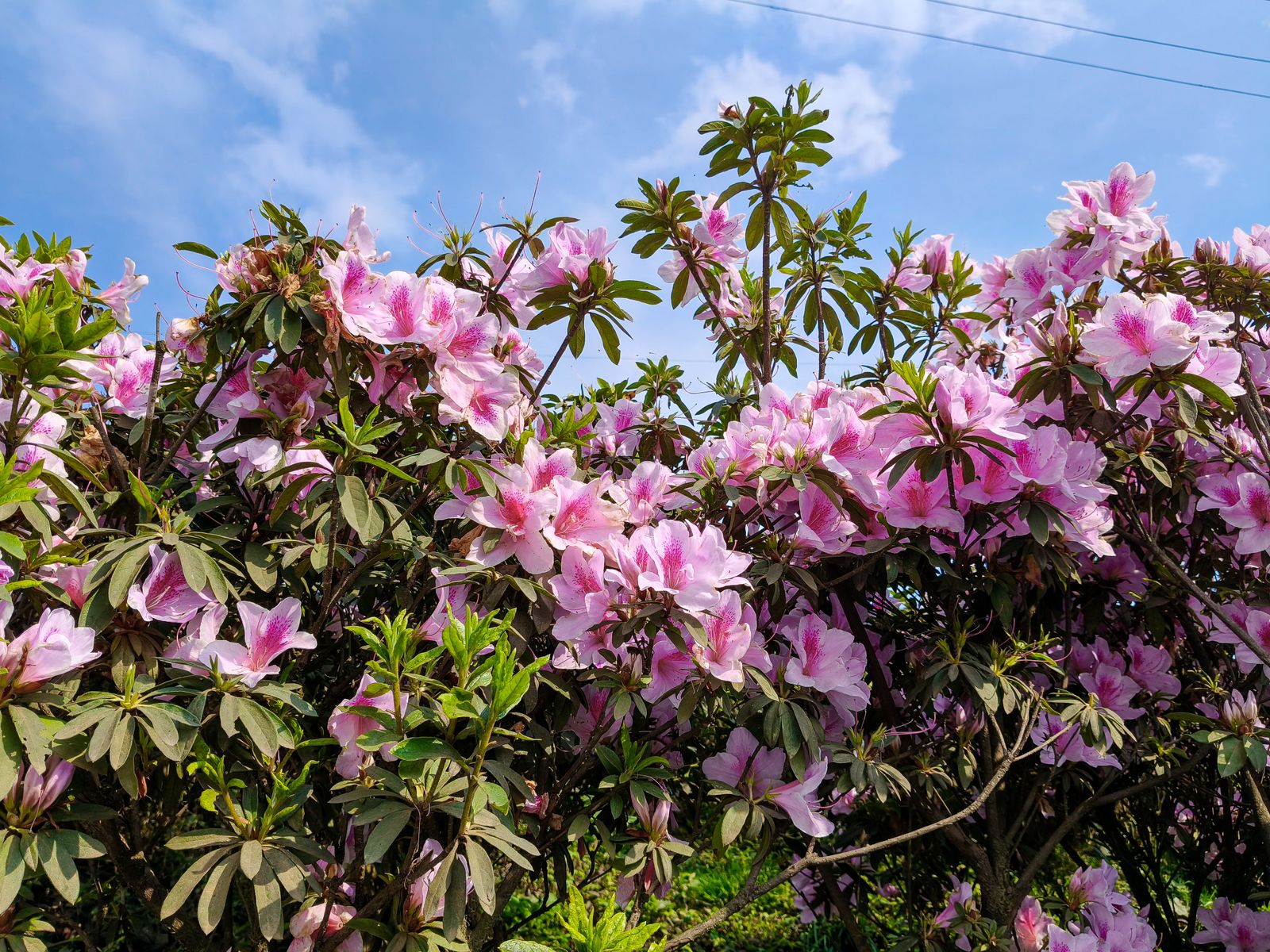
      Not a festival, but the season the ridge is proudest of: mid-March to mid-May above about 2,700 m, later in a year that holds its snow.

  6. Sep
    • Pang LhabsolWherever the mountain is in view

      The 15th day of the seventh Tibetan month, late August or early September, when Kanchenjunga is honoured as the guardian of Sikkim. Gangtok's royal chapel dances the Pangtoed warrior dance; here you simply look north at the deity itself.

  7. Oct
    • Chho-TshoKhecheopalri Lake

      In October, after the cardamom harvest, the villages round the lake give thanks for the year's food. It is a village thanksgiving rather than a monastery festival, so there is nothing to watch unless a household asks you in, and we would have to ask.

  8. Nov
    • Chasok TangnamLimbu households on the slopes

      On the full moon of Mangsir, in November or December: the Limbu harvest thanksgiving, kept at home rather than in public, and the best evening of the year to be offered thee.

  9. Dec
    • Losoong and NamsoongBhutia and Lepcha homes

      9 to 13 December 2026. The harvest new year is kept here too, although the Kagyed masked dances belong to Tsuklakhang, Rumtek and Phodong, away east in Gangtok and East Sikkim.

Mid June to mid September

If you come in the rains

Pelling has no weather station of its own, so every monthly figure you read for it, including the strip above, is Darjeeling's from 29 km away. Take them as an order of magnitude and no further. What the rains mean on this ridge is plainer than any number: the mountain is gone for weeks together, the cloud sits at 2,150 m rather than below it, and a room that faces the range faces grey. Below you both roads slip, the Teesta gorge and the Rangeet valley alike, and in June 2026 fresh slides at Sevoke sent Sikkim traffic round by Gorubathan.

There is still a Pelling worth having in July. Every stream on the Yuksom road turns into a waterfall. Khecheopalri is at its blackest and stillest, and the path above Dubdi smells of wet cardamom. No coach reaches Pemayangtse, and the morning prayer has almost nobody in it. If you insist on the monsoon, we bring you up through Darjeeling rather than the gorge, ask for a room in a main house rather than a cottage at the end of a wet path, keep a spare day before your flight and plan that flight for the afternoon. We would still rather send you in October.

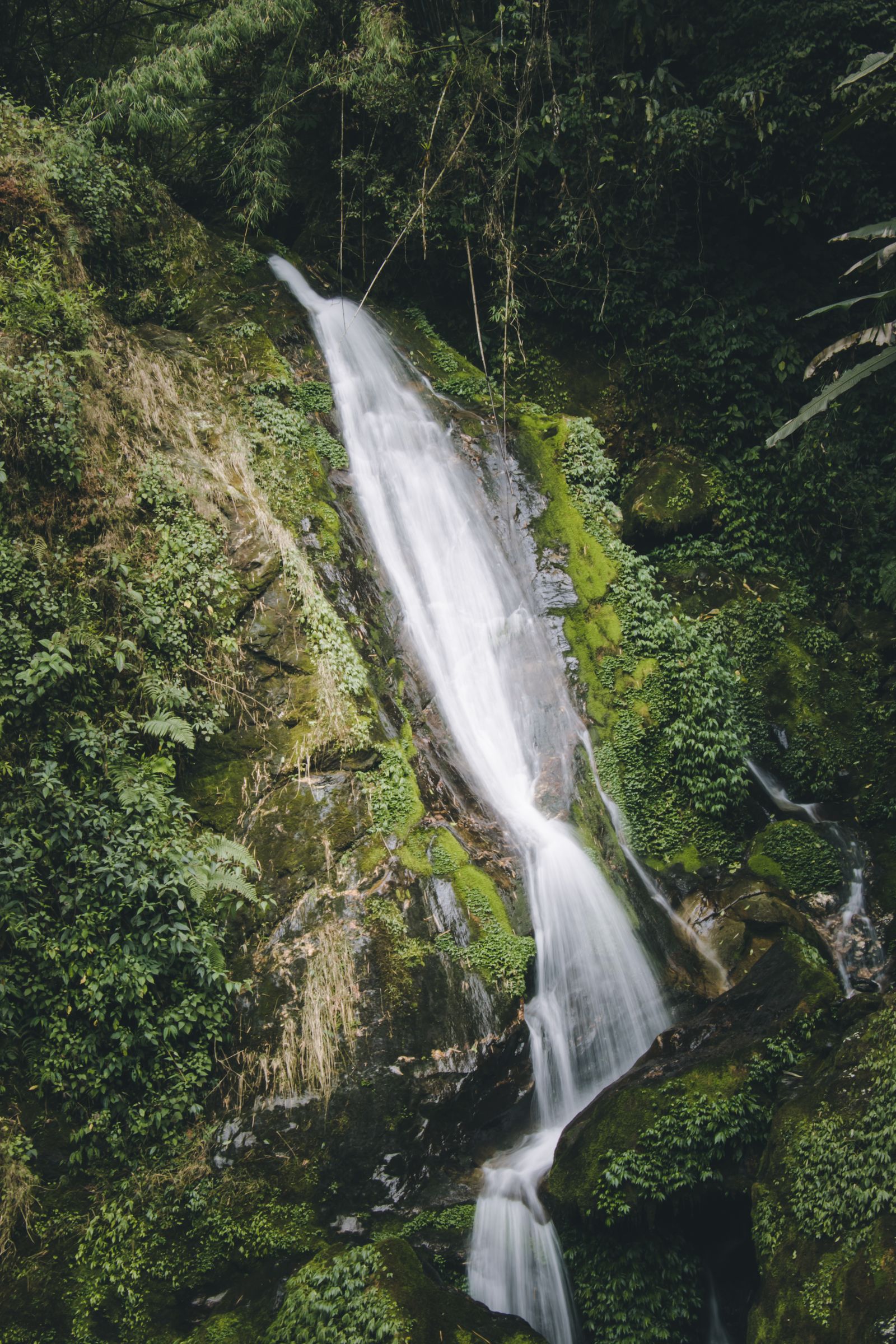
A waterfall dropping in white threads over mossy rock through dense green forest in Sikkim
Shibaji Mondal / Pexels

Solved before you arrive

What nobody warns you about in Pelling & West Sikkim, and what we do about it

A ridge this close to Kanchenjunga has one real problem, cloud, and a handful of practical ones: the road in, the mid-morning coaches, a permit filed online and steep ground. Here is how we plan round each.

  1. The problem

    You came for Kanchenjunga, and it is hiding in cloud

    What we do

    We plan at least two dawns, three when the mountain is the reason you came, and ask for a room whose windows face the range so you can watch from bed. Your guide checks the sky at 05:15 and rings your room only if it is clear. Where we would stand: the helipad ground in Upper Pelling, open and free, for the whole northern arc, with Pandim, 6,691 m, about 31 km off; Rabdentse's upper terrace for second light, once the gate is open; and the Sanga Choeling courtyard in the late afternoon, an hour's climb above the ridge. If the first morning is grey, we move the Yuksom day forward and keep the next dawn free. October to December gives the best odds, and for a different angle on a fourth night we send you across to Rinchenpong in the new Soreng district.

  2. The problem

    Bagdogra to Pelling is a long day of river gorge and hairpins

    What we do

    We meet you at the arrivals exit with a large, clean SUV, cold water and a driver who knows the Rangeet road, with the lunch stop planned before you land. Better still, come by Darjeeling: a night or two on that ridge, then a far shorter drive down to the Rangeet at Jorethang and up to Pelling. If NH10 along the Teesta is closed by a landslide, that is also the road we switch to. You enter Sikkim at Melli, where the permit is checked. The leg-by-leg times are in the road table above.

  3. The problem

    Pemayangtse and the skywalk fill with coaches by mid-morning

    What we do

    Groups tend to reach Pemayangtse and the Chenrezig statue from mid-morning, so we go first: the monastery straight after the dawn, then the statue and the skywalk in their first hour or late in the afternoon. On a cloudy day we skip the glass entirely. Rabdentse, fifteen minutes on foot from its gate, is quiet at almost any hour, and Tashiding sees a coach only at Bumchu.

  4. The problem

    Foreign passport or OCI card: the permit is now online only

    What we do

    The rule itself is in the facts panel above. What it means for your week is this: the posts at Melli and Rangpo now check permits rather than issue them, so nothing can be put right at the border. We collect passport, visa or OCI scans and your itinerary well ahead, file as early as the portal allows, and hand you printed copies for the checkpost. Indian passport holders need only photo ID.

  5. The problem

    The trail towards Goecha La, without a budget group

    What we do

    Treks from Yuksom need a registered local guide and a licensed operator, and foreign trekkers must go in twos at least. We arrange a private crew of guide, cook and porters, sleeping tents with proper mattresses, a dining tent, a toilet tent and a menu agreed with you before you leave. Permits currently take trekkers only to View Point 1, about 4,600 m, short of the pass, and we build in rest days at Tshoka and Dzongri.

  6. The problem

    Elderly parents, steep steps and 3 °C December nights

    What we do

    Pelling averages about 3 °C at night in December and 1 °C in January. We ask for heated rooms, hot-water bottles and extra quilts before you arrive; the Elgin Mount Pandim heats the house in winter and lights fires in the cottages. Those cottages sit downhill on a steep path, so parents get rooms in the main building. At Yuksom we choose Norbugang, on a short level path, over the hour's climb to Dubdi, and keep the car close. Khecheopalri's boardwalk is the flattest walk of the week.

Where we would put you

The right house matters more than the town

Room types and rates are confirmed for your dates in your quote.

  1. Wicker chairs and a low table on the lawn at The Elgin Mount Pandim in Pelling, with cloud on the wooded ridge behind
    The lawn at Mount Pandim, looking into the cloud on the Pelling ridge.flowcomm, CC BY 2.0, via Wikimedia Commons
    01

    The Elgin Mount Pandim

    Heritage resort and spa · a royal retreat, since 1942 · 8 acres · under a kilometre from Pemayangtse

    Built by the King of Sikkim as a retreat for the royal family, opposite Pemayangtse in its own forest. The house for history, gardens and a warm room, and two mornings that need almost no car.

    Ask for a Deluxe Suite in the main house, with a sitting-room fire in winter, or a Deluxe Cottage down the garden path; the main house for anyone who finds a steep path hard.

  2. Sunrise light on the snow summit of Kanchenjunga above a dark silhouetted ridge of forest in Sikkim
    Khangchendzonga at sunrise, the mountain the resort is built around the view of.Amol Nakve / Pexels
    02

    Udaan Khang-Chen View Resort & Spa

    Resort and spa · 25 rooms · Naku, about 4 km from Pelling town · vegetarian kitchen

    Built around the view of Kanchenjunga, with a spa and a pure vegetarian restaurant: the easy answer for vegetarian families, and the house Sikkim for Families uses.

    Ask for a Luxury View Room with Balcony, or the Family Duplex Room; we book room heaters ahead, as they cost extra.

  3. 03

    Limboo Homestay, Yuksom

    Limbu family home at the Goecha La trailhead, 1,780 m · a kitchen that cooks from its own garden

    Where Goecha La, Privately sleeps its two nights before the trail. Simple, clean rooms rather than grand ones, and supper cooked by the family that owns the house.

    Ask for a room in the newer building with an attached bathroom; we confirm hot water before you walk in.

  4. 04

    Royal Barsey Homestay, Okhrey

    Sherpa family house in upper Okhrey, about 2,300 m · 7 rooms · 10 km below the Barsey trailhead

    The house Red Pandas and Rhododendrons uses for the rhododendron walk: home cooking, attached baths with hot water, and a dawn start with no long drive. Warm and honest, not a luxury house.

    Ask for the family room, or a triple kept for two, and the jeep to Hilley booked the evening before.

At the monasteries and the lake

Manners that make you a guest

None of this is written on a board. Your guide says it at the gate, and it is here so you arrive knowing it.

  • Mani walls and prayer wheels on your rightWalk clockwise round a chorten and turn the wheels the same way. It matters most on the climb to Tashiding, which runs between mani walls and flagstones carved with Om Mani Padme Hum. At the Bon house near Kewzing the circuit reverses: Bon pilgrims turn anticlockwise, and there the old direction is the polite one.
  • Cameras stay outside the hallsAt Pemayangtse and Tashiding, photograph the courtyard, the doors and the roofline, and leave the camera at the step before the shrine. Zangdok Palri on Pemayangtse's top floor is the thing everyone asks about, and it is the thing to look at rather than photograph.
  • Nothing goes into the water at KhecheopalriNo stone, no coin, no foot. Shoes come off before the wooden boardwalk, so carry socks for a winter evening, and keep the prayer wheels on your right as you walk out. Swimming, boats and fishing are all forbidden, and nobody has to tell you to lower your voice.
  • At Bumchu, wait your turn for the waterThe holy water is shared in an order the monastery keeps, and people wait from midnight. Your guide will tell you where to stand and when, and it will not be at the front of the line.
  • Sewaro at a Limbu door, tashi delek at a monasteryThe greeting changes with the house: sewaro to a Limbu host, tashi delek to a monk or a Bhutia family, namaste to almost anyone in Nepali. Take the tongba with both hands, and let your host top up the hot water at least once before you stop.

Journeys through Pelling & West Sikkim

What each journey does in Pelling & West Sikkim

All Sikkim journeys
Kanchenjunga's snow face rising at the head of a brown alpine valley on the Goecha La trail, a glacier moraine below Private trek 10 nights

Goecha La, Privately

Pelling1Yuksom1Trek camps: Sachen, Tshoka, Dzongri, Lamuney, Kokchurung7Yuksom1

10 nights here at The Elgin Mount Pandim, day 2: pelling at dawn, then Yuksom and Dubdi

Mid October to late November, and March to mid May from₹1,90,000
Lingdum Monastery in Sikkim, its gold roofs and white walls rising in tiers above a painted stair and forest Signature journey 7 nights

Monasteries of the East

Gangtok3Ravangla1Pelling3

3 nights here at The Elgin Mount Pandim, day 5: a Bon house, then Tashiding on its hill

October to mid December, March to May from₹1,40,000
Kanchenjunga's snow summit and its ridges filling the frame under a deep blue Sikkim sky Short break 3 nights

Kanchenjunga, Face to Face

Pelling3

3 nights here at The Elgin Mount Pandim, day 2: dawn from the suite, the anointing monastery, the lost court

October to December, March to April from₹70,000
A black yak grazing on the Yumthang meadow in North Sikkim, small purple flowers in the grass and snow peaks behind Grand journey 10 nights

Sikkim, End to End

Gangtok2Lachung2Gangtok1Ravangla2Pelling3

3 nights here at The Elgin Mount Pandim, day 8: legship's river temple, and a cottage at Pelling

April to May, October to November from₹2,25,000
First light turning the Kanchenjunga range orange under a dark cloud bank, seen from Darjeeling above blue ridges Signature journey 7 nights

Kanchenjunga at First Light

Darjeeling3Pelling2Kalimpong2

2 nights here at The Elgin Mount Pandim, day 4: down to the Rangeet, up to the Pelling ridge

Oct to Dec, Mar to Apr from₹1,55,000
A row of golden prayer wheels on monastery steps above the wooded hills at Gangtok in Sikkim Signature journey 8 nights

The First Time: Darjeeling and Sikkim

Gangtok3Pelling2Darjeeling3

2 nights here at The Elgin Mount Pandim, day 4: across South Sikkim to the Pelling ridge

October to early December, March to May from₹1,75,000
Kanchenjunga glowing gold and pink at a December sunrise above dark forested ridges in Sikkim Winter honeymoon 5 nights

Tea and Snow: A Winter Honeymoon

Glenburn Tea Estate3Pelling2

2 nights here at The Elgin Mount Pandim, day 4: into Sikkim at Melli, up to a cottage with a fire

December to February from₹1,70,000
The giant Chenrezig statue on its hilltop above Pelling, the long stair and walkway climbing to it through forest and cloud Family journey 6 nights

Sikkim for Families

Gangtok3Ravangla1Pelling2

2 nights here at Udaan Khang-Chen View Resort & Spa, day 5: down to the Rangeet, up to a room with a view

March to May, October to early December from₹95,000
Pink rhododendrons in full flower against a clear blue April sky in Darjeeling Spring naturalist journey 6 nights

Red Pandas and Rhododendrons

Darjeeling1Okhrey (West Sikkim)2Lava (Kolakham)2Kalimpong1

2 nights here at Royal Barsey Homestay, day 2: the zoo's red pandas first, then down to the Rangeet and up to Okhrey

Mid-March to early May (bloom peaks mid-March to late April) from₹95,000

Questions

Seven questions about Pelling & West Sikkim

Ask on WhatsApp
Why do Bhutia families call Sikkim a hidden valley?

Because the old texts name it a beyul, a valley hidden by Guru Rinpoche for a later age. Bhutias call it Demazong, the hidden valley of rice, and tradition puts Tashiding at its heart: the hill is the pistil of a lotus whose four petals are sacred caves, one to each direction. The western one, Dechen Phug, lies near Dzongri on the Goecha La trail. Monasteries of the East can add the southern cave, Khandro Sangphuk, above Reshi.

What happens at Bumchu, and can we be there for it?

On the 14th and 15th days of the first Tibetan month, in February or March, the lamas at Tashiding open a vase of holy water sealed a year earlier and read the level. Full to the brim foretells a year of peace and plenty; brimming over means disturbance and disaster; low or dry means famine. The water is then shared, the vase refilled from the river and sealed again. Thousands come, so tell us early and we walk you up before dawn.

Which of the monasteries here may we go inside?

Pemayangtse and Tashiding admit everyone, inside the halls as well as the courtyards. Dubdi above Yuksom has one resident monk, so we send word the day before and he opens it for you. Sanga Choeling is the exception: by custom only men go into the hall, and the inner sanctum is kept for Bhutia and Lepcha worshippers, while the courtyard above the valley is open to everyone. Worth knowing before you choose a house here, not at the gate.

What is the difference between Upper and Lower Pelling?

Height, and how much road you hear. Upper Pelling sits at about 2,150 m and holds the helipad ground, an open field where anyone may stand for the whole northern arc. Lower Pelling is roughly 250 m below it, on the road that carries the day's traffic. The Elgin Mount Pandim is off both, under a kilometre from Pemayangtse. Ask us which end a hotel stands on before you book a room for the view.

Why is Rabdentse a ruin?

Because the Gurkha armies came. Tensung Namgyal moved the court here from Yuksom, and Rabdentse was the capital of Sikkim from 1670 until 1814, when the court moved on to Tumlong. What stands now is a platform with three royal chortens and the palace walls to the north, reached by a forest path fifteen minutes from the gate. The Archaeological Survey of India looks after it, and almost nobody walks up in the middle of the day.

How much climbing does West Sikkim actually ask of us?

More than the photographs suggest. Rabdentse is fifteen minutes on a forest path from its gate. Sanga Choeling is a climb of 45 minutes to an hour. Dubdi above Yuksom is about 3 km up through cardamom and oak, an hour at a steady pace. Khecheopalri's boardwalk is flat, and Norbugang at Yuksom is a short level path. We build each day so that anyone who would rather sit has somewhere worth sitting.

Is the glass skywalk worth an hour with children?

Yes, in its first hour or late in the afternoon, and not at all on a cloudy day, when you pay to stand on glass above fog. It runs out from the foot of the 137 ft Chenrezig statue and was the first glass skywalk built in India, opened on 1 November 2018. Children like it and some adults do not. The statue's own stairway and prayer-wheel pavilions are the better half of the visit.

Sources we checked for this guide (50)
  1. Pelling altitude 2,150 m; nearest airports Bagdogra and Pakyong
  2. Pelling coordinates 27.30 N 88.23 E, elevation 2,150 m, Nepali name पेलिङ
  3. Pelling 10 km from Gyalshing; second tourist destination in Sikkim after Gangtok
  4. Yuksom 1,780 m; name means meeting place of three learned monks; Phuntsog Namgyal crowned at Norbugang in 1642 aged 38
  5. Norbugang: stone throne below a large pine still standing, footprint attributed to one of the lamas, Kathok Lake water used for the consecration
  6. Dubdi Monastery founded 1701, means the retreat, 2,100 m, about an hour's walk from Yuksom, oldest surviving monastery in Sikkim
  7. Pemayangtse planned 1647, enlarged 1705; ta-tshang pure monks; head lama anointed the Chogyals; Zangdok Palri by Dungzin Rinpoche over 5 years; 2,085 m; cham in February
  8. Rabdentse second capital 1670 to 1814, founded by Tensung Namgyal, about 3 km from Pelling, 15-minute walk from gate, ASI monument
  9. Khecheopalri Lake 1,700 m, Kha-Chot-Palri, Sho Dzo Sho, birds pick up leaves, legend of Tara's footprint, jetty lined with prayer wheels, no swimming or boating
  10. Chenrezig statue 137 ft; India's first glass skywalk opened 1 November 2018
  11. Tashiding on a hill between the Rathong Chu and Rangeet; Bumchu festival in the first Tibetan month
  12. Kangchenjunga 8,586 m; 1955 first ascent by Joe Brown and George Band stopped short of the summit as promised to the Chogyal
  13. Pang Lhabsol honours Khangchendzonga as guardian deity, 15th day of 7th Tibetan month (August to September)
  14. Sikkim name from Limbu su (new) and khyim (house or palace); 1642 consecration at Yuksom
  15. Sewaro written ᤛᤧᤘᤠᤖᤥ as the greeting on the Limbu Wikipedia main page
  16. Limbu welcome guests with tongba; Limbu house at Hee-kengbari, West Sikkim
  17. Tongba: finger millet (kodo), khesung starter, bamboo straw with filtering bottom, 2 to 5 per cent alcohol, milky and bready
  18. Chasok Tangnam, Limbu harvest festival on the full moon of Mangsir (November to December)
  19. West Sikkim district renamed Gyalshing in December 2021
  20. Pelling monthly temperatures, rainfall and sunshine, 1991 to 2020 averages; the site notes its data come from Darjeeling, 29 km away
  21. Jorethang 322 m on the Rangeet, on the way to Pelling from Darjeeling and Siliguri; Maghe Sankranti fair about 14 January
  22. Legship on the Rangeet, gateway to Gyalshing, Kirateshwar Mahadev Temple
  23. Waypoint altitudes for Melli (about 250 m), Legship (611 m) and Gyalshing (about 1,520 m) from the Copernicus DEM
  24. Road distances by leg (OSRM, September 2026): Bagdogra to Pelling 135 km via Sevoke 36, Melli 69, Jorethang 94, Legship 118, Gyalshing 129; Pelling to Yuksom 34 km
  25. Foreigners' RAP and PAP online only through e-FRRO from January 2026; no physical permits at checkpoints
  26. RAP covers Pelling, Pemayangtse and Yuksom; needed by foreign nationals and OCI cardholders, not Indian citizens (April 2026)
  27. Indian citizens need no permit for Pelling or West Sikkim (2026)
  28. Goecha La trek: licensed operator and guides mandatory, foreigners minimum group of two, trekkers limited to View Point 1 (about 4,600 m)
  29. Goecha La 4,940 m; trek from Yuksom via Sachen, Tshoka, Dzongri, Thansing
  30. Pakyong Airport had no passenger movements April 2025 to March 2026
  31. The Elgin Mount Pandim built 1942 by the King of Sikkim as a royal retreat, opposite Pemayangtse
  32. The Elgin Mount Pandim: 8 acres, cottages and suites, spa, heated in winter
  33. Elgin Mount Pandim operating with 2025 and 2026 reviews; cottages downhill on a steep path
  34. Udaan Khang-Chen View Resort & Spa, Naku, Pelling 737113: spa, Kanchenjunga-view room categories (Luxury View Room with Balcony, Family Duplex Room), heaters chargeable
  35. Udaan Hotels restaurants serve pure vegetarian cuisine in Darjeeling, Gangtok and Pelling
  36. Udaan Khang-Chen View: 25 rooms, about 4 km from Pelling town, Grains Pure Veg restaurant, reviews through September 2026, #1 of 36 hotels in Pelling
  37. Nepali हिमाल: snow peaks, the Himalayas
  38. Taste photograph: finger millet grains, tagged 'finger millet', free Unsplash licence, Second Breakfast
  39. Sikkim Tribal Research Institute, Limboo tribe page: the Limbu new year 'Kok Phekwa Tumyen' falls on 14 January; Thi-Tongba, finger millet fermented in a bamboo or wooden cane and taken with a bamboo straw; Thi (Jaarn); Kinema, sticky fermented soya bean; Khareng, roti of finger millet, barley, maize or buckwheat; Yangben, a curry of macro-lichen collected from trees; Sargyangma or Karjyang, pork sausage
  40. Limbu dishes: wachipa, rice with minced local chicken, burnt feather follicles and offal; sargemba, blood sausage of pig blood, yangben, rice and spices in pig intestines; yangben-faaksa, pork curry with wild lichen
  41. Yangben, the wild tree lichen eaten by the Limbus
  42. Bumchu at Tashiding: 14th and 15th days of the first Tibetan month, February or March; a full vase foretells peace and prosperity, an overflowing vase disaster and disturbance, a low or dry vase famine; the pot is replenished with river water and sealed at the end
  43. Sikkim as Beyul Dremojong, the hidden valley; Tashiding resembles the pistil of a lotus with four caves as its petals: Sharchok Bephug in the east, Lho Khandro Sangphuk in the south near hot springs, Nub Dechen Phug in the west near Dzongri, Jhang Lhari Nyingpo in the north, three days' walk and the holiest
  44. Khecheopalri: visitors must remove their footwear before the wooden boardwalk, which is lined with prayer wheels; birds are believed to keep the surface clear of leaves
  45. Soreng district: Rinchenpong's Sang Ngag Yangtse monastery, established about 1730 by the Nyadakpa Lama, third oldest in Sikkim, with a rare Ati Buddha in the Yab-Yum position, a short hike from the town, facing Kanchenjunga
  46. Soreng district holds Rinchenpong and the Barsey Rhododendron Sanctuary after the December 2021 split of West Sikkim
  47. Mount Pandim 6,691 m, about 31 km from Pemayangtse in a straight line (as used on Kanchenjunga, Face to Face)
  48. Elgin Mount Pandim room categories (Deluxe Suite, Premium Cottage, Deluxe Cottage), electric heaters, hot-water bags and winter fireplaces in the cottages
  49. Limboo Homestay, Yuksom: the family home used for two nights on Goecha La, Privately
  50. Royal Barsey Homestay, upper Okhrey: a Sherpa family's house since 2016, 7 rooms with attached baths and hot water, 10 km below the Hilley gate to Barsey (used on Red Pandas and Rhododendrons)

Facts checked against official and published sources, September 2026. Roads, permits and fees change: we confirm every detail again for your dates.

Paro Taktsang, the Tiger's Nest, its white walls and golden roofs clinging to the cliff above pine forest and drifting mist Continue the journey Bhutan Druk Yul: the land of the thunder dragon

Plan my journey

Pelling & West Sikkim, your way

Tell us the month and who is travelling. A designer in the hills replies within 24 hours with a first route and a straight price.

At its best
October to December, March to May
Stay
2 nights on a longer route, 3 to 4 for the mountain
Fly into
Bagdogra (IXB), about 135 km, 5 to 6 hours by road
+91 86178 24110 Message a designer Support 24×7, every day of your journey
With country code if outside India. Either this or email is enough.
Who is coming, the pace you like, the occasion. A sentence is fine.
Add more detail
Their ages help: add them in your note
Permits in Sikkim and fees in Bhutan depend on it
A week in the hills starts around ₹1.4 lakh per person, and Bhutan around ₹3.25 lakh.
Calls from our office, 8am to 9pm IST (GMT+5:30)
Darjeeling, Kalimpong, Gangtok, Pelling, Bhutan, Nepal

No deposit to begin, and nothing is booked until you say yes.