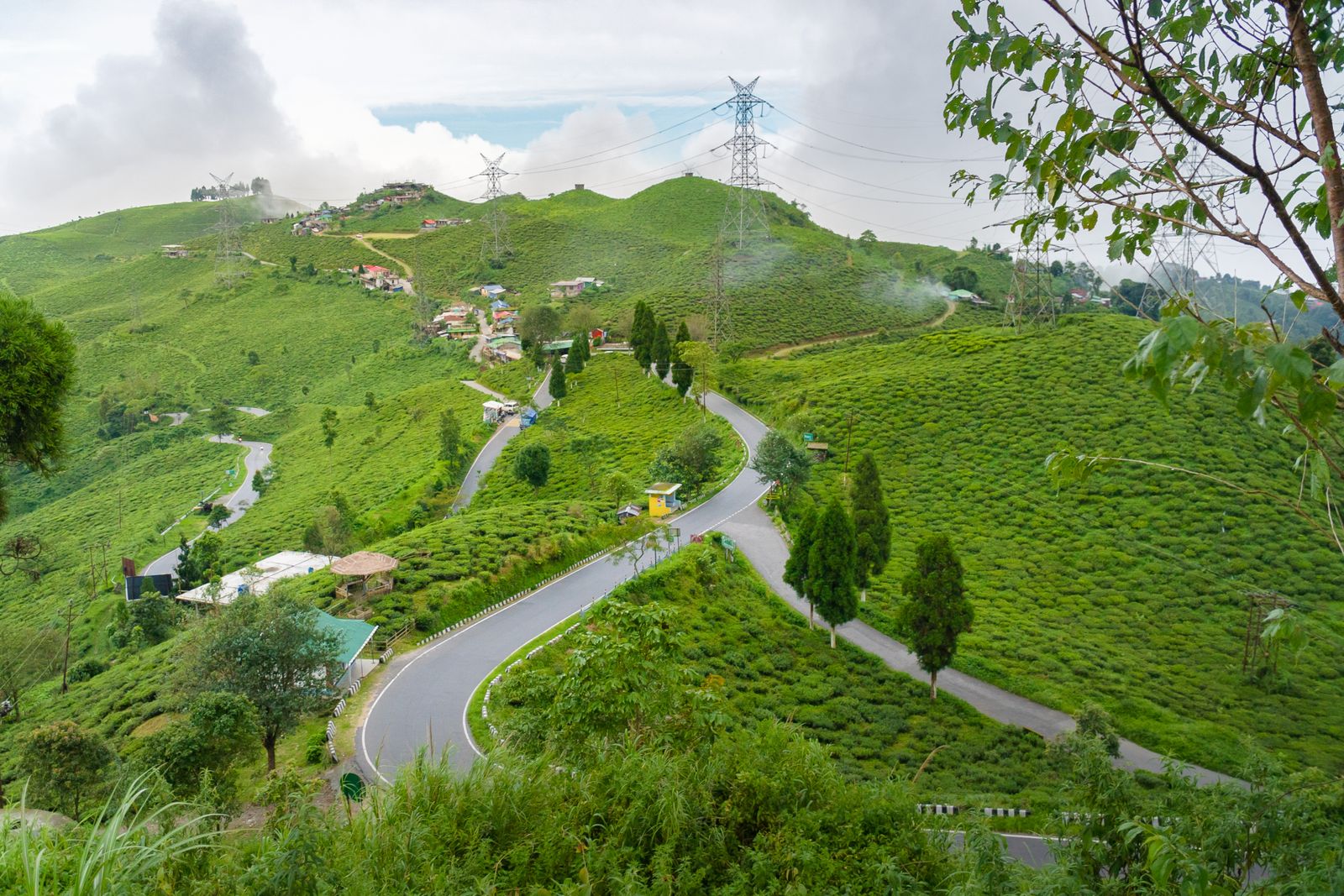
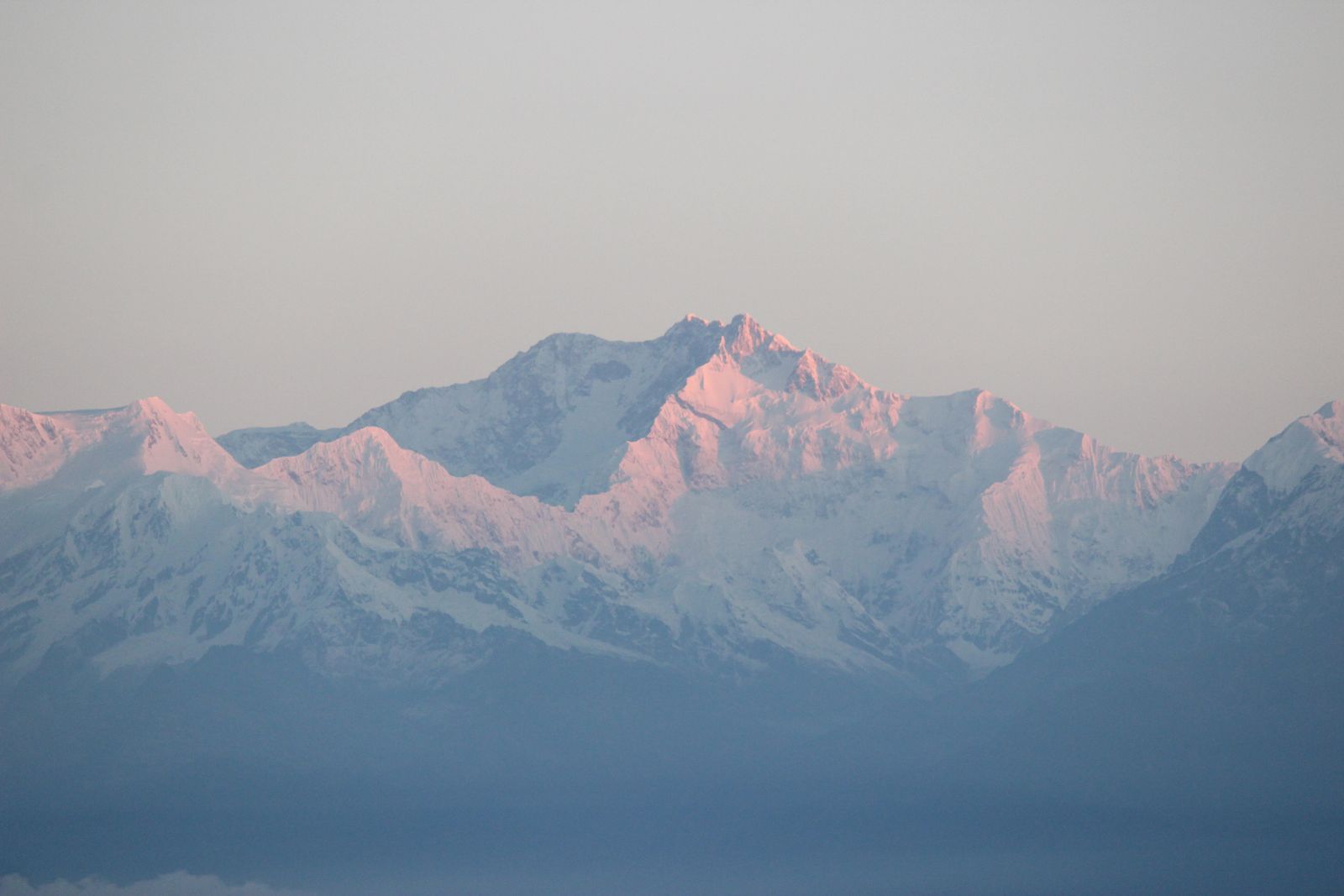
Darjeeling's houses spread along the forested ridge with the snow peaks of the Kanchenjunga range rising above the cloud

27.04° N 88.26° E · 2,042 m

Darjeeling

Tea, the toy train and a colonial town that still wakes to the Kanchenjunga.

Namaste नमस्ते Nepali. I bow to you. Said with palms together, at any hour.

In short

What is Darjeeling, and who is it for?

Darjeeling is for travellers who want the Himalaya at a walking pace: a Nepali-speaking town where tea is still plucked by hand below the Mall, steam still climbs to Ghum, and Kanchenjunga stands over the rooftops on a clear morning.

Altitude
2,042 m
Getting there
Bagdogra (IXB), about 70 km, about 3 hours by road
Best months
October to December, March to April
Give it
3 to 4 nights
Best for
Tea estates, steam railway, Kanchenjunga sunrises, slow heritage stays
Spoken
Nepali, Bengali, Hindi, English; also Tibetan and Lepcha
Permits
No permit is needed for Darjeeling: Indian citizens need only photo ID, and foreign guests need a valid Indian visa (Bagdogra accepts e-Visa arrivals). Foreign and OCI guests going on into Sikkim apply online through e-FRRO, about 30 days ahead, before they reach the state.

The name

दार्जिलिङ

Dorje-ling: the place of the thunderbolt

From the Tibetan dorje, the thunderbolt sceptre, and ling, a place. By local tradition the name first belonged to Dorje-Ling, a monastery built on Observatory Hill in 1765, where the Mahakal temple stands today.

Darjeeling, written in Nepali

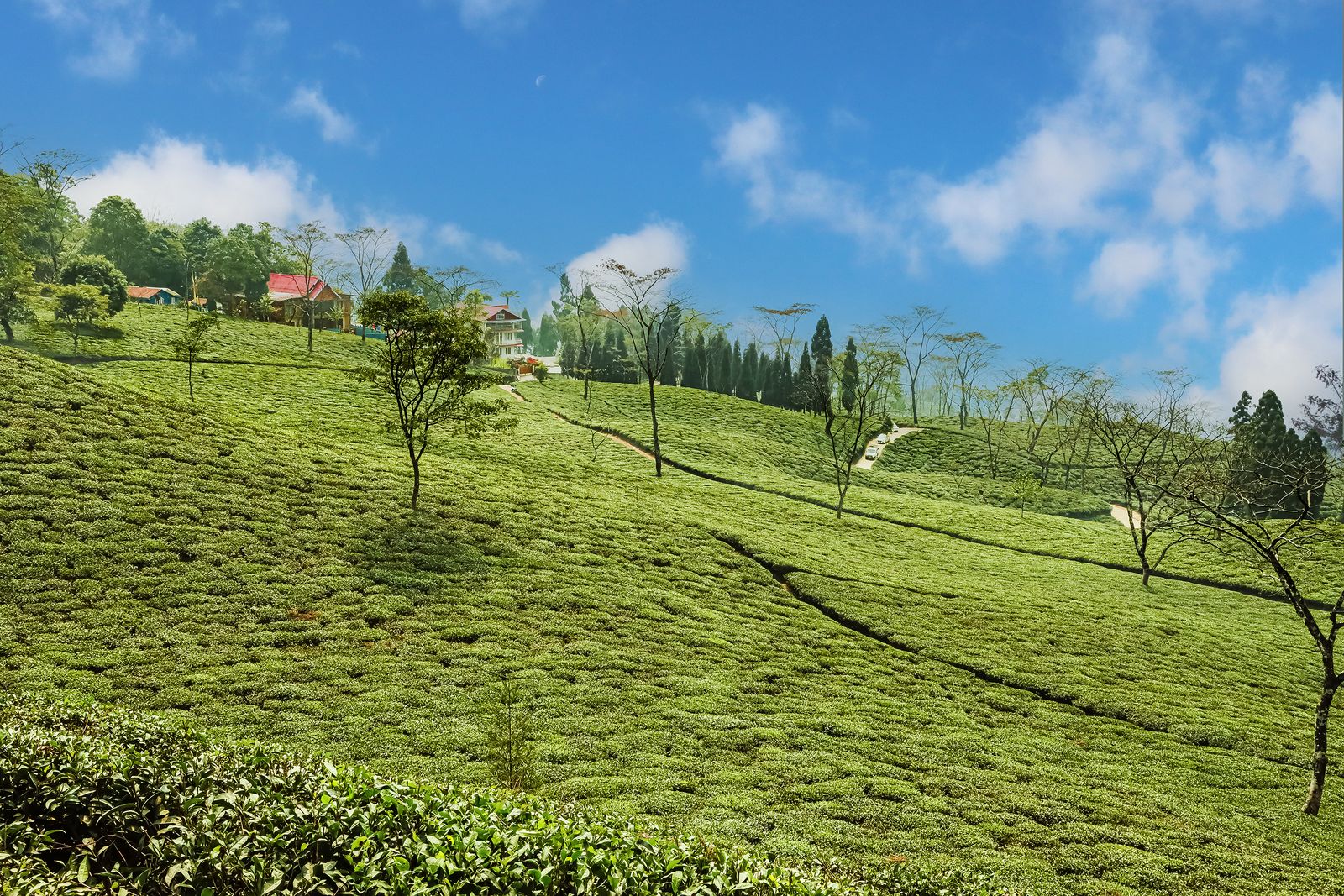
Darjeeling is the reason the rest of the region exists on any map. The British came for the climate in the 1830s, planted tea in the 1850s and built a two-foot-gauge railway up the ridge in 1881. What they left is a town of steep lanes, tin roofs and planters' bungalows, with 80-odd working tea gardens on the slopes below and the third-highest mountain on earth filling the northern sky on a clear morning.

We use Darjeeling as the first and last chapter of most journeys: two or three nights at a tea estate bungalow or one of the heritage hotels on the ridge, an early drive to Tiger Hill or a quieter viewpoint we prefer, a morning in the Himalayan Mountaineering Institute, tea tasting with a planter rather than in a shop, and a walk through the bazaar with someone who grew up in it.

The road up

126 m to 2,045 m, 70 km in about 3 hours

About 70 km and 3 hours: Rohini Road to Kurseong, then Hill Cart Road (NH110) through Sonada and Ghum. When landslides close it, we use Pankhabari Road or NH110 via Tindharia.

  1. Bagdogra airport (IXB)126 m · 0 km
  2. Kurseong, via Rohini Road1,483 m · 37 km · 1.6 h
  3. Sonada1,997 m · 53 km · 2.2 h
  4. Ghum, highest station on the line2,258 m · 64 km · 2.7 h
  5. Darjeeling2,045 m · 70 km · 3 h
  6. Tiger Hill, at dawn2,590 m · 81 km · 3.5 h
Altitudes and distances rounded. Times are for a private car in dry weather, without stops.

Darjeeling in five scenes

How a stay here actually unfolds

  1. Kanchenjunga's snow peaks lit orange by a low sun above a haze of blue foothills NSG

    04:40 · Tiger Hill, 2,590 m

    The mountain takes the light before you do

    The car leaves town at 04:00, turns off at Ghum and climbs the Senchal road through forest in the dark. At the top you stand at 2,590 m, 11 km from your bed, gloves on. Then Kanchenjunga turns pink and gold while the valleys below are still black: the summits catch the sun before the ground you stand on. On the clearest mornings Everest shows far to the west, and looks smaller only because it is further away. The forest you drove through is the Senchal Wildlife Sanctuary.

  2. Stone steps rising to a painted Buddhist monastery in Darjeeling, with a white stupa and carved mantra Abhinav Das

    06:30 · Ghum Monastery, Ghum, 2,225 m

    Butter lamps and the Buddha still to come

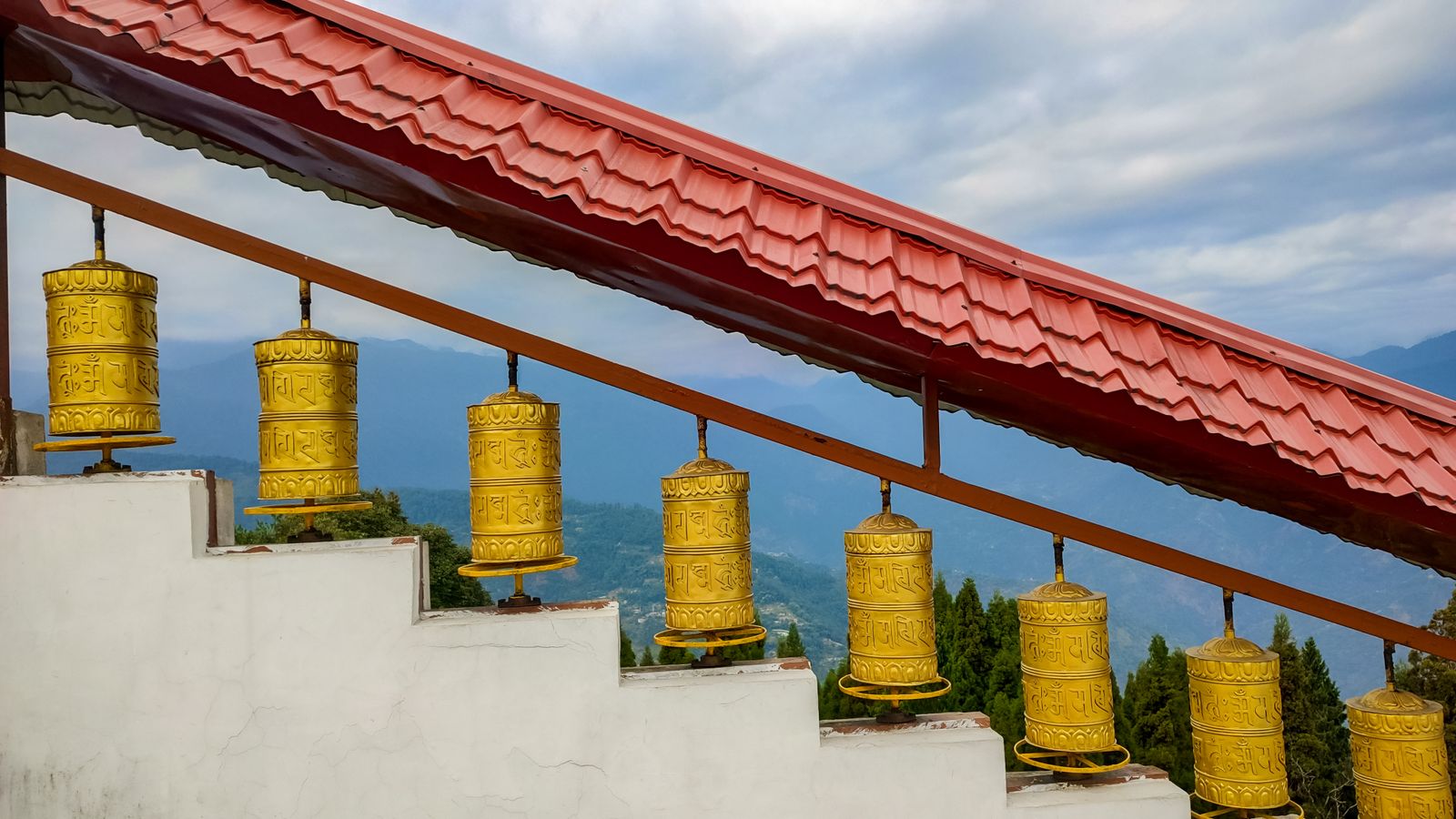
    On the way down, the car stops at Ghum. Yiga Choeling was begun in 1850 by Sokpo Sherab Gyatso, a Mongolian astrologer and monk. Its main hall holds a Maitreya Buddha 15 feet high: the Buddha of the age still to come. Butter lamps burn in rows before him and the air smells of juniper and wax. Walk clockwise, keep the altar on your right, and turn the prayer wheels as you pass. If the monks are at prayer, we sit at the back in our coats and wait.

  3. A Darjeeling Himalayan Railway steam engine hauling blue coaches through trees, smoke rising kabita Darlami

    Day 2, 10:30 · Batasia Loop, 5 km from Darjeeling

    The loop where the line turns back on itself

    At Batasia, commissioned in 1919, the track spirals over itself so the line can lose height without steepening the climb, and on 610 mm gauge the whole train comes back into view beside you. In the middle stands the memorial to the Gorkha soldiers of the Indian Army, with Kanchenjunga behind it on a clear day. The steam joy ride halts here for the photograph, and the Toy Train Weekend tells the engines and their crews in full. Above the loop is Ghum, India's highest station at 2,258 m, with a museum on its first floor.

  4. Street lamps glowing through thick fog above signs on a Darjeeling street at night Abhinav Kumar

    Day 2, 17:30 · Observatory Hill and Chowrasta, 2,134 m

    Temple bells, prayer flags and lamps in the fog

    At dusk, walk the short lane, about 90 m, up from the Mall to Mahakal on Observatory Hill. The Dorje-Ling monastery stood here in 1765, and by local tradition the town took its name from it. Today a Hindu priest and a Buddhist monk perform their rituals side by side, among lingams, a Buddha and layers of prayer flags. Come back down to Chowrasta as the lamps come on in the fog. The golden statue is Bhanubhakta Acharya, the poet who first put the Ramayana into Nepali, and the square around him is the town's evening walk.

  5. A wooden handloom strung with wool in the weaving workshop at the Tibetan Refugee Self Help Centre in Darjeeling Kushagra Dhall / Unsplash

    Day 3, 09:30 · Tibetan Refugee Self Help Centre, Lebong, 2,143 m

    Looms on the Hermitage spur

    Below the town on the Lebong road, on the spur locals still call Hermitage, a crafts centre opened on 2 October 1959, months after the Dalai Lama left Tibet. Zhu Dan, the wife of Gyalo Thondup, raised its first funds, and Tenzing Norgay sat on the founding committee. About 130 Tibetan families live and work here now, with a crèche and a school on the same ground. The workshops make carpets, thangkas, carved folding tables and leather boots, and the centre has sent its work to 36 countries. If the weavers are at their looms, watch from the doorway and ask before you photograph anyone. If a carpet tempts you, ask about sending it home.

Beyond the ridge

Four places a local adds when the Mall is full

Darjeeling is a district as well as a town. These are the places below and around the ridge we add when a stay has a spare day, each with the reason to go.

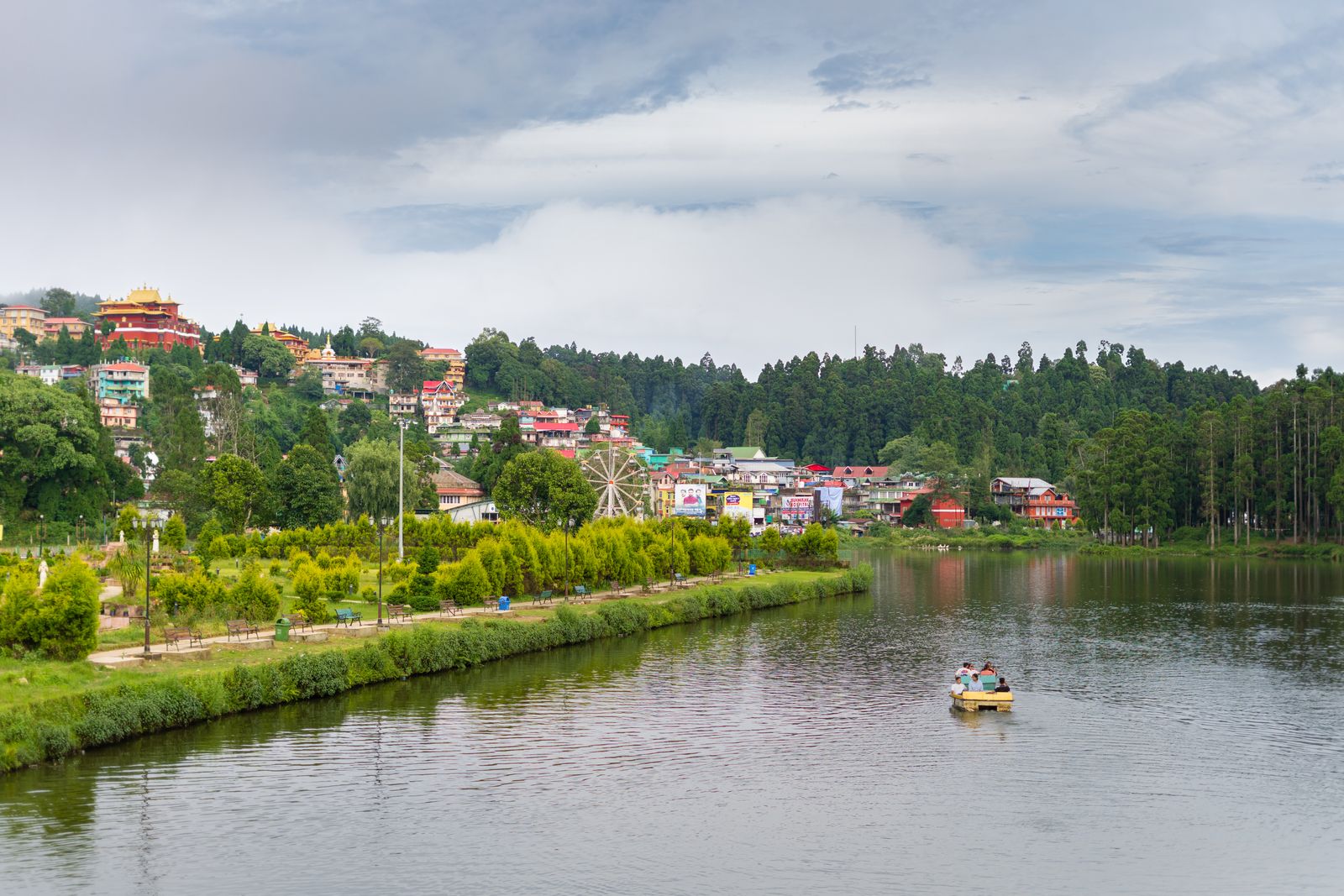
Sumendu Lake at Mirik with a boat on the water and the town's coloured houses on the slope above
Arto Suraj / Pexels
A tea tasting table: lidded cups, infused leaves and bowls of liquor from pale gold to amber
चिया

The taste of Darjeeling

Second flush Darjeeling tea

Chiya is simply tea in Nepali, but the second flush is the cup this ridge is known for. Plucked in May and June, the leaf gives a copper liquor with the grape-skin note tasters call muscatel, and it can only come from the 87 estates recognised by the Tea Board, on slopes between 600 and 2,000 m. The most prized muscatel comes off the Kurseong gardens below the ridge, Castleton, Margaret's Hope and Jungpana among them, and in town the old merchants sell it by garden and flush: Nathmull's on Laden La Road since 1931, Golden Tips on Nehru Road since 1933. We ask an estate for its tasting room in the morning: a row of white lidded cups, the wet leaf turned out on each lid, and the taster slurping hard so the tea reaches the whole palate.

Estate tasting room, mornings; second flush May to June, first flush from late February

Words to carry

Three words that open doors

Spoken here: Nepali, Bengali, Hindi, English; also Tibetan and Lepcha. These three are Nepali.

  • धन्यवाद Dhanyabad say dhun-yuh-BAAD Thank you Nepali
  • मीठो छ Mitho chha say MEE-tho chhuh It is delicious Nepali
  • बिस्तारै, दाइ Bistarai, dai say bis-TAA-rai, DAA-ee Slowly, brother (to a driver on the bends) Nepali
  • བཀྲ་ཤིས་བདེ་ལེགས Tashi delek say TAH-shee de-LEK Blessings and good luck: the greeting at Ghum and the Tibetan gompas Tibetan

When to go

Darjeeling, month by month

April, October and November rate best here. July: Wettest month, about 650 mm; bhanu jayanti on 13 july.

  1. Jan Average low 2 °C, high 11 °C. Quiet Coldest month, 2 °C nights; Maghe Sankranti mid month
  2. Feb Average low 3 °C, high 12 °C. Quiet Cold and dry, the first leaf only late in the month; Losar at the gompas
  3. Mar Average low 6 °C, high 16 °C. Good First flush in full; Campbell's magnolias in flower
  4. Apr Average low 9 °C, high 19 °C. Best First flush teas, mild days, spring haze builds
  5. May Average low 11 °C, high 19 °C. Good Second flush starts; Buddha Jayanti at the full moon
  6. Jun Average low 13 °C, high 20 °C. Monsoon Monsoon arrives, about 420 mm, mist on the ridge
  7. Jul Average low 13 °C, high 20 °C. Monsoon Wettest month, about 650 mm; Bhanu Jayanti on 13 July
  8. Aug Average low 14 °C, high 20 °C. Monsoon Heavy rain, deep green gardens, monsoon flush
  9. Sep Average low 13 °C, high 20 °C. Monsoon Rain easing late in the month, slips still likely
  10. Oct Average low 10 °C, high 19 °C. Best The mountain returns; Dashain and Puja fill the town
  11. Nov Average low 6 °C, high 17 °C. Best Dry and sharp, autumn flush; Tihar, 7 to 11 November
  12. Dec Average low 4 °C, high 14 °C. Good Driest month, 3.5 °C nights; carols, full after the 25th

BestGoodQuietMonsoon Average daily low and high, °C · source

The town's own year

Festivals Darjeeling keeps for itself

Dates move with the Nepali and Tibetan calendars, so we confirm each one when you choose your month. Arrive on the right day and you see the town as it sees itself.

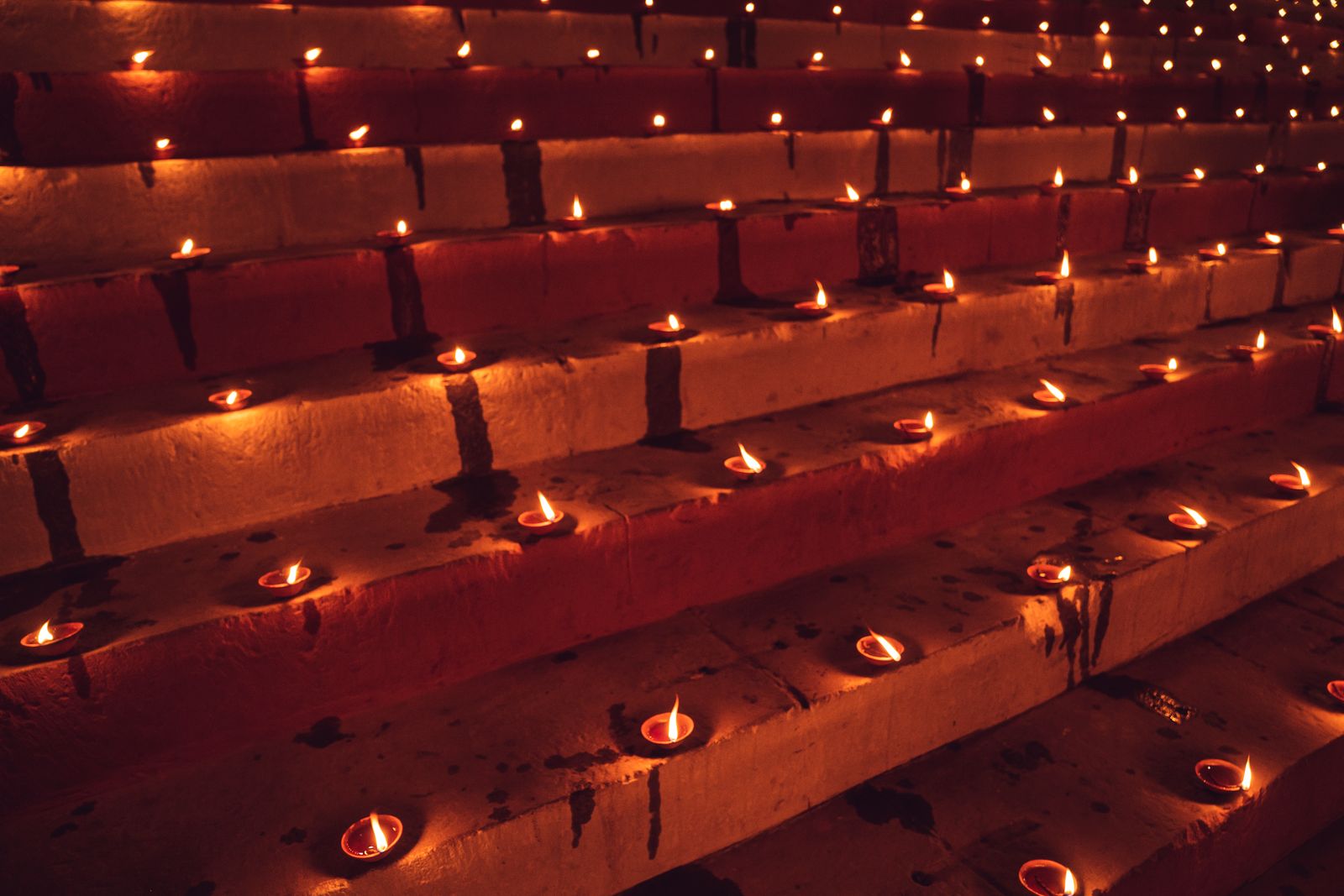
Rows of small oil lamps burning along wide stone steps on a festival evening
Yogendra S31 / Pexels
  1. Jan
    • Maghe SankrantiHomes across the hills

      Around 14 January, when the month of Magh begins: a family feast day, and a riverside fair at Jorethang on the Rangeet, held since 1961.

  2. Feb
    • LosarGhum, Lebong and the town's gompas

      The Tibetan new year, usually in February or early March. New prayer flags go up and families carry khadas to the monasteries.

  3. Apr
    • Sansari Puja and Mahakala prayersVillages and monasteries of the district

      The hill villages' worship of nature, and the Mahakala Drupchod, seven days of prayers in the Drukpa tradition, both on the district's April list.

  4. May
    • Buddha JayantiThe town's gompas

      The full moon that marks the Buddha's birth, awakening and passing, with butter lamps and prayers in every monastery.

  5. Jul
    • Bhanu JayantiChowrasta

      13 July, the birthday of Bhanubhakta Acharya, kept every year by the Nepali Sahitya Sammelan, founded here in 1924. His golden statue on the square is garlanded.

  6. Oct
    • DashainEvery Gorkha home

      In 2026, from Ghatasthapana on 11 October to the Tika day on 21 October. On the seventh day the Phulpati, flowers and leaves for the goddess, comes in procession to music; on Tika day elders give red tika and jamara.

    • The Puja holidaysHotels and the Mall

      Durga Puja falls in the same weeks and fills the town from the plains. We often base you on an estate and come up early.

  7. Nov
    • TiharEvery doorstep in town

      7 to 11 November 2026: crows, dogs, cows and oxen honoured in turn, Deusi singers at the gates after dark, Bhai Tika on the last day. Lights of Tihar spends all five days in the hills.

  8. Dec
    • ChristmasSt Andrew's and Chowrasta

      St Andrew's holds its carol service, the Mall is lit and Glenary's sells its plum cake. The town is calm until the 25th and full in the week after.

June to September

If you come in the rains

Three Nepali words cover the monsoon here. Kuhiro, fog, climbs out of the valleys most afternoons and sits on the ridge. Juka, leeches, wait on the estate paths, so wear long socks. Pahiro, landslide, is the word the drivers use at dawn when they call each other about the roads. The steam joy rides can be suspended in the heaviest rain, Singalila and the other forest parks close from 16 June to 15 September, and the mountain rarely shows.

That is the cost. The return is a town that belongs to itself: no queue on the Mall, schools and offices at work, and the gardens at their greenest, plucking the monsoon flush, a fuller cup that takes milk well. If you come, we base you lower, at Glenburn or across the Teesta in Kalimpong, keep a spare day before your flight, and choose the road up each morning.

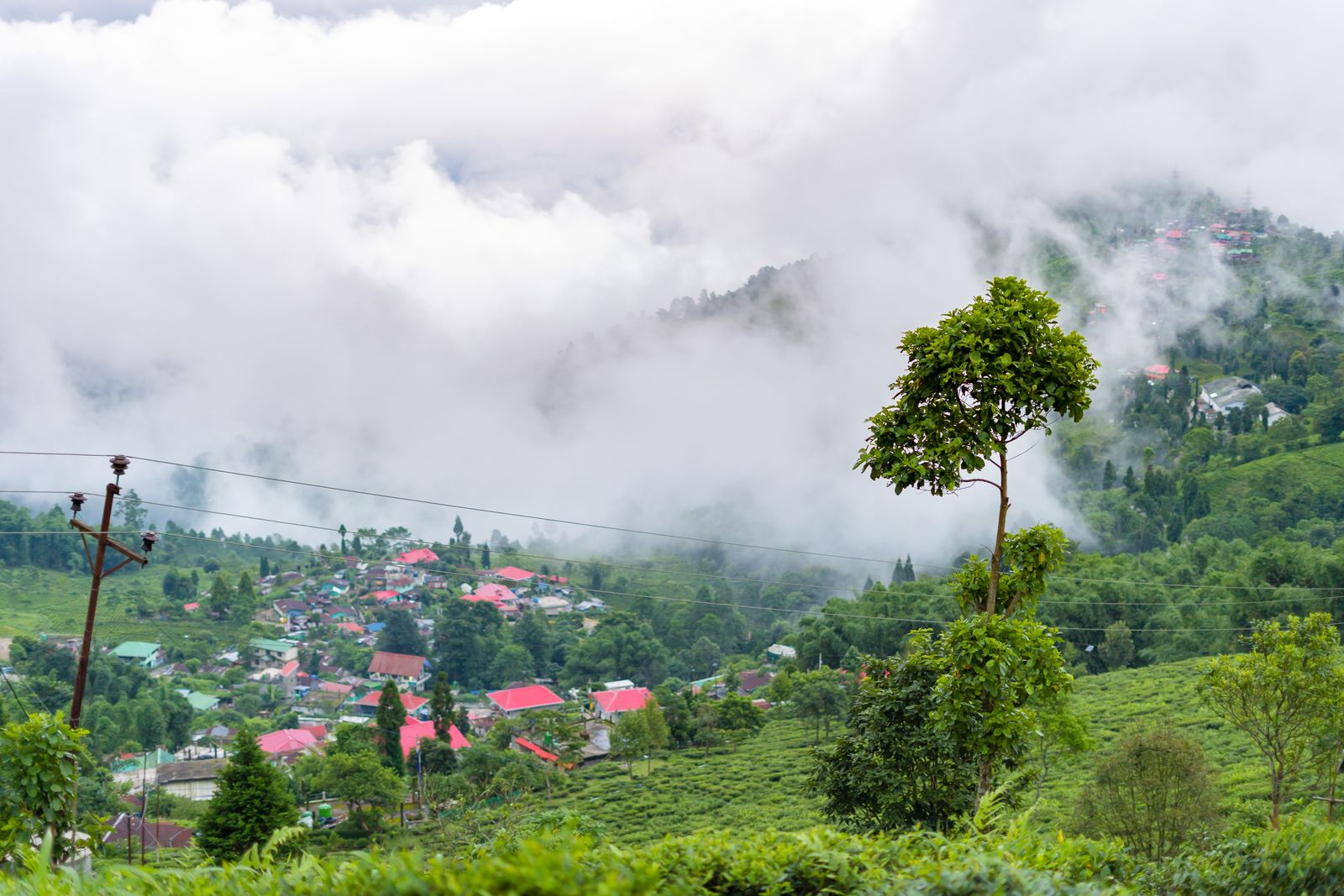
Cloud drifting across green tea rows and a scatter of tin roofed houses on a Darjeeling hillside

Solved before you arrive

What nobody warns you about in Darjeeling, and what we do about it

Darjeeling's troubles are crowds at dawn, cold old rooms and a crawl on Hill Cart Road. Here is how we get round each.

  1. The problem

    Tiger Hill at dawn is a queue of jeeps in the dark

    What we do

    The district caps Tiger Hill traffic with daily vehicle tokens, and our driver collects yours the afternoon before. We leave at 04:00 and a guide keeps your place at the rail. If the forecast is cloud we call it off at 03:30 and you sleep. In the Puja and Christmas weeks, when the queue is longest, we often watch from the north side of the Mall instead, which is a five minute walk from the old hotels.

  2. The problem

    The toy train joy ride sells out, and you share it with a crowd

    What we do

    We book first-class seats on the steam joy ride as soon as the railway opens them, and choose a morning departure when the ridge is clearest. For a train of your own, we apply to the Darjeeling Himalayan Railway for a steam charter, subject to its approval and the engines available that week. Our Toy Train Weekend is built around one.

  3. The problem

    The usual tea tour is a factory walk-through that ends in a shop

    What we do

    We ask an estate for a morning in its fields and tasting room during plucking season. You walk a section with a senior member of the garden staff, follow the leaf through withering and rolling, then cup first, second and autumn teas side by side the way buyers do. Glenburn runs its own tea experience for guests. There is no plucking from December to early February, so we move tea-led trips to spring.

  4. The problem

    Town hotels look out on traffic and rooftops, not the tea gardens you came for

    What we do

    Above the Mall the ridge is built out to the road, so a town window often gives you rooftops, wires and a water tank. We often base guests on a tea estate below the town instead, such as Glenburn in the houses listed below, where the rows fall away from the verandah and the mountain stands over them. You come up to Darjeeling for one planned morning, walk the Mall, and are back on the estate for tea.

  5. The problem

    Rooms in December are cold, and the old houses are colder

    What we do

    Darjeeling averages about 3.5 °C at night in December and under 2 °C in January, and many older buildings have no central heating. We book rooms with fireplaces, such as a Heritage Room at MAYFAIR, the fire-lit rooms at Windamere or a fireplace room at The Elgin, ask for the fire to be laid before you return, and check heaters, hot water and extra quilts before you arrive. An estate lower in the valley is warmer again.

  6. The problem

    Hairpins all the way up, and a monsoon that closes roads

    What we do

    We send a large car with a driver from the hills, stop at Kurseong for tea and a stretch, and keep ginger and the front seat for anyone who feels the bends. In the monsoon we check each morning which road up is open: Rohini, Pankhabari, or NH110 via Tindharia. Landslides cut these roads in October 2025 and again in June 2026, so every July to September plan carries a spare day.

Where we would put you

The right house matters more than the town

Room types and rates are confirmed for your dates in your quote.

  1. The Burra Bungalow at Glenburn Tea Estate, its green roof above a lawn set with white garden umbrellas and tables
    The Burra Bungalow at Glenburn, with the lawn laid for tea.A. J. T. Johnsingh, WWF-India and NCF, CC BY-SA 4.0, via Wikimedia Commons
    01

    Glenburn Tea Estate

    Tea estate bungalows · 8 suites · estate founded 1859

    A working tea estate 75 minutes from town above the Rangeet river: for guests who want the tea itself, real quiet and warmer nights.

    Ask for A Water Lily Bungalow suite: all four face the mountains directly. The Burra Bungalow sees them from its verandah.

    • WarmthTwo of the four suites in the Burra Bungalow have fireplaces.
    • BathroomThree of the four Burra Bungalow bathrooms have free standing bathtubs and all four have a walk in rain shower; the Water Lily Bungalow bathrooms have antique free standing bathtubs.
  2. The Windamere Hotel in Darjeeling seen from its terraced garden, with white painted railings and the hotel signboard
    Windamere from its garden on Observatory Hill.P.K.Niyogi, CC BY-SA 3.0, via Wikimedia Commons
    02

    Windamere Hotel

    Raj-era hotel on Observatory Hill · afternoon tea

    A short walk from Chowrasta, with fireplaces, formal dining and afternoon tea in the sitting rooms. Old Darjeeling, kept.

    Ask for A room away from the maintenance and restoration work, which the hotel runs between 10:00 and 18:00, and the fire lit before you return at dusk.

  3. The cream and yellow heritage building of the MAYFAIR Hill Resort in Darjeeling above its planted garden and statuary
    The MAYFAIR at Darjeeling, above its garden opposite Raj Bhawan.Mr. Debapriya Hore, CC BY-SA 4.0, via Wikimedia Commons
    03

    MAYFAIR Hill Resort, Darjeeling

    Hill resort opposite Raj Bhawan · 53 rooms · spa

    Full-service comfort: spa, library, doctor on call and heritage rooms with fireplaces. The easy choice for families and older parents.

    Ask for A Heritage Room in the main heritage building: the category the hotel lists with a fireplace.

    • WarmthHeritage Rooms come with fireplaces, described as keeping occupants warm and cosy.
    • Getting inDoctor on call, described as a physician ready at all times.
  4. A single tall tree standing in a Darjeeling tea garden, with a mown path running between the clipped tea bushes
    Darjeeling tea country, the hills the resort's terraces stand in.Soumya Banerjee / Unsplash
    04

    Taj Chia Kutir Resort & Spa, Darjeeling

    Resort in the Makaibari Tea Estate, Kurseong · 73 rooms and suites

    Tea terraces, the J Wellness Circle spa and an indoor heated pool, about 36 km from Bagdogra: the gentlest first night up from the plains.

    Ask for A valley-facing room with a terrace, and spa time booked with the room, not on arrival.

  5. The white and green colonial building of The Elgin in Darjeeling among tall trees, seen over a gilt topped railing
    The Elgin at Darjeeling, the 1887 Cooch Behar house near the Mall.Adam Jones, CC BY-SA 2.0, via Wikimedia Commons
    05

    The Elgin, Darjeeling

    Heritage house of 1887 near the Mall · fireplaces · spa

    Built in 1887 and first owned by the Maharaja of Cooch Behar: an old family house in the middle of town, with fires in the rooms, hot water bottles at night and the lamp-lit lanes a short walk away.

    Ask for A Deluxe Double or Twin with a fireplace, and the fire laid before you come in each evening.

  6. Cochrane Place at Kurseong, a timber and plaster colonial house on its stone terrace above the Pankhabari road
    Cochrane Place on the Pankhabari road at Kurseong.Rangan Datta Wiki, CC BY-SA 4.0, via Wikimedia Commons
    06

    Cochrane Place by Teesta Hotels

    Restored magistrate's house at Fatak, below Kurseong · 31 rooms

    Once the home of Percy John Cochrane, magistrate of Kurseong, with the Makaibari, Castleton and Ambootia gardens all round it: simpler than the Taj, and closer to the tea.

    Ask for A valley-facing room in the main house, away from the road.

Journeys through Darjeeling

What each journey does in Darjeeling

All Darjeeling and Kalimpong
Tea bushes covering a whole hillside below red roofed estate cottages and dark cypress trees Slow journey 7 nights

One Estate, Seven Days

Glenburn Tea Estate7

7 nights here at Glenburn Tea Estate, day 2: the factory by morning, the Rung Dung by noon

October to December, February to April from₹2,65,000
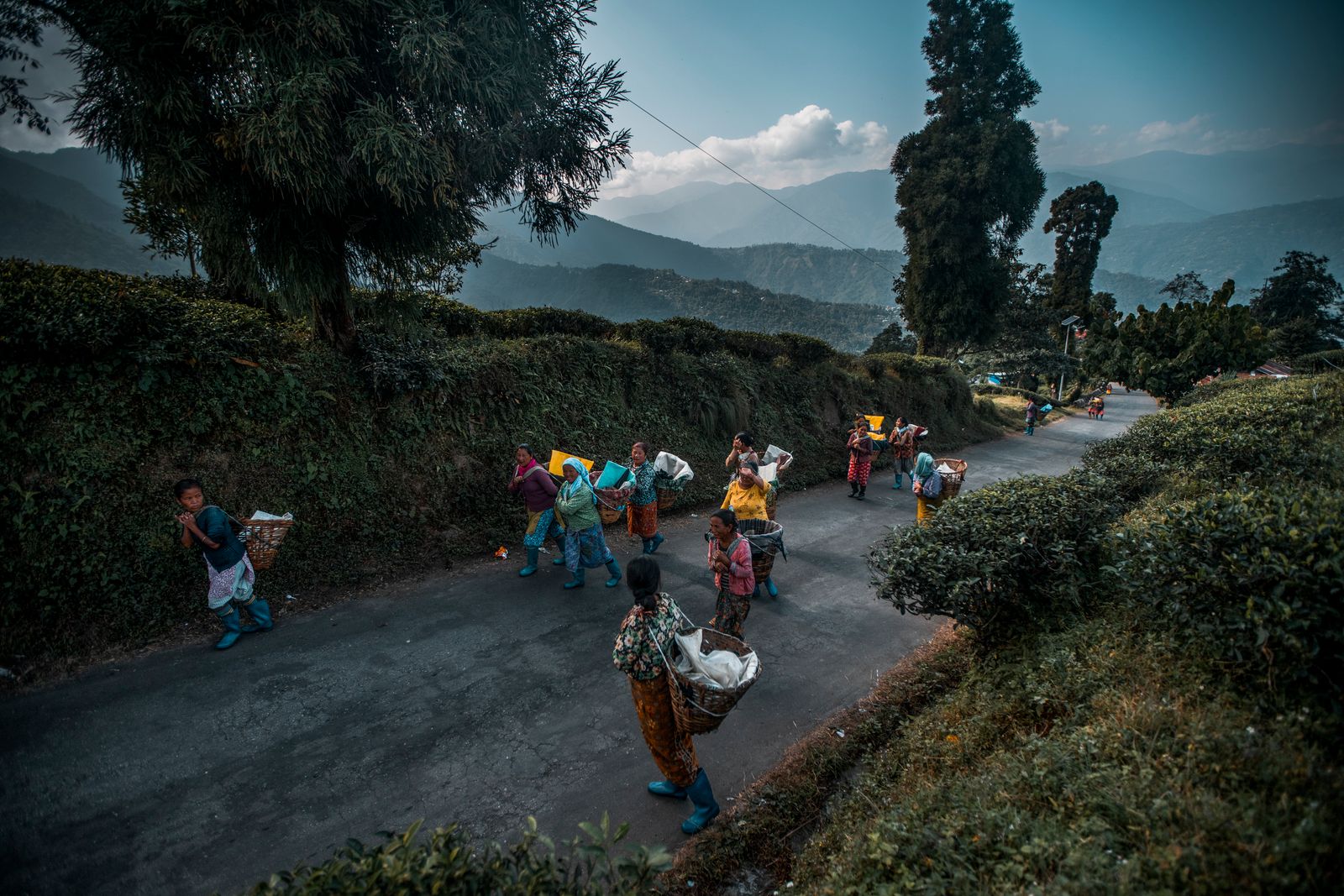
Tea garden workers carrying the day's pluck in sacks along an estate road at dusk, hills falling away behind Signature journey 6 nights

The Planter's Week

Kurseong2Glenburn Tea Estate2Darjeeling2

6 nights here at Taj Chia Kutir Resort & Spa, Darjeeling, day 2: a morning in Makaibari, an afternoon in Kurseong

Mar to Apr, Oct to Nov from₹1,60,000
Tea slopes above a village of red roofed houses with cloud pouring over the ridge in the Darjeeling hills Grandparents to grandchildren 7 nights

Three Generations

Kurseong (Makaibari)4Kalimpong3

4 nights here at Taj Chia Kutir Resort & Spa, Darjeeling, day 2: makaibari: the 1859 factory and a butterfly trail

October to mid December, March to April from₹1,50,000
A road winding between clipped tea slopes and rows of cypress in the Darjeeling hills under cloud Tea journey 6 nights

The Tea Trail

Kurseong1Glenburn Tea Estate3Ravangla2

4 nights here at Cochrane Place by Teesta Hotels, day 2: makaibari at seven, then over Ghum to Glenburn

March to May, October to early November from₹1,55,000
First light turning the Kanchenjunga range orange under a dark cloud bank, seen from Darjeeling above blue ridges Signature journey 7 nights

Kanchenjunga at First Light

Darjeeling3Pelling2Kalimpong2

3 nights here at Windamere Hotel, day 2: mahakal before the town wakes, the Mall's north side by day

Oct to Dec, Mar to Apr from₹1,55,000
Kanchenjunga turning soft pink at sunrise above a pale blue haze, the view from the hills of the Eastern Himalaya Honeymoon or anniversary 7 nights

A Himalayan Honeymoon

Glenburn Tea Estate3Kalimpong2Gangtok (Pangthang)2

3 nights here at Glenburn Tea Estate, day 2: sunrise from the four-poster, green tea by afternoon

October to April, clearest October to December from₹2,65,000
A row of golden prayer wheels on monastery steps above the wooded hills at Gangtok in Sikkim Signature journey 8 nights

The First Time: Darjeeling and Sikkim

Gangtok3Pelling2Darjeeling3

3 nights here at Windamere Hotel, day 6: down to the Rangeet and up to the tea ridge

October to early December, March to May from₹1,75,000
Boudhanath stupa at dusk in Kathmandu, its white dome, gilded tower and prayer flags seen from a rooftop under a pink sky Grand journey 14 nights

Three Kingdoms

Kathmandu3Darjeeling3Gangtok2Phuentsholing1Thimphu2Paro3

3 nights here at MAYFAIR Hill Resort, Darjeeling, day 4: over the Mechi, on a line drawn in 1817

October to mid December, March to April from₹5,70,000
A blue Darjeeling Himalayan Railway locomotive edging along a hill bazaar street between jeeps, shopfronts and people Railway short break 3 nights

The Toy Train Weekend

Kurseong1Darjeeling2

3 nights here at Taj Chia Kutir Resort & Spa, Darjeeling, day 2: the 06:30 local train, Kurseong to Darjeeling

October to December, March to May from₹85,000

Questions

Six questions about Darjeeling

Ask on WhatsApp
Can we see Kanchenjunga without going up Tiger Hill?

Yes. On a clear morning between October and December the range stands over the rooftops from Observatory Hill above Chowrasta and from many hotel windows, usually until mid morning, when haze builds over the valleys. For a dawn away from the Tiger Hill road we drive instead to Chatakpur, nineteen houses at about 2,400 m inside the Senchal sanctuary, 6 km of broken forest road above Sonada. Kanchenjunga at First Light tells the whole Tiger Hill morning.

Which days do Darjeeling's markets and sights close?

Thursday is the one to watch. Most shops in Chowk Bazaar close that day, bakeries apart, and so do the zoo and the Himalayan Mountaineering Institute beside it. Happy Valley's factory opens Tuesday to Saturday and rests from November to February. We plan your town days around all of this, so a Thursday becomes an estate morning or a drive to Mirik. The Hills with Children plans the zoo afternoon in full.

How can we tell real Darjeeling tea from the rest?

Read the packet. Real Darjeeling names its garden, its flush and the year, and carries the Tea Board's round Darjeeling logo, a woman holding two leaves and a bud, drawn in 1983. Darjeeling became India's first geographical indication in 2004, so only tea from the district's registered gardens may use the name. A bag that names no garden tells you nothing. Buy whole leaf and carry it in your cabin bag. The Planter's Week follows the leaf from bush to cup.

What should we call people here, and may we photograph them?

Call a woman older than you didi, elder sister, and a man dai, elder brother. It is how the town addresses a shopkeeper, a plucker or a driver, and it is always welcome. Ask before you photograph anyone, with a word and a nod at the camera; pluckers at work may prefer that you watch and walk on. In a gompa, walk clockwise and ask before photographing a monk or the altar. Three more Nepali words are under Words to carry.

Where does Darjeeling eat breakfast?

It depends who you ask. Glenary's bakery on Nehru Road opens at 07:00, when the shelves are full and the terrace over the valley is yours. Keventer's, on the same road since 1911, is where the town goes for ham, bacon and sausages. And the town itself eats sel roti, the ring-shaped rice bread, with aloo dum from a stall in Chowk Bazaar. We set a town morning around one of the three. Kitchens of the Hills walks the whole market.

How much walking does Darjeeling town ask of us?

More than people expect, and most of it on slopes. Chowrasta is closed to all vehicles, so the square is reached on foot; Mahakal is a short, steep lane above it, and Chowk Bazaar lies well below. For anyone who finds slopes hard, the car stops at the nearest point on the Mall road and a guide walks at their pace to a bench beside Bhanubhakta's statue. Three Generations plans a whole week this way.

Sources we checked for this guide (62)
  1. Coordinates 27.0375 N 88.2631 E, average elevation 2,045 m, 1991 to 2020 climate table, Bengali and Nepali official languages
  2. Name from Tibetan dorje (thunderbolt) and ling (place); 1835 deed presenting Darjeeling to the East India Company
  3. Dorje-Ling monastery built on Observatory Hill in 1765; Hindu and Buddhist worship side by side at Mahakal; approach about 100 yards from the Mall, on foot only
  4. Nepali spelling दार्जिलिङ
  5. 87 estates recognised by the Tea Board, 600 to 2,000 m; flush seasons; first planted 1841 by Archibald Campbell; first Indian GI in 2004
  6. DHR opened to Darjeeling July 1881, 610 mm gauge, UNESCO 1999, B-class steam built 1889 to 1925
  7. Batasia Loop commissioned 1919, about 5 km from Darjeeling, Gorkha war memorial, Kanchenjunga view
  8. Ghum at 2,225 m, Ghum station 2,258 m (7,407 ft)
  9. Tiger Hill 2,590 m, 11 km from Darjeeling; peaks lit before lower ground; Kanchenjunga looks higher than Everest because it is closer
  10. Tiger Hill daily vehicle token limit since 15 September 2019, tokens issued to drivers the previous day on a first-come basis; observation tower tickets priced by floor; Senchal road and sanctuary
  11. Steam joy ride about 2 hours round trip with 30 minutes at Ghum; monsoon suspensions
  12. Bagdogra to Darjeeling about 70 km via Matigara, Simulbari, Rohini Road and Kurseong, about 2 hours 45 minutes
  13. Official routes from Siliguri: Tindharia and Kurseong, Mirik, Rohini, Pankhabari
  14. Bagdogra Airport elevation 126 m, IATA IXB, domestic destinations incl. Delhi, Mumbai, Kolkata, Bengaluru, Chennai, Hyderabad
  15. Bagdogra is a designated airport for e-Visa entry
  16. Rohini Road severely damaged in the October 2025 landslides
  17. Rohini slip repair underway in late October 2025; Pankhabari and NH110 via Tindharia open
  18. June 2026 Mahanadi landslide cut NH110 between Siliguri and Kurseong
  19. NH110 runs Siliguri, Sukna, Tindharia, Kurseong, Sonada, Ghum to Darjeeling; narrow, encroached stretches
  20. Kurseong elevation 1,482.55 m, about 32 km from Darjeeling
  21. Sonada 17 km from Darjeeling and 16 km from Kurseong
  22. Chowrasta at 2,134 m; golden statue of Bhanubhakta Acharya
  23. Bhanubhakta Acharya first translated the Ramayana into Nepali
  24. Kanchenjunga 8,586 m, third-highest mountain
  25. Glenburn: 8 suites in Burra and Water Lily bungalows; Water Lily suites have direct mountain views
  26. Glenburn: open all year, no plucking December to early February, clearest views October to December, winter nights not below 7 °C
  27. Glenburn established 1859 by a Scottish tea company; estate elevation 1,000 to 3,000 ft (about 300 to 910 m)
  28. Windamere Hotel on Observatory Hill operating in 2026, afternoon tea, fireplaces; 2026 notice of restoration works between 10:00 and 18:00
  29. MAYFAIR Hill Resort: 53 rooms, opposite Raj Bhawan, spa, library, doctor on call; Heritage Room in the main building listed with fireplaces
  30. Taj Chia Kutir in Makaibari Tea Estate, Kurseong: 73 rooms and suites (69 rooms, 3 suites, 1 cottage), J Wellness Circle spa, indoor heated pool, about 36 km and 1 hour 10 minutes from Bagdogra (tajhotels.com, archived December 2025)
  31. Yiga Choeling: external structure established 1850 by the Mongolian astrologer and monk Sokpo Sherab Gyatso; 15-foot Maitreya Buddha
  32. Glenburn is 1 hour 15 minutes from Darjeeling and 3 hours from Bagdogra
  33. Bagdogra listed among airports for e-Visa entry (official e-Visa portal)
  34. Bagdogra 2026 direct routes: IndiGo to Bengaluru, Chennai, Delhi, Hyderabad, Kolkata, Mumbai (DGCA summer schedule 2026 cited)
  35. Climate normals 1991 to 2020 (IMD): December mean minimum 3.5 °C, January 1.7 °C, July rain 648.5 mm, December rain 2.8 mm
  36. Bhanu Jayanti kept every 13 July in Darjeeling by the Nepali Sahitya Sammelan (formed 25 May 1924); bust installed 17 June 1949, life-size statue 13 July 1996
  37. District festival list: Maghey Sakranti (January), Sansari Puja and the Gyalwang Drukpa's seven-day Mahakala Drupchod (April), Buddha Jayanti (May), Sawane Sakranti and Guru Purnima (July), Fulpati and Lakhe dances (October), Bhai Tika (November)
  38. Phulpati is celebrated on the seventh day of Dashain
  39. Dashain 2026: Ghatasthapana 11 October, Vijaya Dashami Tika 21 October
  40. Tihar 2026: 7 to 11 November, Laxmi Puja 8 November
  41. Magnolia campbellii named by Hooker after Archibald Campbell, Superintendent of Darjeeling; flowers late winter to early spring
  42. Tibetan Refugee Self Help Centre opened 2 October 1959 at Lebong (Hermitage); founded by Zhu Dan, wife of Gyalo Thondup; Tenzing Norgay on the founding committee; about 2,143 m; 130 Tibetan families; creche, nursery and school
  43. Tibetan Refugee Self Help Centre came into existence on 2 October 1959; situated at Lebong, locally known as Hermitage
  44. Centre makes carpets, thangkas, carved folding tables and frames, metalwork and leather boots; exported to 36 countries
  45. Tenzing Norgay settled at 19 in the Sherpa community of Too Song Busti (Toong Soong), Darjeeling; died 1986, cremated at HMI
  46. Chowk Bazaar: most shops closed on Thursdays except bakeries
  47. Street food at Chowk Bazaar: sel roti, alu dum, chhurpi, momos, thukpa
  48. Zoo and HMI closed to visitors on Thursdays
  49. Happy Valley factory Tuesday to Saturday, closed November to February; established 1854, 3 km from Chowk Bazaar
  50. Glenary's bakery on Nehru Road opens at 07:00, terrace over the valley
  51. Keventer's, Nehru Road, since 1911: ham, bacon and sausages
  52. The Elgin, Darjeeling: built 1887, owned by the Maharaja of Cooch Behar, fireplaces and hot water bags, near the Mall
  53. Cochrane Place was the home of Percy John Cochrane MBE, magistrate of Kurseong; overlooks Makaibari, a few yards from Castleton
  54. Cochrane Place by Teesta Hotels, 132 Pankhabari Road, Fatak, Kurseong; 31 rooms
  55. Tea Board's round Darjeeling logo created in 1983: a lady in profile holding two leaves and a bud, registered as a certification trade mark (checked 20 September 2026)
  56. Nathmull's, Laden La Road, Darjeeling: tea merchants since 1931 (review finding)
  57. Golden Tips, Nehru Road, Darjeeling: since 1933 (review finding)
  58. Kurseong gardens named for muscatel second flush: Castleton, Margaret's Hope and Jungpana (review finding, which cites the Wikipedia page for each estate)
  59. Chatakpur: nineteen village houses at about 2,400 m inside the Senchal Wildlife Sanctuary, 6 km of broken road above Sonada, Kanchenjunga from most homestays (site data: quiet-places-near-darjeeling.json and the month-by-month journal note, both checked 20 September 2026)
  60. Tashi delek is written བཀྲ་ཤིས་བདེ་ལེགས (bkra shis bde legs) and is used as a greeting in Tibetan communities and neighbouring regions (checked 20 September 2026)
  61. Taj Chia Kutir: the hotel page (archived December 2025) gives about 36 km and 1 hour 10 minutes from Bagdogra; listings read on 20 September 2026 give 35 to 38 km and about 1 hour 12 minutes, so the copy says 'about'
  62. Re-checked 20 September 2026: Dashain 2026 Ghatasthapana 11 October, Phulpati 17 October, Vijaya Dashami 21 October; Tihar 2026 Kaag Tihar 7 November, Laxmi Puja 8 November, Bhai Tika 11 November

Facts checked against official and published sources, September 2026. Roads, permits and fees change: we confirm every detail again for your dates.

The view from Deolo Hill above Kalimpong, tall firs framing forested ridges and a faint rainbow over the valley after rain Continue the journey Kalimpong Kalenpung: in Lepcha, the hillock where people gather

Plan my journey

Darjeeling, your way

Tell us the month and who is travelling. A designer in the hills replies within 24 hours with a first route and a straight price.

At its best
October to December, March to April
Stay
3 to 4 nights
Fly into
Bagdogra (IXB), about 70 km, about 3 hours by road
+91 86178 24110 Message a designer Support 24×7, every day of your journey
With country code if outside India. Either this or email is enough.
Who is coming, the pace you like, the occasion. A sentence is fine.
Add more detail
Their ages help: add them in your note
Permits in Sikkim and fees in Bhutan depend on it
A week in the hills starts around ₹1.4 lakh per person, and Bhutan around ₹3.25 lakh.
Calls from our office, 8am to 9pm IST (GMT+5:30)
Darjeeling, Kalimpong, Gangtok, Pelling, Bhutan, Nepal

No deposit to begin, and nothing is booked until you say yes.