
Drivers, guides and safety
Who looks after you once you land
The people who drive, guide and cook for you, the vehicle rules in Sikkim and Bhutan, what a day with us feels like, how we keep you safe on mountain roads, and what we leave behind.
In short
What is it like to travel with Darjeeling Trips once the journey begins?
From Bagdogra arrivals you travel in a private car, usually a Toyota Innova Crysta, with a driver who lives in these hills, joined by local guides in each region and, in Bhutan, the licensed guide the law requires. Sikkim's sightseeing rules and Bhutan's green tax mean locally registered cars on some days, and your quote names every handover. Road days rarely pass six hours, and the high days carry oxygen, water and blankets in the car.
Your team
The people around your journey
Everyone here lives in the mountains they show you. Most guests meet four or five of them; a Bhutan or trekking journey adds a few more.
-
Your travel designer
The person who builds your plan, from our office at Salbari in Darjeeling district. They book every house, drive, guide and permit, and write the quote that names each one with the date its rate was checked. The same person answers your questions before, during and after the journey.
A driver from the hills
Your driver meets you at Bagdogra arrivals, and from then on is the person who knows where a day can bend: which tea shop is open at seven, which washroom is clean, which bend holds the view worth stopping for, and how long the queue at Rangpo really is. They live in these hills and drive them all year, in the monsoon as well as in November.
-
Local guides, region by region
One for Darjeeling's railway and tea gardens, others for Kalimpong, Gangtok, West Sikkim and the Kathmandu valley, and naturalists on wildlife journeys. Each is chosen for the place, and for how well they read a monastery or a forest.
-
Your licensed Bhutanese guide
Bhutan requires every tourist to travel with a licensed guide. Yours meets you at Paro arrivals or at the Phuentsholing gate, orders lunch in Dzongkha, holds your place at a festival and stays with you to the departure gate. Your guide and the Bhutanese car come from a Bhutan-licensed operator, named in your quote with the rest of your Bhutan costs, while the number you call stays ours.
-
Our chef, Suman Barman
He writes the dietary brief sent to every kitchen on Kitchens of the Hills, cooks the hill dinner offered on The First Time, and packs the border-day hamper on Three Kingdoms.
-
Trek crews and estate guides
On the Goecha La trek, a licensed Sikkim trek guide, cook and porters; on the Singalila Ridge, our senior guide beside the registered local guide the park requires; on tea estates, the estate's own walking guides.
-
Support, 24x7
Our Darjeeling team answers +91 86178 24110 by phone and on WhatsApp at any hour while you travel. Your driver's number and ours are the only two you need, and WhatsApp still gets through on hotel Wi-Fi.
Vehicles and rules
Which car, where, and why
Taxi unions, border rules and protected areas decide which car may run each road, so a long journey uses more than one. Every handover is planned for a hotel door or a border gate, and named in your quote.
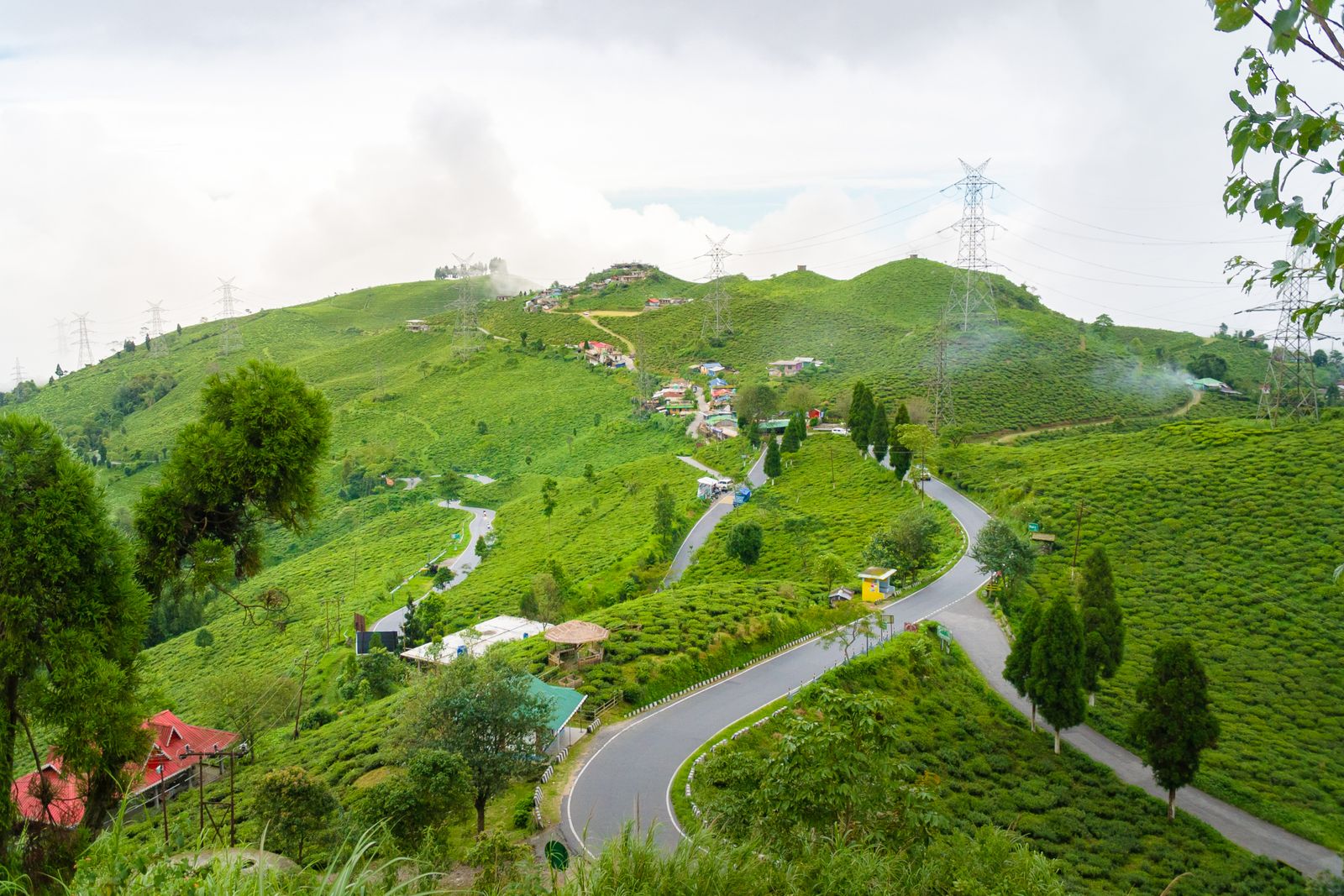
| Where you are | Your vehicle | The rule behind it |
|---|---|---|
| Bagdogra, Darjeeling, Kalimpong, the Dooars | Toyota Innova Crysta or similar, with your driver from the hills | One car for the West Bengal transfers, with fuel, tolls and parking paid |
| Darjeeling town day and Tiger Hill | Your car from the hills, with a Tiger Hill vehicle token collected the afternoon before | The district limits Tiger Hill traffic with daily tokens, issued to drivers a day ahead |
| Transfers into Sikkim | Your car from the hills drops you at Gangtok or Pelling and collects you later | West Bengal cars may drop and pick up inside Sikkim, but not tour it |
| Gangtok, Pelling and Sikkim sightseeing | A Sikkim-registered car; a Pelling syndicate car on the local days | Sikkim's taxi rules keep local touring for Sikkim-registered vehicles |
| Tsomgo, Nathu La and Zuluk | A Sikkim-registered permit SUV from a registered operator | Protected-area permits run through registered operators and SK-plate cars |
| North Sikkim: Lachung and Lachen | A Crysta from a registered Sikkim operator | Every car must pass the Tung checkpost by 16:00, in both directions |
| Singalila Ridge to Sandakphu | A Land Rover or Bolero from the local association, with its own driver | Ridge vehicles and their fares are set at the association's counter |
| Bhutan | A Land Cruiser Prado class SUV, or a Hiace for five or six, with a Bhutanese driver | Indian cars pay Nu 4,500 per vehicle per night beyond Rinchending, so a Bhutanese car takes over |
| Nepal | A Nepal-registered car from Kakarbhitta; a private car and driver in Kathmandu | Cars change at the Mechi bridge, with our people waiting on each bank |
Driving hours
The road rules we plan by
Mountain roads set the pace here. These are the limits every itinerary is checked against before it reaches you.
No day is planned with more than six hours of driving, except a transfer or border day that your plan names as one, such as Gangtok to the Bhutan gate, or a plan B when NH10 is shut. No long drive follows a 04:00 start. Typical road days take three to five hours with stops, and we break them where there is something to stop for: tea in Kurseong, lunch beside the Rangeet or at a monastery gate, momos where your driver eats. Anyone who feels the bends takes the front seat, and we stop about every two hours whether or not anyone asks.
Departure days are planned backwards from your flight. After Gangtok or Pelling, a Bagdogra flight from 14:00 keeps the last morning calm; from June to September we suggest a later flight still, because a closed road should cost you an hour, not a ticket.
And we plan for the road we have, not the one on the map. A hill highway carries trucks, army convoys, school children and cows, so overtaking waits and the horn does the talking. If the car sits behind a convoy on NH10 for twenty minutes, that is the day working properly, not badly. Long drives are timed to finish in daylight, because these roads have no lighting and the last hour of a descent is the one you want in the sun.

A border day
Gangtok to the Bhutan gate, hour by hour
The longest day we plan, and the one guests ask about most. This is day four of Two Kingdoms: 230 km from Gangtok to the Bhutan gate at Phuentsholing, about seven hours at the wheel. From the Hills into Bhutan makes the same crossing from Kalimpong, 180 km, reaching the gate at about 15:30.
-
06:30
The road is read before you wake
Your driver calls the NH10 police post and the drivers coming the other way. If the highway is blocked near Sevoke, the day goes down through Gorubathan instead and you hear it at breakfast, not at a barrier.
-
07:00
Breakfast boxes, and one car for the day
The Nor-Khill kitchen packs breakfast, because the first two hours have nowhere worth stopping. The Sikkim-registered car that took you up to Tsomgo goes back to its own yard, and your driver from the hills loads the bags at the hotel door. The passport or voter ID for the Bhutan gate rides in your day bag from now on, never in the boot.
-
08:30
Out of Sikkim at Rangpo
The road drops to the Teesta and leaves the state at the Rangpo barrier, where the car's papers and your permits are checked. Your driver hands them over and deals with the officer; you wait in the car unless you are asked for.
-
09:30
Tea at Teesta Bazaar
The first stop: washrooms, tea and a stretch by the water. On the ridge above you is Kalimpong, and in it Bhutan House, where the Gangtok-born princess who would draw Bhutan's first flag was married in 1918. You pick that thread up again in Thimphu.
-
11:30
The hills end, and the tea begins
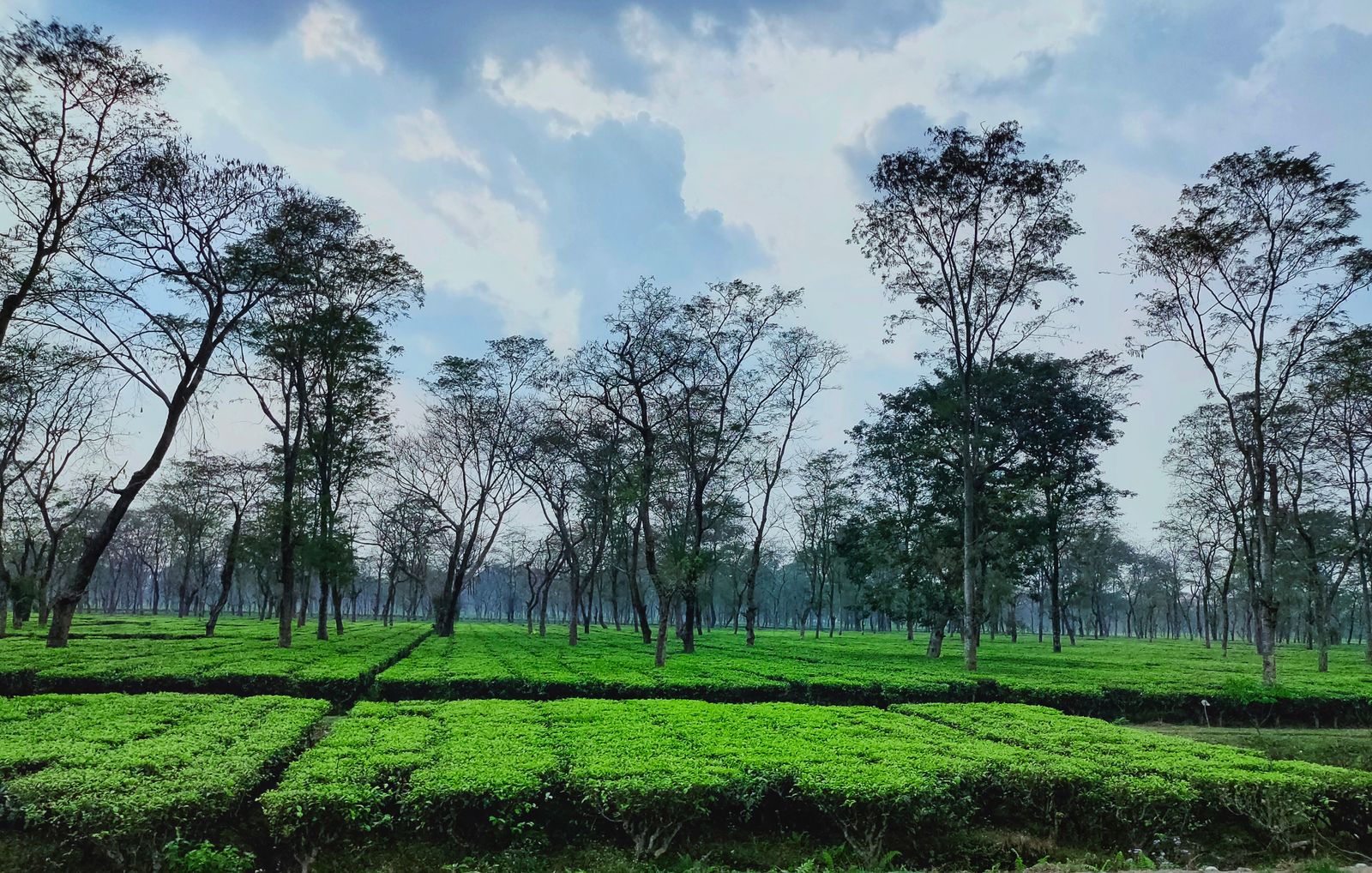
Below Sevoke the gorge opens out and the road turns east into the Dooars: flat tea gardens clipped under lines of tall shade trees, wide stony rivers coming down from the north, and the Bhutan foothills blue ahead. A second stop here for tea and a walk about.
-
14:00
Through the Bhutan Gate at Jaigaon
Jaigaon's main street runs crowded right up to the gate. Your Bhutanese guide, registered at the land port 48 hours ahead, meets you there with the papers, and your driver from the hills moves the bags into the Bhutanese car that takes over from here. You walk through the gate and set your watch 30 minutes forward.
-
16:00
An evening with nothing in it
A late lunch at Hotel Druk, a few steps inside the gate, and then nothing at all. Phuentsholing lies at 293 m, so the evening is warm, and the town is yours on foot: Bhutan asks for a guide only above Rinchending. From the Hills into Bhutan walks at dusk to Zangtho Pelri Lhakhang, built as Guru Rinpoche's copper-coloured mountain. Tomorrow climbs 2,000 m to Thimphu.
Safety and support
How we keep you safe on the road
Most of what keeps a mountain journey safe happens before you notice it. This is what runs quietly behind every day.
- A road report before every driveYour driver checks the route with the police, district updates and other drivers the evening before, then again at dawn.
- A second way round every main roadYour plan names the long way round for each day, and your driver has driven them all, which is why a closure usually costs hours rather than a night.
- Oxygen on the high daysAn oxygen canister, blankets and water ride in the car to Tsomgo, North Sikkim and Zuluk; trek parties carry bottled oxygen and a full first-aid kit.
- WhatsApp for where the signal failsCoverage drops on the high roads at Tsomgo, Zuluk and the Singalila Ridge, so your guide checks in whenever it returns, and a WhatsApp message still gets through on hotel Wi-Fi when a call will not.
- A written plan B for every dayEach day of your itinerary carries its own fallback for weather, a closed road or a hidden mountain, written in before you travel.
- Spare mornings where the sky decidesThe Everest flight is booked early in your Kathmandu stay so a cloudy dawn can be retried, Darjeeling dawns get a second try where the nights allow, and a pre-dawn start is cancelled when the 03:30 forecast says cloud.
- The 16:00 gate on the North Sikkim roadEvery vehicle, going up and coming down, must pass the Tung checkpost by 16:00, so a Lachung or Lachen day is planned backwards from that hour rather than forwards from breakfast.
- Medical help within reachThe larger hospitals lie in Siliguri, below the hills, and in Gangtok, and Before you travel names them. On Three Generations we brief a local doctor in Kurseong and Kalimpong ahead of arrival.
- Permits and papers in the carYour guide or driver carries every permit, ID copy and fee receipt for the party, and deals with the officer at each post.
- Flights watched on both endsWe track your flight on arrival day and time the last drive around your departure, which is why we ask for flights home from 14:00 after Pelling or Yuksom.
Leaving the hills better
What we leave behind us
Sustainable luxury here is a set of habits, not a certificate. All six of ours are set out on About us; two of them belong to the road.
We book no elephant-back safaris in the Dooars. Open jeeps with the forest department's own guides take you to the rhinos instead, on the parks' routes and time slots, and at Jaldapara that means the early run before the grass warms.
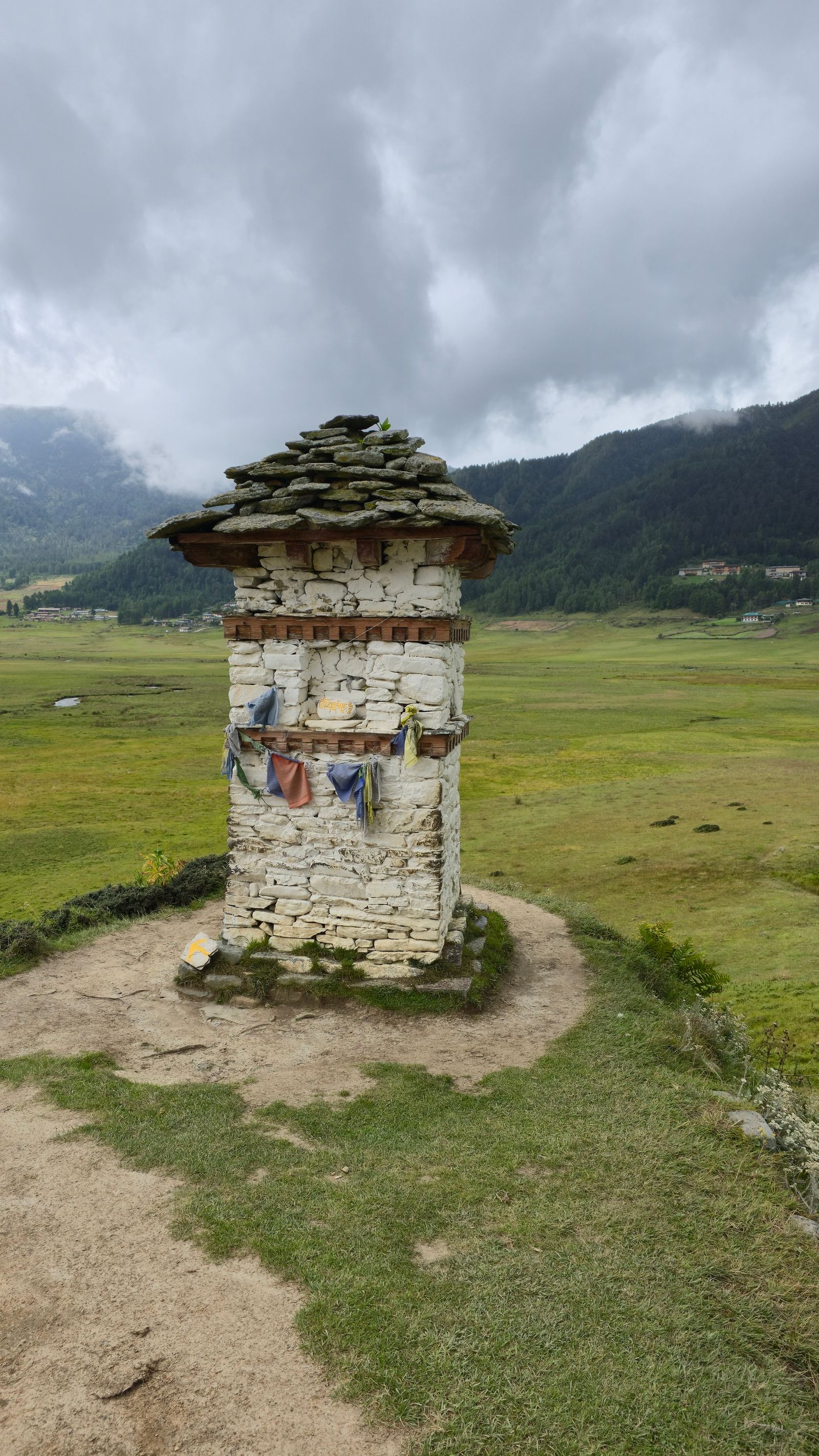
And we keep our distance. In Phobjikha the black-necked cranes are watched from behind the fences and from the farm tracks at the valley's edge, voices low and the flash off, and we fly no drones over the valley: the marsh they roost on has been a Ramsar site since 2014, and the power cables there run underground so the birds do not hit them.
Questions
On the road, answered straight
Where does the car change hands on a journey through two or three states?
Your driver from the hills stays with you on most days, and meets you at Bagdogra arrivals. Local rules bring in other cars for three things: a Sikkim-registered permit vehicle for Tsomgo, Nathu La and the north; a Pelling car for sightseeing there, through the local taxi syndicate; and a Bhutanese car and driver from the Phuentsholing gate or Paro airport, which Bhutan's rules require beyond the Rinchending checkpoint. Tiger Hill needs a vehicle token, which your driver collects the afternoon before. Each handover is planned for a hotel door or a border gate rather than a roadside, and your quote names every one of them with the day it happens.
How much luggage fits, and where will six of us sit?
A Toyota Innova Crysta takes three or four guests with luggage in comfort, with the front seat kept for anyone who feels the bends. Five or six travel in two cars, which also means nobody lifts a case at an airport kerb. In Bhutan it is a Land Cruiser Prado class SUV, or a Toyota Hiace for five or six. The Singalila Ridge is different: only the local association's Land Rovers and Boleros run on that track, with their own drivers.
Can the long border day be broken in two?
Yes. Gangtok to the Bhutan gate is 230 km and about seven hours, and a night in the Dooars splits it, leaving you at the gate by lunch the next day. It is the choice we put to anyone over 65, and to anyone who would rather not give a whole day to the car. It is the longest day we plan: every other day is built under six hours unless your itinerary names it as a transfer or border day.
Are the hill roads safe in the monsoon?
They are slower and less predictable. From mid June to mid September, slides can close NH10 along the Teesta or the climb to Darjeeling for hours or days. The climb has three ways up, Rohini Road, Pankhabari Road and the Hill Cart Road through Tindharia, so one closure rarely stops the day, and NH10 is diverted through Gorubathan and Lava. We ask for a spare day in any monsoon plan, and we do not drive past a closure the police have not opened, whatever the queue behind us is doing.
Do we need a guide as well as a driver?
In Bhutan, yes, by law: a licensed Bhutanese guide travels with you from arrival to departure, and since September 2026 a guide meeting you at the Phuentsholing land border must be registered 48 hours before the crossing, so a road entry cannot be arranged at the last minute. Elsewhere we add local guides on the days that reward one, such as monasteries, Tsomgo, the railway and tea gardens, and the Kathmandu valley, plus the registered local guide the Singalila park requires. Drive days and slow days need only your driver.
What happens if someone feels unwell on a high day?
Tell your driver or guide at once. At altitude the remedy is height lost, not rest, so we turn back rather than push on: a headache at Tsomgo means we stop at the lake and leave Nathu La for another journey, and the car carries the oxygen, water and blankets named above. On the road we stop, rest and reach a doctor if needed. An evacuation is paid by your travel insurance, which is why our booking terms ask for cover that includes it, and our altitude rules explain how the days are built to avoid the question.
Can we stop wherever we like on a drive?
Yes. The car is yours for the day, so a tea stall, a viewpoint or a village shop is a word to your driver, not a change to the plan. Two exceptions: landslide stretches, where stopping is unsafe, and the army camps and convoys on the Zuluk, Nathu La and North Sikkim roads, where photography is not allowed at all. Your driver will say which is which before you reach for the camera.
Sources we checked for this page (29)
- Company facts: office at Salbari in Darjeeling district; phone and WhatsApp +91 86178 24110; support 24x7 while guests travel; the team, including chef Suman Barman; the practices behind 'leaving the hills better'
- Tiger Hill daily vehicle tokens since 15 September 2019, issued to drivers the previous day on a first-come basis
- Only Sikkim-registered taxis may do sightseeing, Tsomgo and Nathu La inside Sikkim; West Bengal taxis drop and pick up
- Pelling taxis work through the PTDA syndicate; outside vehicles may drop but not do local sightseeing
- Zuluk: only Sikkim-registered vehicles; PAP through registered operators
- All tourist and light vehicles from Gangtok or Mangan must cross the Tung checkpost by 4 pm, going up and coming down (ETV Bharat, 11 September 2026)
- Indian vehicles beyond Rinchending check post pay Nu 4,500 a day as green tax
- A licensed guide is mandatory for tourists in Bhutan
- NH10 blocked by landslides at Sevoke in June 2026; traffic diverted via Moonsong and Gorubathan
- Rohini slip repair under way in October 2025; Pankhabari and NH110 via Tindharia open
- NH10 boulder falls divert Siliguri to Kalimpong traffic via the Lava and Gorubathan road
- Singalila Land Rover fares and night halt charges set locally; Tumling near the park gate
- Black-necked cranes winter in Phobjikha from late October to mid-February
- Six-hour driving ceiling with declared transfer days (Gangtok to Phuentsholing about 7 hours) and longer plan B routes when NH10 is shut; no long drive after a 04:00 start; flights home from 14:00 after Pelling or Yuksom
- Two Kingdoms: Innova Crysta with a driver from the hills to Gangtok and the Phuentsholing gate, a Sikkim-registered car for Gangtok sightseeing and Tsomgo, a Prado-class SUV with a Bhutanese driver from Phuentsholing, and a guide registered at the land port 48 hours ahead
- Tiger Hill vehicle token collected by the driver the afternoon before; elephant-back rides excluded by our policy
- Chef Suman Barman writes the dietary brief sent to every kitchen
- A local doctor briefed on the family's medical notes in Kurseong and Kalimpong; two cars for six guests
- Driver checks the road with the police the evening before and again at dawn; flight tracked from the evening before
- Crane watching from behind fences and on paths, voices low, flash off, no drones in the valley
- Everest Experience booked for the first full Kathmandu morning, with spare dawns behind it
- Two Kingdoms day 4, Gangtok to Phuentsholing: 230 km and about seven hours, 07:00 start with breakfast boxes, Teesta Bazaar at about 09:30, a second stop at about 11:30, the Bhutan Gate at about 14:00, Hotel Druk inside the gate, the Dooars night as an alternative, and Bhutan House in Kalimpong where a princess of Sikkim married into the Dorji family in 1918
- From the Hills into Bhutan day 3: Kalimpong to Phuentsholing, 180 km, the gate at about 15:30, the guide registered at the land port 48 hours ahead, bags moved into a Bhutanese car because an Indian car beyond Rinchending pays Nu 4,500 a night, watches forward 30 minutes, Phuentsholing at 293 m, and the dusk walk to Zangtho Pelri Lhakhang
- Bhutan's September 2026 notice on engaging guides at land ports, 48 hours before the crossing
- Phobjikha: Ramsar site since 2014, power cables laid underground for the cranes
- Official routes from Siliguri to Darjeeling: Hill Cart Road via Tindharia and Kurseong, Rohini Road and Pankhabari Road
- Mayeum Choying Wangmo Dorji, born 1897 in Gangtok, daughter of Chogyal Thutob Namgyal of Sikkim, married Sonam Topgay Dorji at Bhutan House, Kalimpong, on 5 April 1918, and is credited with designing Bhutan's first flag (checked 20 September 2026)
- The design of Bhutan's flag is credited to Mayum Choying Wangmo Dorji in 1947 (checked 20 September 2026)
- Phobjikha: about 970 ha declared a Ramsar site on 2 May 2014; black-necked cranes arrive in late October and leave in mid February; transmission lines laid underground for the cranes (checked 20 September 2026)
Checked September 2026. We confirm every rule, fee and flight again for your dates.
Plan my journey
Tell us how far you like to drive in a day
Send the number of you, how much luggage you travel with and who would rather not spend a morning on hairpins, and we will size the car, place the guides and set the pace of each day.