In short
Lepchajagat, 19 km from Darjeeling, is the easiest: forest, birds and a 45-minute drive. Sittong earns a night for its orange terraces between November and January. Tinchuley and Takdah suit a week already based at Glenburn. Mirik is a fine morning on the way down, not a night.
Type offbeat places near Darjeeling into a search box and the same four names come back, ranked by how cheap the homestay is. That is a fair list for a traveller with a rucksack and a poor one for anyone paying for a private journey, because it never answers the question that settles it. Is there a room here you would be glad of for three nights, or is this a morning's drive with a good lunch at the end? Here is the grading we would give you on the telephone, village by village.
The four, side by side
Heights and road distances come from the published figures listed at the end. The drive times are ours, for a private car that stops.
| Place | Height | From Darjeeling | Why you would go | Our verdict |
|---|---|---|---|---|
| Lepchajagat | 2,123 m | 19 km, about 45 minutes | Oak, pine and rhododendron forest, birds, the range through the trees | The easiest of the four: a morning from town |
| Sittong | About 1,220 m, rising to about 1,830 m | 35 km, about 1 hour 45 minutes | Orange terraces from November to January, a river valley, birds | Worth one night, in a homestay, in winter |
| Tinchuley and Takdah | About 1,768 m at Tinchuley, 3 km above Takdah | 32 km, about 1 hour 30 minutes | Cantonment bungalows, orchids, two rivers meeting far below | A night if Glenburn is already in your week |
| Mirik | 1,495 m | 49 km, about 2 hours | A lake under pines, tea gardens below, the Nepal border on the way | A morning on the way down, not a night |
In all four places the beds are homestays, small guesthouses and one government forest lodge. There is no hotel here with a lift, a spa or a night porter, and none of the houses on our list is in these villages. So we treat three of the four as mornings out from a house you already trust, and keep a night for the one where the room and the season match. If a village night is what you came for, say so: we will name the house and send photographs of the room itself.
Mirik: a road worth more than its lake
Mirik is the one we most often talk people out of. Its facts, the height, the lake and the gardens below it, are on our Darjeeling page. What that page cannot tell you is the hour. By mid morning in season the shore belongs to day coaches out of Siliguri, and there is nowhere quiet left to sit. Arrive by half past eight and it is yours, which means leaving Darjeeling in the dark for a lake you will have finished with in twenty minutes.
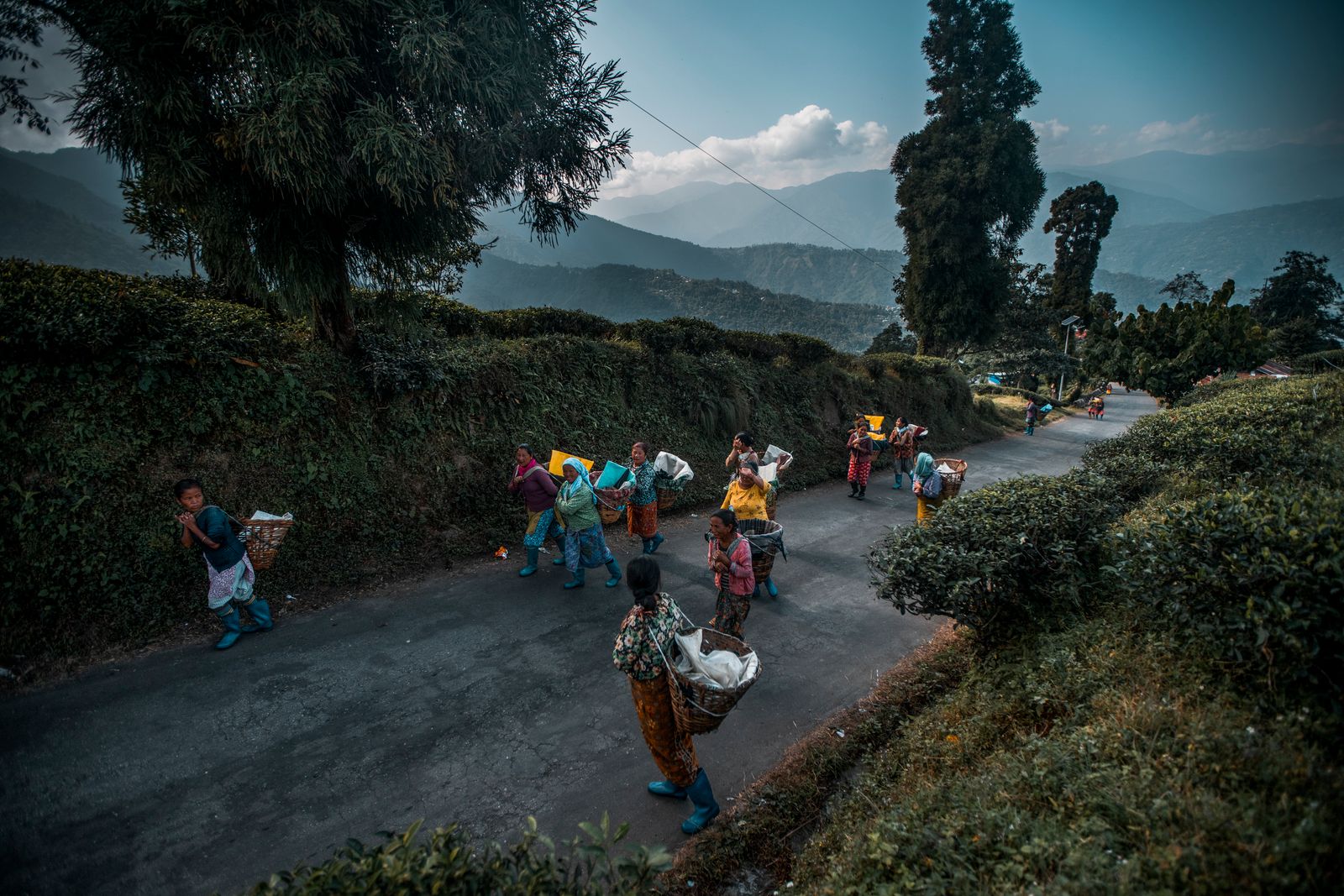
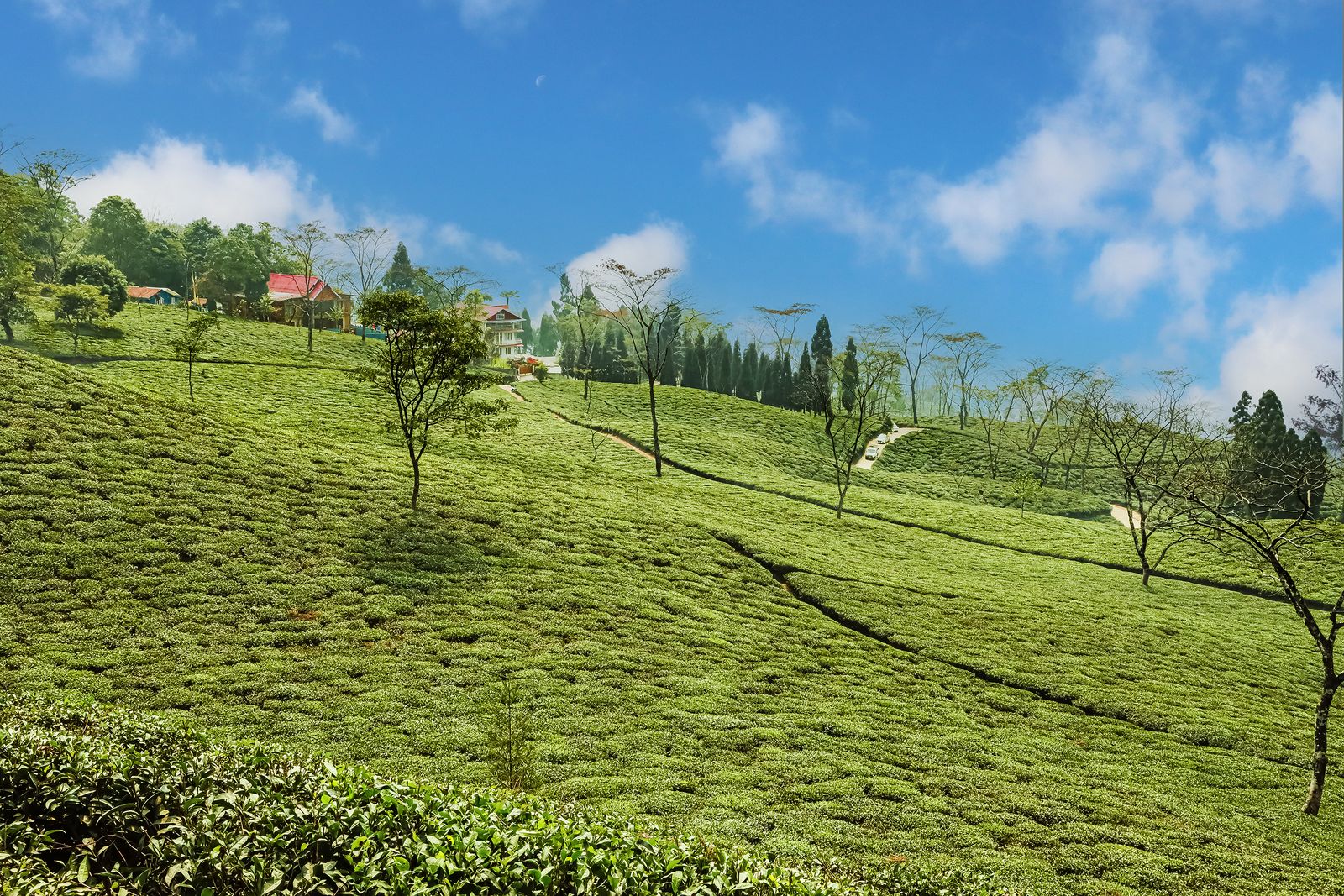
So we treat the road as the destination. From Ghum it climbs through Sukhiapokhri to Simana, where the Nepal border runs along the tarmac and the Sandakphu road turns off, then past the twin lakes at Jorpokhri. Tea gardens fall away below the whole way, and one estate keeps a stall on this stretch that brews its own leaf and serves it scalding. Ask your driver to stop there; he will know which one. Our advice is almost never to make Mirik a day out and back, but to take this road down to Bagdogra on your last morning.
Sittong: orange terraces, and a pond that matters
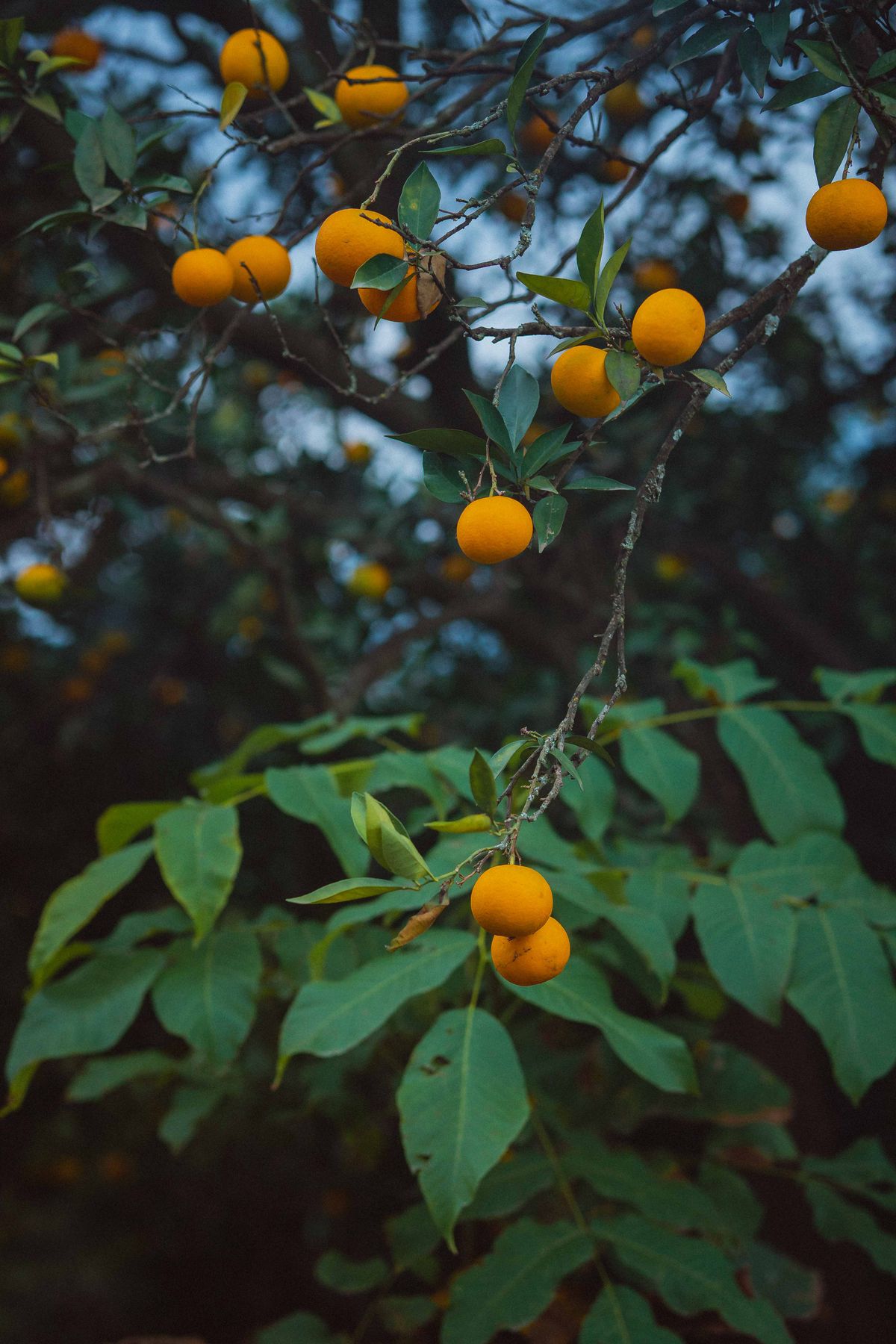
Sittong lies in the Riyang valley in the Kurseong block, 35 km and about an hour and three quarters from Darjeeling by Hill Cart Road and the Bagora road. It is three villages, not one. Sittong I and II climb to about 1,830 m at Mahaldiram; Sittong III, at about 1,280 m, holds Latpanchar in the upper reaches of the Mahananda Wildlife Sanctuary. The 2011 census counted 3,098 people, and they farm. The oranges hang from November to January, and the state's Directorate of Cinchona and Other Medicinal Plants holds an orange festival here each December. Ahaldara, 150 m of walking above the parking place, gives a view round the whole compass.
Near Latpanchar is Namthing Pokhri, a shallow pond that is one of the few breeding waters of the Himalayan newt, one of only two salamanders found in India. Researchers reported in 2026 that about 90 per cent of its habitat lies outside protected land, on private ground and tea estates, and that housing, tourism and new roads are taking the small wetlands away. So visit it lightly. Keep to the path, let nobody lift an animal for a photograph, and ask your driver to go slowly after dark on the Latpanchar road, because the salamanders cross it to reach the water.
Lepchajagat: 45 minutes, and a different air
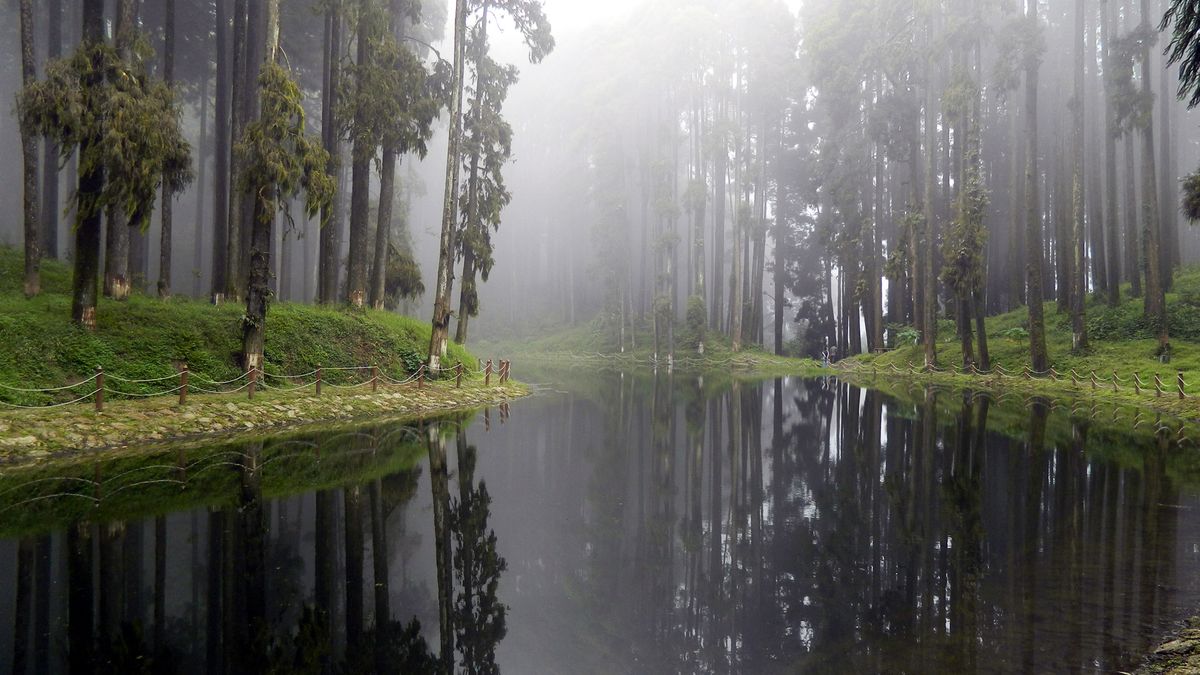
Jagat means the world, and this was a Lepcha hamlet, so the name says whose world it was. It stands at 2,123 m, 19 km and about 45 minutes from Darjeeling, and it is now reserved forest held by the West Bengal Forest Development Corporation: oak, pine and rhododendron, thick enough that the light changes as you walk in. The birds are the reason serious people come, among them the red-billed leiothrix, the stripe-throated yuhina, the ashy-throated warbler and the red-tailed minla. Jorpokhri is 5 km away, Ghum about 10 km and Manebhanjan about 11 km.
The corporation's lodge has six rooms and a kitchen, and it is exactly what a forest lodge is: clean, plain and cold at night. A handful of homestays sit on the slope below. For most guests the right answer is not a bed but an hour: leave a Darjeeling house at half past six, walk while the mist is still in the trees, and be back for a late breakfast. It is also where we send anyone who wants a forest walk with no park gate and no permit, from October to April.
Tinchuley and Takdah: the Peshok side, and the easiest night
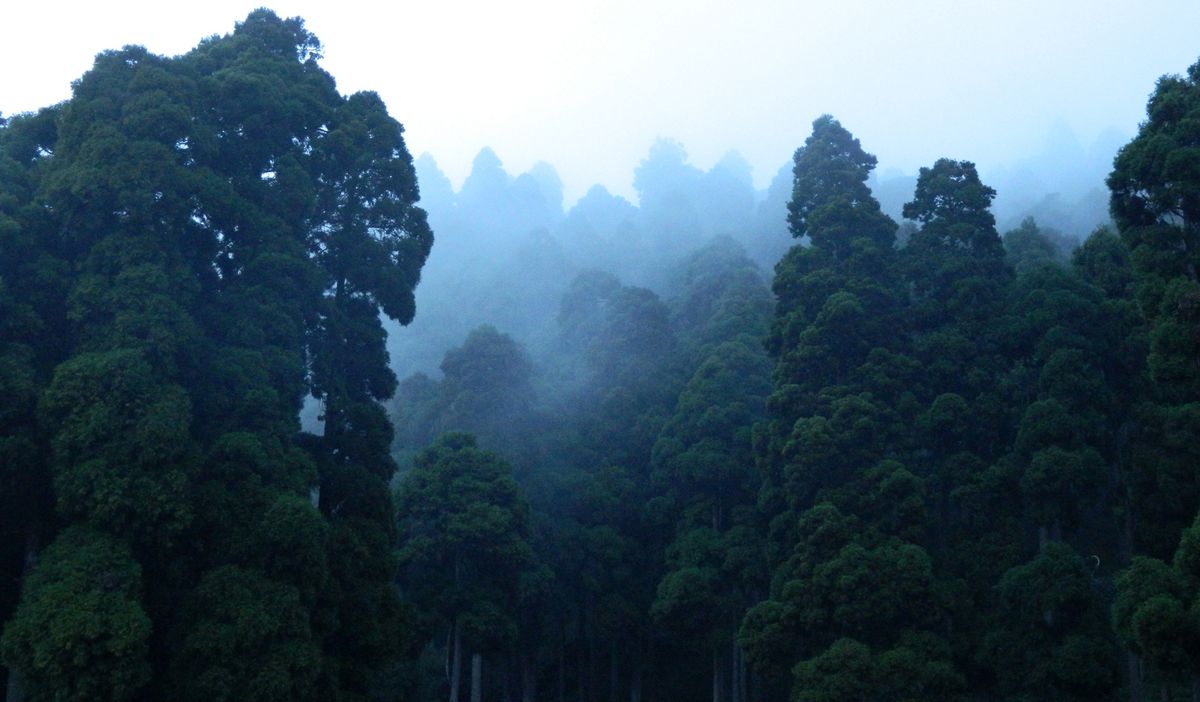
Tinchuley means three ovens, tin chulha, after the three hilltops around it. It stands at about 1,768 m, 3 km above Takdah and an hour and a half from Darjeeling. Twenty minutes' walk through fern brings you to Gumbadara, where you look down on the Rangeet and across into Sikkim. There is a small monastery in which a lama is said to have meditated for seventeen years, with no entry fee, and an orange orchard with a small works that makes juice, marmalade and pickle.
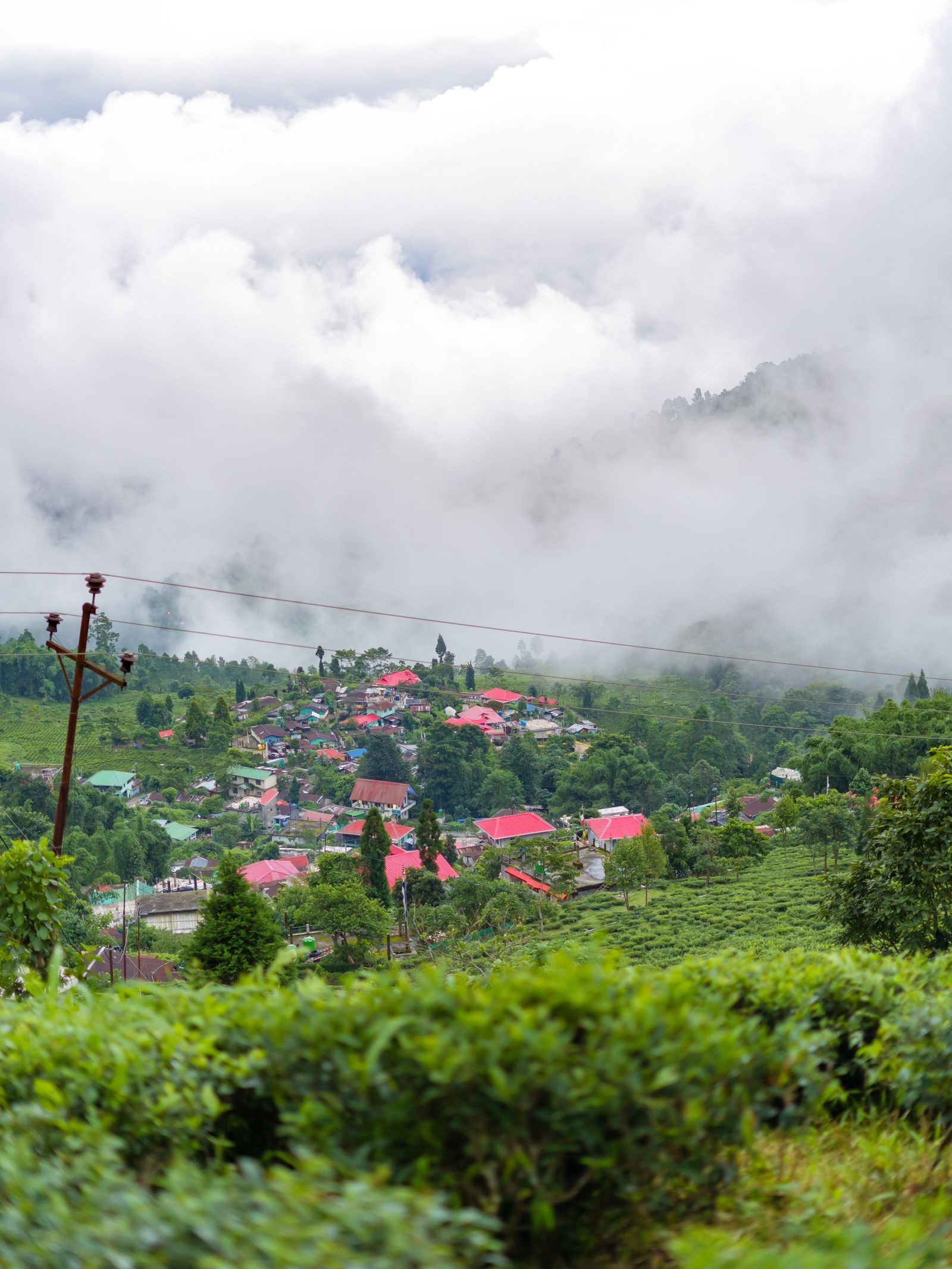
Takdah below it was a British cantonment before independence, built for senior officers, and one local reading of the name is simply always covered, for the fog. Its bungalows still stand, pitched roofs and fireplaces, and a few are now homestays. There is an orchid centre growing rare Himalayan orchids, the Rungli, Giele and Teesta Valley gardens all round, and a market on Thursdays at the junction the town calls Dara Dokan.
Two warnings. The Peshok road is steep and its surface is often poor, so allow for it. And a cantonment bungalow can be handsome outside and uneven inside, which is why we look at the room rather than the photograph. We rate this side highest for a night because of position: Glenburn lies below the same road, its fine-cut marmalade is made with oranges from a Lamahatta orchard on this hill, and a week on the estate already has the spare mornings this country wants.

What a village night is actually like
It is the list we read out before anyone chooses, because one item usually decides.
- Stairs, and no lift. Two storeys on a slope, with steps outside as well as in. Anyone who finds stairs hard is better served by a day out.
- Hot water at an hour, not on tap. A bucket or a small geyser, usually in the morning. Say the night before when you want it.
- No heating. Extra quilts and a hot water bottle instead. From November to February the nights are cold and the walls are thin.
- One kitchen, one menu, fixed hours. Often the best part of the stay, and it is what the family is cooking. Tell us in advance about anything you cannot eat.
- Patchy signal and power cuts. Carry a torch and a power bank, and expect a quiet evening.
- It is somebody's home. Ask before you photograph anyone or any room, and take your shoes off where the family does.
Three quiet places we would put first
- Chatakpur, above Sonada. A forest village that beats all four of these for a clear dawn, and the first place we suggest when the mountain is the point. The houses, the road in and the months it shuts are in our month-by-month note.
- Kalimpong. Quiet with a proper house attached: about 800 m lower than Darjeeling, milder at night, and nothing needing an early start. The Quiet Ridge stays three nights without moving.
- Okhrey and Kolakham. Simple rooms, but on the edge of the Barsey rhododendrons and Neora Valley, which is the point of going. Both are on Red Pandas and Rhododendrons.
When to go, and when we would say no
November to February is the season for these four: the oranges are ripe, the air is at its clearest, and Lepchajagat's forest is at its best in the cold. March and April bring rhododendron and the birds' busiest weeks, with haze building as the days warm.
From the middle of June to the middle of September we would tell you to go elsewhere. The village roads are the first to slip, the West Bengal forest sanctuaries close from 16 June to 15 September, and a homestay night with no view, a wet track and no fire is a poor use of an expensive week. The full picture by month is on our when to go page.
Journeys that already pass this way
- Two Nights on a Tea Estate: a long weekend at Glenburn, on the same road as Takdah and Tinchuley. From ₹75,000 per person, twin share.
- One Estate, Seven Days: a week at Glenburn without moving rooms, which is what leaves the spare mornings this country asks for. From ₹2,65,000 per person, twin share.
- The Planter's Week: two estates and the town, with the Mirik road and the Nepal border offered as a day. From ₹1,80,000 per person, twin share.
Tell us which of the four names brought you here, because the answer changes the week. If it is the oranges, we build the dates round December. If it is the forest, Lepchajagat goes in as a morning. If it is the village night itself, we start from the room and work outwards, not from the village name. For lead times see how far ahead to plan, and for what sits around these villages, Darjeeling and Kalimpong.
Sources we checked for this note (13)
- Mirik: Lepcha Mir-Yok, 'place burnt by fire'; 1,495 m; 49 km south-south-west of Darjeeling and 52 km north-west of Siliguri; 3.5 km road round Sumendu Lake; arched footbridge; Thurbo, Gopaldhara, Okayti and Singbulli gardens; Bokar monastery; oranges and cymbidium orchids (checked 20 September 2026)
- Sumendu Lake 1.25 km long with the Indreni footbridge; published figures for the bridge's length conflict, so this note gives none (checked 20 September 2026)
- Mirik about 49 km and about 2 hours by car from Darjeeling; shikara boating on the 1.25 km lake, pony rides on the bank, 3.5 km walking road round it (checked 20 September 2026)
- Sittong in the Kurseong block, in the Riyang valley; population 3,098 at the 2011 census; the Directorate of Cinchona and Other Medicinal Plants, Government of West Bengal, holds an orange festival in December; Mahananda Wildlife Sanctuary 13 km away (checked 20 September 2026)
- Sittong average about 4,000 ft, Sittong II at Mahaldiram up to 6,000 ft, Sittong III (Latpanchar) about 4,200 ft in the higher reaches of the Mahananda sanctuary; 35 km and about 1 hour 45 minutes from Darjeeling by Hill Cart Road and the Bagora road; November to January for the orchards; homestays only, no hotel or resort; Ahaldara reached by about 150 m of walking uphill; roads often unmaintained (checked 20 September 2026)
- Namthing Pokhri, Pokhritar and Panch Pokhri in the Darjeeling hills are breeding waters of the Himalayan salamander; 10 per cent of its territory is inside protected areas and the remaining 90 per cent sits on private land and tea estates; housing, tourism, wastewater and detergents are named threats, and new roads divide migration paths so animals are crushed by vehicles reaching breeding sites, with culverts requested locally and none built (published 20 July 2026, page read 20 September 2026)
- Lepchajagat 6,956 ft (2,123 m), 19 km and about 45 minutes from Darjeeling; jagat meaning the world and the place a former Lepcha hamlet; reserved forest under the West Bengal Forest Development Corporation; pines, oaks and rhododendrons; the lodge has six rooms; red-billed leiothrix, stripe-throated yuhina, ashy-throated warbler and red-tailed minla; Jorpokhri 5 km, Ghum monastery about 10 km, Manebhanjan about 11 km, Mirik about 27 km; October to April the season (checked 20 September 2026)
- Tinchuley 5,800 ft, 32 km and about 1.5 hours from Darjeeling, 3 km above Takdah; the name means three ovens (tin chullah); Gumbadara about 20 minutes' walk through ferns, over the Rangeet towards Sikkim; a monastery where a lama meditated for 17 years, no entry fee, donations accepted; orange orchards with a small works making juice, marmalade and pickle; the Peshok road steep and usually in poor condition; homestays and guesthouses only (checked 20 September 2026)
- Takdah was a British cantonment before independence, built for high-ranking officers; Darjeeling 30 km away; the name said in one local telling to mean 'always covered', for the fog; an orchid centre growing rare Himalayan orchids; Rungli, Giele and Teesta Valley gardens nearest; the junction called Dara Dokan; market day Thursday (checked 20 September 2026)
- West Bengal's forest sanctuaries, Senchal and Mahananda among them, close from 16 June to 15 September (checked 20 September 2026)
- Chatakpur: 19 village houses at about 2,400 m (7,887 ft) inside the Senchal Wildlife Sanctuary, Kanchenjunga visible from most of the homestays (checked 20 September 2026)
- Site data: Glenburn's fine-cut orange marmalade is made with oranges from a Lamahatta orchard (glenburnteaestate.com, cited on One Estate, Seven Days) and the estate is reached by the Peshok road. Two Nights on a Tea Estate from ₹75,000, One Estate, Seven Days from ₹2,65,000 and The Planter's Week from ₹1,80,000 per person, twin share, the last with the Mirik road and the Nepal border as an add-on day
- India has two salamander species, Tylototriton verrucosus (the Himalayan newt, also called the Himalayan salamander) and Tylototriton himalayanus; T. verrucosus is the only member of the order Caudata across most of the Indian subcontinent (checked 20 September 2026)
Checked September 2026.