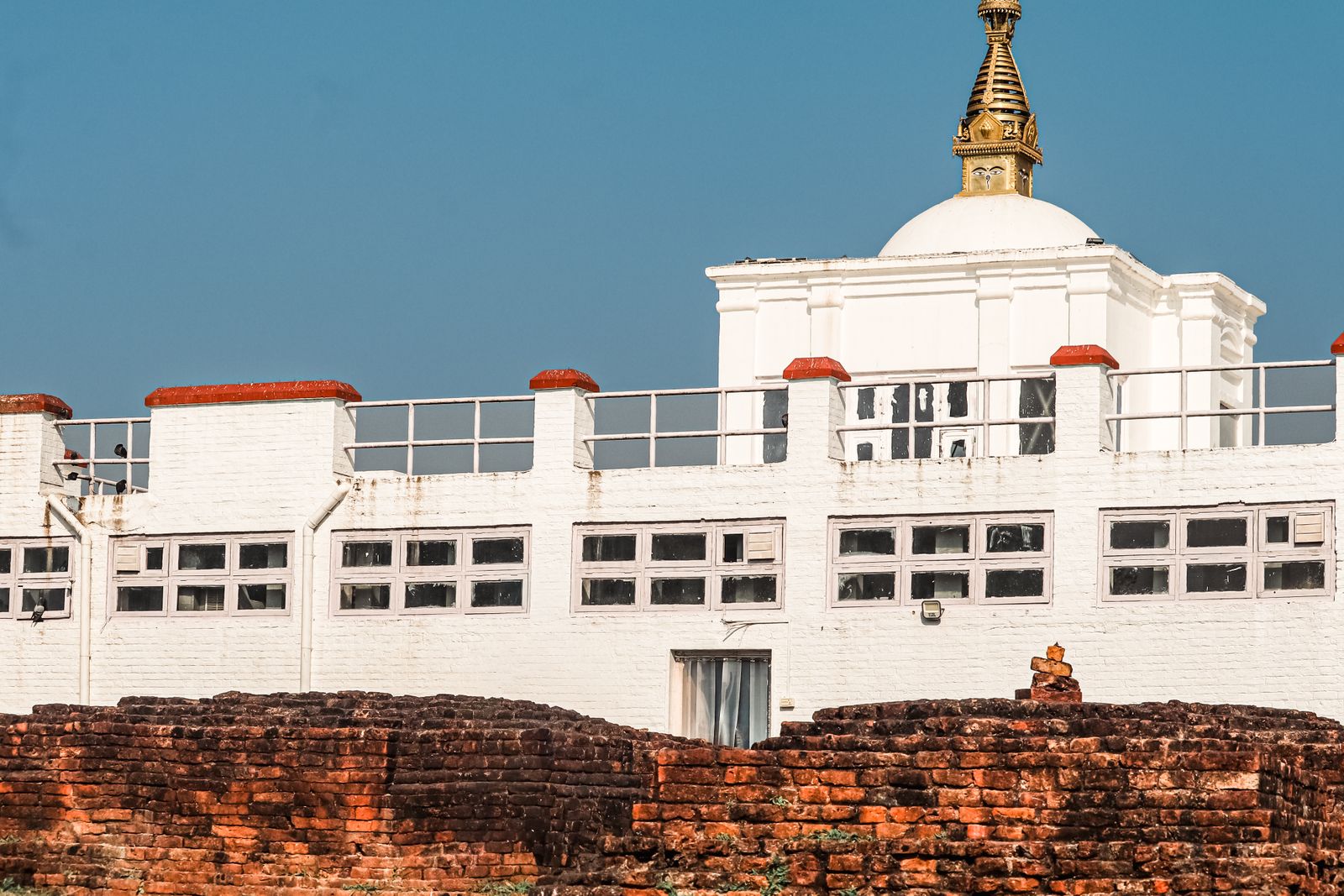
The white Maya Devi Temple at Lumbini above the excavated brick foundations of older shrines, a Nepali flag beside it

Pilgrimage journey · 5 nights

Footsteps of the Buddha

Boudha at dawn, the stone that marks the Buddha's birth, and the walls of the city where he grew up.

  • 5nights, private
  • 3bases
  • 1,400 mhighest point
  • ₹1,55,000from, per person, twin share

In short

Is Footsteps of the Buddha right for you?

Footsteps of the Buddha is a five-night private pilgrimage in Nepal, from the Tibetan monasteries of Boudha to the garden at Lumbini where the Buddha was born. You sleep two nights seven minutes' walk from the Boudha stupa, fly 30 minutes to Bhairahawa for two nights at Lumbini with a morning at Tilaurakot, then fly back for a last night at The Dwarika's.

Made forBuddhist pilgrims and practitioners, readers of history and archaeology, couples who travel for meaning and families with children over twelve.

Not for you ifyou want snow peaks and walking more than temples and excavations, choose Everest by Air or Kathmandu, Pokhara and the Annapurnas instead.

Lumbini is flat, warm and quiet, 150 m above the sea in Nepal's Terai, and it holds one of the few ancient dates the Buddhist world agrees on. In 249 BCE the emperor Ashoka came here and had a pillar cut with a line saying the Buddha Shakyamuni was born on this spot. Archaeologists have since found traces of a timber shrine beneath the brick temples, dated to the sixth century BCE. Some 27 km west lie the walls of Tilaurakot, which may be Kapilavastu, where the prince spent his first 29 years.

Buddhism in Nepal is not only ruins, and this journey is built so that you feel both halves. At Boudha, Tibetan families who settled around the stupa after 1959 walk the kora before work, and at Shechen the monks study ritual dance, music and painting as well as prayer. In Patan, Mahabouddha's brick spire copies the temple at Bodh Gaya where the Buddha woke. Two days among living practice make the birthplace mean more, and the last morning closes a circle at Chabahil, where tradition says Ashoka's own daughter raised a stupa.

Length
5 nights, 6 days
Starts and ends
Kathmandu airport (KTM) to Kathmandu airport (KTM)
Best months
October to November, February to March
Avoid
Mid June to mid September (monsoon); April to early June (over 36 °C); late December and January (Terai fog)
Pace
Moderate
Longest drive
About 2.5 hours, 180 km in all
Highest point
Kathmandu valley, 1,400 m
Group
Private, 2 to 6 guests

The route

Why Kathmandu (Boudha) comes first

Kathmandu comes first because international flights land there, and two nights among Boudha's monasteries and Patan's courtyards give the birthplace its context. Lumbini sits in the middle, 30 minutes away by air, with two nights so the Sacred Garden can be seen at dusk and again at dawn. The last night returns to Kathmandu, about ten minutes from the international terminal, because Bhairahawa has few international flights and winter fog can hold its mornings.

Kathmandu airport (KTM) 1 Kathmandu (Boudha) · 2 nights Bhairahawa airport (BWA) 2 Lumbini · 2 nights 3 Kathmandu · 1 night
your bases, in orderby roadby airborders not drawn

Where the nights go

Read the place guidesNepal

The shape of the journey

From 150 m to 1,400 m, day by day

You sleep between 150 m and 1,400 m. The highest you go is 1,400 m, on day 1 at Kathmandu valley, and you come down again to sleep.

Built around

Kathmandu (Boudha), Lumbini and Kathmandu at their best

  • Dawn at Boudha with monks and grandmothers, a seven-minute walk from your room

  • Patan's Golden Temple and Mahabouddha, the valley's echo of the temple at Bodh Gaya

  • The marker stone in the Maya Devi Temple at opening time, before the day's groups arrive

  • Ashoka's pillar of 249 BCE and the walls of Tilaurakot, the likely Kapilavastu

  • Sarus cranes on the Lumbini wetland at dawn, then Swayambhu above Kathmandu at sunset

Day by day

Day by day, Kathmandu (Boudha) to Kathmandu

The longest drive is day 4, a round trip from Lumbini, about 2.5 hours with stops.

  1. Day 1 · Kathmandu airport (KTM) Kathmandu (Boudha)

    Into Kathmandu, and a first kora at Boudha

    • 6 km, about 0.5 h
    • High point 1,400 m
    • Sleep at 1,400 m
    • Easy
    Boudhanath stupa lit gold at dusk under a deep blue sky, prayer flags strung from its spire to the terrace

    Nonstop flights from India's big cities land at Tribhuvan through the day; foreign guests queue for the visa on arrival, and Indian guests walk through on a passport. Your guide from the valley waits outside with a name card, and the drive to Boudha takes about 20 minutes. Shambaling, a 1970s house built to lodge Tibetan pilgrims and restored in their style, stands in a lane of monasteries seven minutes on foot from the stupa, and we ask for your room to be ready at noon so you can sleep off the flight. At 16:30 walk down to the square. The dome rises 36 m, the largest spherical stupa in Nepal, and Newars still call it Khasti, a name tied to the dew said to have been gathered for its building. Tibetan families settled around it after 1959, and more than 50 gompas now ring the square. When the 2015 earthquake cracked the spire, private donors paid for the repair, more than 30 kg of gold among it, and the stupa reopened in November 2016. Walk the kora clockwise with the evening crowd, a hand running along the prayer wheels set into the base, then climb onto the lower terrace, where the mandala plan makes sense underfoot and the square's lamps come on below you. Dinner is at Lungta, the hotel's restaurant, where we ask the kitchen for Tibetan dishes, and bed comes early.

    The momentStanding on Boudha's lower terrace at dusk, the kora turning below you like a slow river of robes and shawls.

    InsiderWalk the kora clockwise, keeping the stupa on your right. Tibetan grandmothers notice a visitor who gets it right, and some will fall into step beside you.

    If the weather turnsIf your flight lands after dark, the kora moves to tomorrow's dawn walk and dinner comes to your room. Rain never stops the kora; umbrellas wait at the door.

    Meals
    Dinner
  2. Day 2 · Kathmandu

    Morning prayers at Shechen, Bodh Gaya's echo in Patan

    • 25 km, about 1.5 h
    • High point 1,400 m
    • Sleep at 1,400 m
    • Easy
    The gilded tiered roofs of the Golden Temple at Kwa Bahal in Patan, pigeons perched along its eaves

    At 06:00 you walk back to the stupa while the shutters are still down and the kora belongs to monks and grandmothers with prayer beads. At 06:45 your guide takes you to Shechen, a Nyingma monastery founded here in 1985 by Dilgo Khyentse Rinpoche and home to more than 300 monks; we asked last night whether visitors may sit at the back of morning prayers. Breakfast at 08:00. At 09:30 we drive about 45 minutes to Patan, and your guide keeps to its Buddhist courtyards. Kwa Bahal, the Golden Temple, was founded in the 12th century and has stood in its present form since 1409, and for most of the year tortoises patrol its compound as guardians. A short walk away, Mahabouddha rises from a courtyard so narrow that you crane to see its top. It was begun in 1585 and modelled loosely on the Mahabodhi Temple at Bodh Gaya, where the Buddha woke to enlightenment; the 1934 earthquake brought it down, and Patan rebuilt it. Lunch in Patan, then a free afternoon in Boudha.

    The momentCraning up at Mahabouddha's brick spire in its narrow courtyard, Patan's copy of the temple where the Buddha woke.

    InsiderShechen's monks also study ritual dance, music and painting. If a class fills the courtyard, stand back and watch, and raise a camera only when your guide nods.

    If the weather turnsIf Shechen's hall is closed to visitors that morning, we take butter tea on a Boudha rooftop as the kora turns. Rain keeps Patan to its covered courtyards.

    Meals
    Breakfast, Lunch, Dinner
  3. Day 3 · Kathmandu (Boudha) Lumbini

    Thirty minutes to the Terai, and the Sacred Garden

    • 30 km, about 1 h
    • High point 1,400 m
    • Sleep at 150 m
    • Easy
    The Maya Devi Temple at Lumbini reflected in the Puskarini pond in low sun, the Ashoka pillar at the left edge

    Your large cases stay behind this morning. You fly with a soft bag, and our Kathmandu team carries the rest to The Dwarika's for your last night. The car leaves Boudha at 07:30 for the domestic terminal and Buddha Air's 09:00 to Bhairahawa, 30 minutes in the air; on a clear morning the snow peaks line the right-hand windows. Gautam Buddha airport lies at 105 m, and the warmth of the Terai meets you at the aircraft door. Your Lumbini guide drives you about 30 minutes to Buddha Maya Gardens, a short walk from the Sacred Garden. Lunch, then rest through the hot hours. At 15:30 you walk in past the Puskarini, the pond where tradition says Maya Devi bathed before the birth and the newborn was first washed. Beside it stands Ashoka's pillar, found in December 1896, its Brahmi letters recording the emperor's visit twenty years after his anointing. Stay for dusk, when pilgrims settle to chant beneath the prayer-flagged bodhi tree.

    The momentReading, through your guide, the line Ashoka had cut in 249 BCE: here the Buddha Shakyamuni was born.

    InsiderThe same inscription made Lumbini village free of tax and cut its share of the harvest to an eighth. The oldest proof of the birthplace is also a tax concession.

    If the weather turnsIn December and January fog can hold Bhairahawa's morning flights, so we book the 11:15 then. If the Sacred Garden closes for a ceremony, we go in at dawn.

    Meals
    Breakfast, Lunch, Dinner
  4. Day 4 · Lumbini

    The marker stone at opening, Kapilavastu by noon

    • 70 km, about 2.5 h
    • High point 150 m
    • Sleep at 150 m
    • Moderate
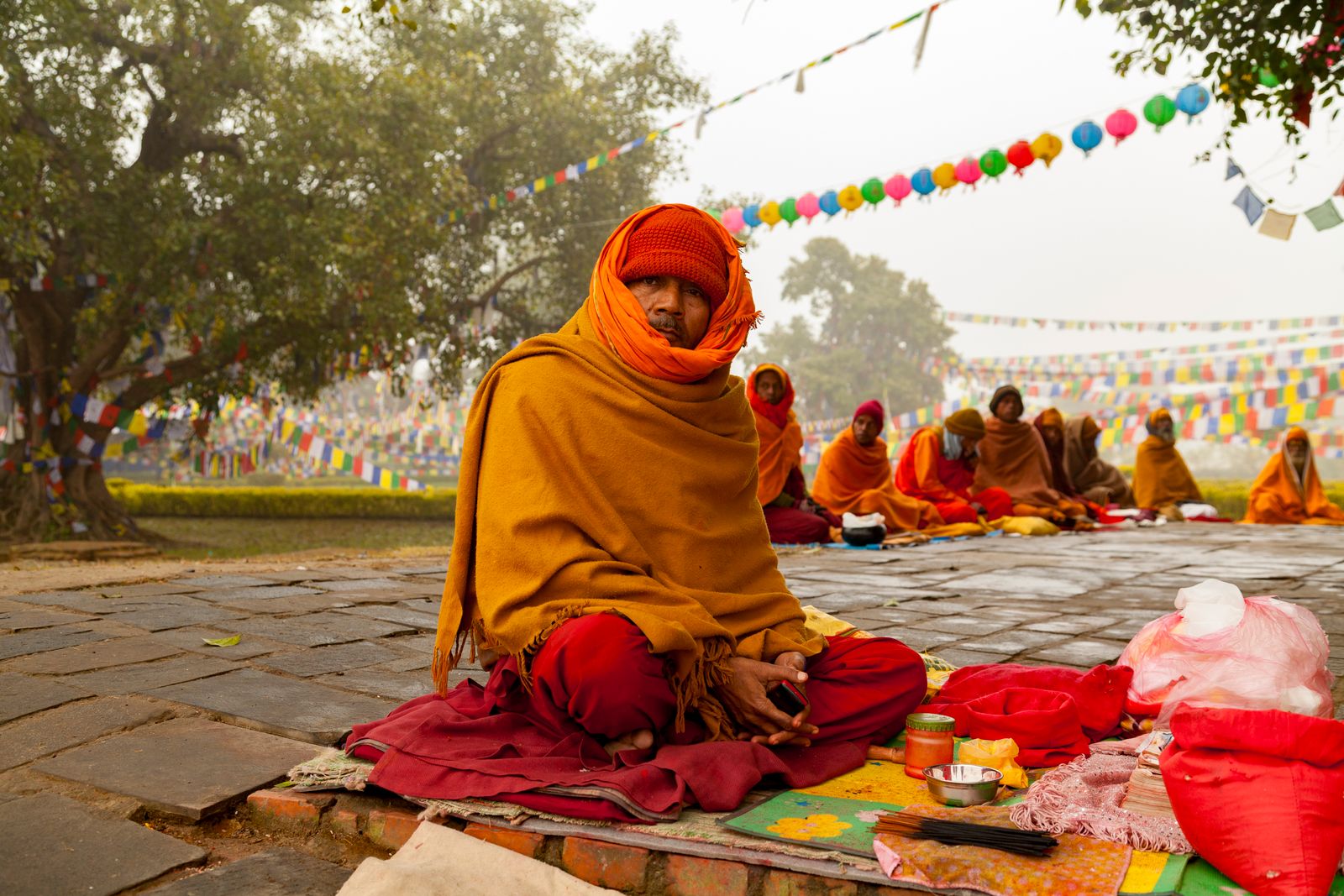
    Pilgrims wrapped in saffron shawls seated in a row on stone paving under prayer flags in Lumbini on a misty morning

    At 05:45 you walk to the gate in the half-light, to be among the first into the Maya Devi Temple. Inside, a walkway runs above excavated brick foundations. Digs since 2010, with Durham University, UNESCO and Nepal's archaeologists, found traces of a timber shrine beneath them from the sixth century BCE. Under glass lies the marker stone held to mark the place of the birth, and a worn sculpture shows Maya Devi holding a sal branch, her sister Mahapajapati beside her. Sit under the bodhi tree as long as you like. Breakfast at 08:00. At 09:00 the car drives about an hour west to Tilaurakot on the Banganga river, a walled citadel of 500 m by 400 m that may be Kapilavastu, and on to the Kapilvastu Museum nearby. Lunch back in Lumbini, and rest. At 16:00, e-rickshaws down the central canal to the monastic zones: the white marble Royal Thai monastery, the Myanmar Golden Temple, and the Eternal Peace Flame, lit in 1986.

    The momentStanding over the marker stone in the temple's hush as the first pilgrims of the day file in behind you.

    InsiderScholars still argue over Kapilavastu: Tilaurakot in Nepal and Piprahwa in India both have a case. Your guide will set out both, fairly.

    If the weather turnsOn a hot day we swap the order: monasteries at 07:30, Tilaurakot after 15:30. If the temple opens late for a ceremony, we return to it at dusk.

    Meals
    Breakfast, Lunch, Dinner
  5. Day 5 · Lumbini Kathmandu

    Sarus cranes at sunrise, Swayambhu at sunset

    • 45 km, about 2 h
    • High point 1,400 m
    • Sleep at 1,400 m
    • Easy
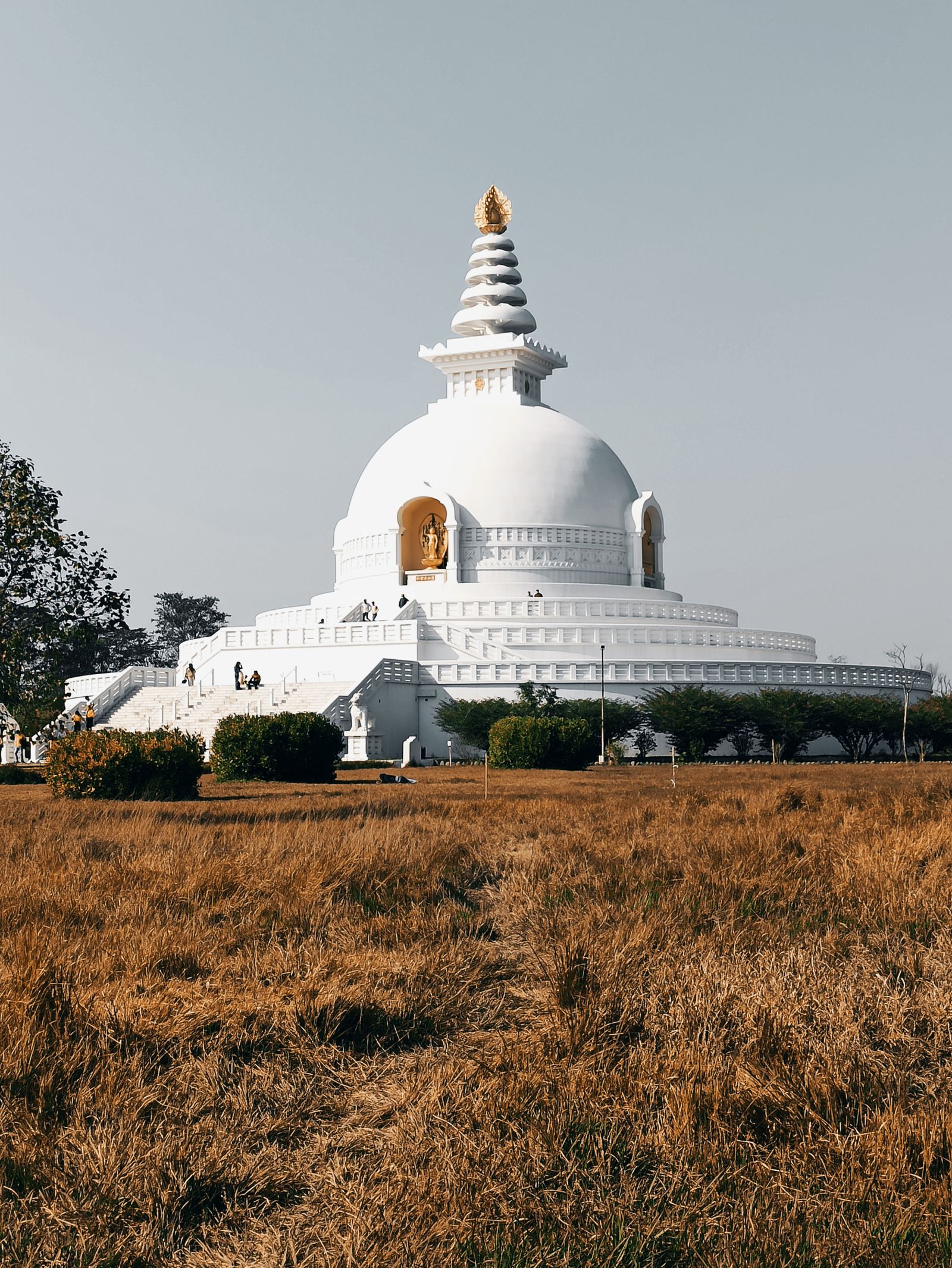
    The white dome and gilded Buddha niche of the World Peace Pagoda at Lumbini, rising above dry golden grass

    At 06:00 bicycles or an e-rickshaw carry you north along the canal to the World Peace Pagoda, completed in 2001 by the Japanese order Nipponzan Myohoji. The wetlands around it are a crane sanctuary. Sarus cranes, up to 1.8 m tall and the tallest birds that fly, stalk the fields in pairs, and at first light they call in unison. Breakfast at 08:00, a last walk if you want one, and at 10:30 the car leaves for the airport. Buddha Air's 12:20 lands in Kathmandu at 12:50, and your cases are already in your room at The Dwarika's. Lunch in the courtyard. At 16:00 we drive across the city to Swayambhu for the last of the light. Walk the stupa clockwise under its painted eyes, the valley you will leave tomorrow spread below, and stay on the terrace until the sun has gone. Dinner is at Krishnarpan, the hotel's Nepali restaurant, course by course.

    The momentA pair of sarus cranes trumpeting together over the Lumbini wetland as the Peace Pagoda catches the first sun.

    InsiderBeside the Swayambhu stupa stands a small shrine to Hariti, a fierce goddess sworn to protect children under twelve. Newar parents bring their little ones to her.

    If the weather turnsIf fog or delay holds the 12:20, we take the 14:30 and see Swayambhu at 07:30 tomorrow. Light rain does not keep the cranes in; the car carries umbrellas.

    Meals
    Breakfast, Lunch, Dinner
  6. Day 6 · Kathmandu Kathmandu airport (KTM)

    Ashoka's daughter's stupa, and the flight home

    • 5 km, about 0.5 h
    • High point 1,400 m
    • Easy
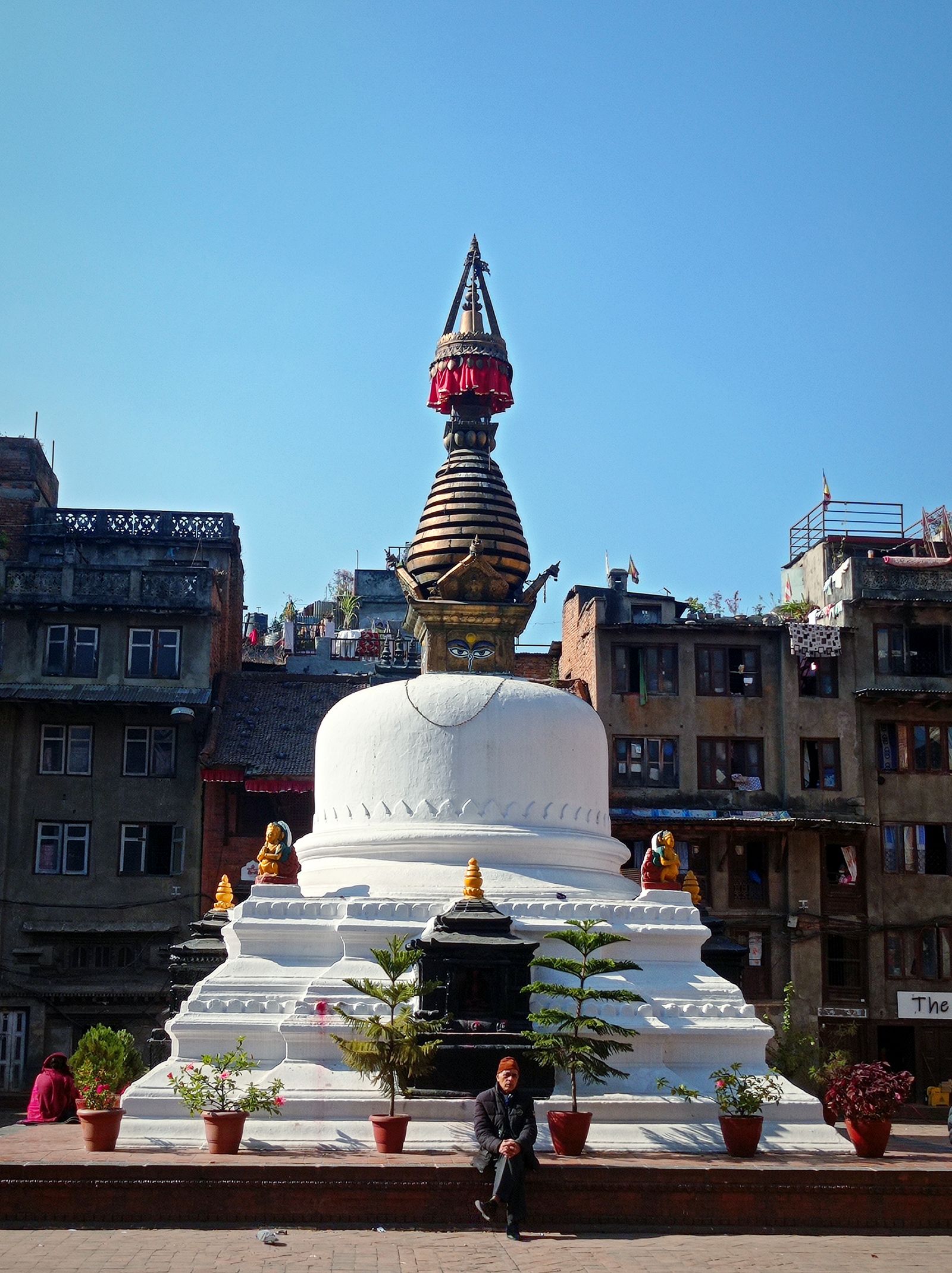
    A small whitewashed stupa with a tiered spire in a square of old brick houses in Kathmandu, a man seated at its base

    The last morning closes a circle. After breakfast, at 08:00, the car takes you a few minutes up the road to Chabahil, where a whitewashed stupa, the Dhando Chaitya, stands among shops and houses. Tradition says Charumati, a daughter of the emperor Ashoka, built it after marrying a prince of the valley, and many historians count it the oldest Buddhist stupa in Kathmandu. Two days ago you read her father's words on the pillar at Lumbini. Walk round it once with your guide, then return to pack: the soft bag that went to Lumbini is back with the rest of your luggage in the room. The Dwarika's is about ten minutes from the international terminal, so for a departure at about 13:00 we leave at 09:45. Your guide carries the bags to the terminal door, and our support line stays open until you message us from home.

    The momentWalking once round Dhando Chaitya, the stupa tradition gives to Ashoka's daughter, two days after reading her father's pillar.

    InsiderA few steps along Chabahil's market street stands Chandra Binayak, one of the valley's four Binayak temples of Ganesh: Ashoka's daughter's stupa and Ganesh share one neighbourhood.

    If the weather turnsIf your flight is delayed, we ask The Dwarika's for a late check-out so you can wait in your room. If it is cancelled, we find the next seat home and move your onward tickets.

    Tonight
    Homeward
    Meals
    Breakfast

Where you will stay

Where you sleep, three houses

Shambaling Boutique Hotel, Buddha Maya Gardens, Lumbini and The Dwarika's Hotel. Prefer a different house on any night? Say which and we re-price it.

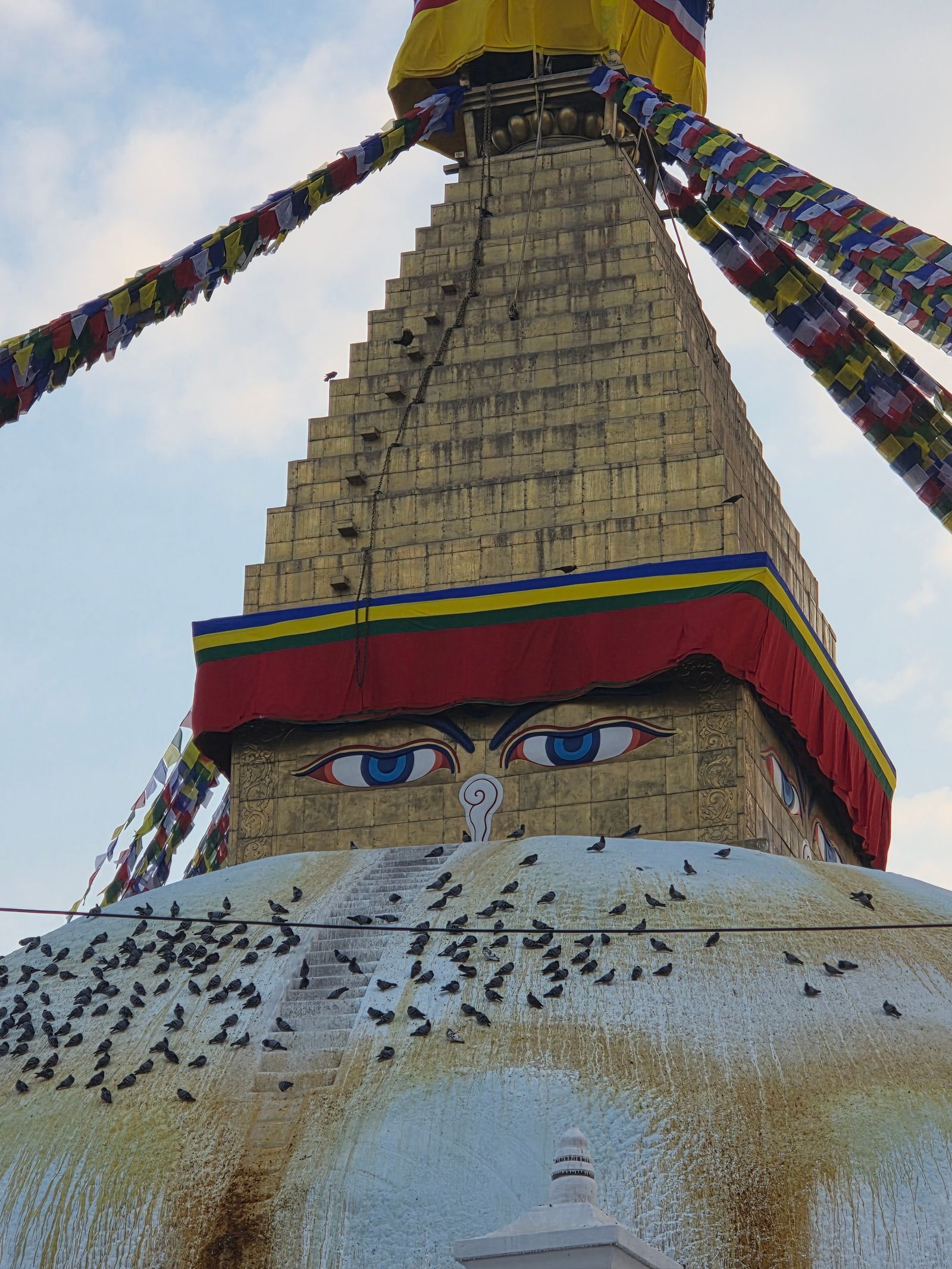
  1. The eyes and prayer flags of the Boudhanath stupa in Kathmandu with pigeons on its dome
    Boudhanath at close quarters, seven minutes on foot from the house door.Prajjwal Chettri / Pexels
    2 nights

    Shambaling Boutique Hotel

    Kathmandu (Boudha)

    A Tibetan-style house seven minutes' walk from Boudha, with a meditation room. Chosen for the dawn walk to the stupa, not for marble.

    Ask for A Deluxe Room facing the monastery; a Kala or Chakra Suite for more space

  2. The white Maya Devi temple above the ancient brick ruins of the sacred garden at Lumbini
    The Maya Devi temple and its brick ruins, five minutes on foot from the hotel.Arun Baral / Pexels
    2 nights

    Buddha Maya Gardens, Lumbini

    Lumbini

    The nearest good hotel to the Sacred Garden, five minutes on foot, with a pool for the hot hours. Plain rooms, and we say so.

    Ask for A Super Deluxe Room; ask for one with a balcony over the garden

  3. A carved Newar door with an iron bolt and wooden lock at the Dwarika's hotel in Kathmandu
    A rescued Newar door at the Dwarika's, carved lattice, iron bolt and wooden lock.simonsimages, CC BY 2.0, via Wikimedia Commons
    1 night

    The Dwarika's Hotel

    Kathmandu

    A last night about ten minutes from the international terminal, with a Krishnarpan dinner to close the journey.

    Ask for A Heritage Deluxe Room; ask for one looking onto a courtyard

Price and what it covers

from₹1,55,000

per person, two sharing, at Indian-national rates; other passports pay more for the Lumbini flights and the Sacred Garden. How our prices are built

About £1,210 or US$1,610 at the rates of 19 September 2026.

Included

  • A private car and driver in Kathmandu, and a car with driver in Lumbini for the airport, Tilaurakot and the monastic zones
  • A licensed Kathmandu valley guide for the Kathmandu days, and a Lumbini guide who knows the excavations
  • Buddha Air economy seats from Kathmandu to Bhairahawa and back
  • Five nights for two sharing in the three houses named, with every meal the day plan lists, from Lungta's Tibetan dinner to Krishnarpan on the last night
  • Entry to the Sacred Garden on both Lumbini days, Tilaurakot and the Kapilvastu Museum, Patan's monuments, Boudha and Swayambhu
  • E-rickshaws or bicycles in the Lumbini master plan area, and offerings at each temple
  • Your large luggage moved from Boudha to The Dwarika's while you are in Lumbini
  • Meetings at Kathmandu and Bhairahawa airports, with luggage handled at each
  • A Nepali SIM for each room, and drinking water carried on every drive, the hot Lumbini afternoons included
  • Our team on call 24x7 from Darjeeling for all five nights and both Buddha Air flights

Not included

  • International flights to and from Kathmandu
  • Nepal's tourist visa for other passports, bought on arrival at Tribhuvan; the 15-day visa covers this journey
  • Travel insurance, which should cover medical evacuation
  • Tips for guides, drivers and hotel staff
  • Drinks, laundry, and any meal the day plan does not list
  • Donations beyond the offerings we include, and the optional add-ons below

Make it more Arranged on request, priced in your quote

  • Ramagrama, the stupa Ashoka left closedA day east of Bhairahawa to the grassy relic mound that tradition says a naga guarded, so Ashoka could not open it.
  • Buddha Jayanti at LumbiniTime the journey for the Buddha's birthday, 20 May in 2027, and accept the heat: afternoons pass 36 °C.
  • A thangka lesson in BoudhaAn afternoon with a thangka painter near the stupa, learning the grid that fixes every figure's proportions.
  • Everest before breakfastAdd a night in Kathmandu for Buddha Air's hour-long mountain flight at dawn, with a spare morning behind it.

Before you go

Before you go on this route

Choose another journey ifIf you want snow peaks and walking more than temples and excavations, choose Everest by Air or Kathmandu, Pokhara and the Annapurnas instead.

  1. Papers: Indian guests need no visa but show a passport or an original Voter ID on both Buddha Air flights, and other passports buy the 15-day visa on arrival at Tribhuvan. Every other rule, passport by passport, sits on the Permits and visas page of our planning guide.
  2. Clothing: Lumbini reaches about 32 °C in October and 20 °C in January, when mornings sit near 9 °C. Bring light cotton, a warm layer and a scarf, and cover shoulders and knees at every temple.
  3. Temples: shoes come off at the Maya Devi Temple and in monastery halls, so slip-on shoes save time. Walk clockwise round stupas and ask before photographing monks.
  4. Health: Lumbini is flat and low, but the sun is strong. Carry water, a hat and sunscreen, and rest through the early afternoon, as the plan does.
  5. Money: at the Sacred Garden and most monuments Indian guests pay the lower SAARC rate. For Indian notes, UPI and SIMs in Nepal, see Before you travel in the planning guide.
  6. Luggage: take a soft bag to Lumbini; the rest stays with us in Kathmandu. We confirm the domestic baggage allowance on your ticket.
  7. Fog: from late December into January, Terai fog can delay flights at Bhairahawa. We book later-morning flights in those weeks and keep the plan loose around them.

Questions

Six questions about Footsteps of the Buddha

Ask on WhatsApp
Is Footsteps of the Buddha worth doing in December or January?

Yes, with a looser plan. Lumbini is pleasant by day then, around 20 °C, but mornings drop near 9 °C and Terai fog can hold Bhairahawa's flights for hours, because the airport needs about 1,800 m of visibility. In those weeks we book the 11:15 down instead of the 09:00, move the cranes to whichever morning is clear, and pack a warm layer for the Sacred Garden at opening. October, November, February and March avoid the problem.

Why two nights in Lumbini, and not one?

Because the Sacred Garden is two different places. At dusk on day three pilgrims settle to chant under the bodhi tree; at opening on day four you are among the first into the Maya Devi Temple. That same day takes in Tilaurakot, about an hour west, and the monastic zones by e-rickshaw, and the cranes need a third dawn before the midday flight. One night means choosing between the birthplace and Kapilavastu; three suit meditation or Ramagrama.

Can parents in their seventies manage the Lumbini days?

Usually, yes. Lumbini is flat and low, at 150 m, and inside the master plan area e-rickshaws cover the distances along the canal, so most walking is on temple floors and garden paths. The hard parts are heat and early hours: October afternoons reach about 32 °C, and day four starts at 05:45. Everyone rests through the early afternoon, Tilaurakot moves to late afternoon on a hot day, and the car stays close.

Is Tilaurakot worth the half day it takes?

If the Buddha's first 29 years interest you, yes. Tilaurakot, on the Banganga 27 km west of Lumbini, is a walled citadel of about 500 m by 400 m, raised over a timber palisade of the sixth century BCE, with a proposed site of King Suddhodana's palace, and the Kapilvastu Museum stands nearby. Whether it, or Piprahwa across the border in India, is the Kapilavastu of the texts is still argued, and your guide sets out both cases fairly. The drive is about an hour each way, and on a hot day we move it to late afternoon.

Is Lumbini really where the Buddha was born?

Tradition and archaeology agree on this garden in Nepal's Rupandehi district. The Ashoka pillar, found in December 1896, records the emperor's visit and the birth in Brahmi letters, and a marker stone under glass in the Maya Devi Temple is held to mark the spot. Excavations since 2010, with Durham University and UNESCO, found a timber shrine of the sixth century BCE beneath the brick temples. UNESCO listed Lumbini as a World Heritage Site in 1997.

Can we meditate or sit in on prayers along the way?

Yes, in several places. Shambaling has its own meditation room, and at Shechen we ask the evening before whether visitors may sit at the back of the monks' morning prayers. In Lumbini you may sit under the bodhi tree beside the Maya Devi Temple for as long as you like, and the monastic zones hold temples built by Buddhist communities from many countries. Tell us your practice, and we plan the quiet hours around it.

Sources we checked for this itinerary (40)
  1. Lumbini at 150 m, UNESCO World Heritage Site 1997; pillar found 1896 by Khadga Shumsher Rana and Fuhrer; Puskarini pond; East Zone Theravada and West Zone Mahayana and Vajrayana; World Peace Pagoda by Nipponzan Myohoji, 2001; 30-minute drive to Bhairahawa
  2. Lumbini pillar inscription in Brahmi: Ashoka anointed twenty years came and worshipped because the Buddha Shakyamuni was born here; Lumbini made tax-free, paying an eighth share; found December 1896
  3. Maya Devi Temple: marker stone and nativity sculpture of Maya holding a sal branch supported by Mahapajapati; excavations from 2010 by UNESCO, Durham University, the Department of Archaeology and LDT found earlier structures of the 6th century BCE
  4. Tilaurakot about 27 km west of Lumbini on the Banganga; fortified citadel 500 x 400 m over a 6th-century BCE timber palisade; Kapilvastu Museum; UNESCO tentative list 1996
  5. Kapilavastu candidates: Tilaurakot in Nepal with the proposed site of Suddhodana's palace, and Piprahwa in India with a relic stupa
  6. Lumbini master plan by Kenzo Tange, 1978; 13 Theravada and 29 Mahayana plots; Royal Thai Monastery and Myanmar Golden Temple in the East Zone; central canal; Eternal Peace Flame lit 1986
  7. Sarus crane up to 1.8 m, tallest flying bird; pairs call in unison; most Nepal birds in Rupandehi, Kapilvastu and Nawalparasi
  8. Lumbini Crane Sanctuary around the World Peace Pagoda wetlands, an International Crane Foundation refuge
  9. Buddha Air Kathmandu to Bhairahawa U4 853 09:00 to 09:30 and U4 855 11:15; Bhairahawa to Kathmandu U4 856 12:20 to 12:50 and U4 858 14:30; 30 minutes, daily
  10. Bhairahawa to Kathmandu schedule including 12:20 and 14:30 departures
  11. Buddha Air lists 8 daily Kathmandu to Bhairahawa flights of 30 minutes; Lumbini about 30 minutes by car
  12. Gautam Buddha International Airport (BWA), Siddharthanagar, 105 m; domestic flights by Buddha Air, Shree and Yeti; winter visibility problems
  13. Dense fog and cold wave disrupted Bhairahawa flights in January 2025; operations need 1,800 m visibility
  14. Siddharthanagar climate: mean max 36.6 C in May, 32.6 C in October, 20.1 C in January; January min 8.7 C; July rain 497 mm
  15. Sacred Garden entry lower for SAARC nationals than for other foreigners; tickets at the gate or online
  16. Buddha Maya Gardens: five minutes' walk from the main temples; Deluxe, Super Deluxe and Suite rooms; pool, spa, yoga; operating in 2026
  17. Buddha Maya Garden Hotel: 65 rooms; 2025 reviews call the rooms basic and the property tired; room rates checked for 2026
  18. Shambaling Boutique Hotel: 7 minutes' walk from Boudhanath, Deluxe rooms facing the monastery or garden, Kala and Chakra Suites
  19. Shambaling: 60 rooms, 4.8 of 5 from 968 reviews, meditation room; room rates checked for 2026
  20. Shambaling room rates checked with the hotel's published tariff, September 2026; check-in 15:00
  21. Shambaling: 1970s estate built as a guest house for Tibetan pilgrims, restored over two years; meditation room
  22. Shambaling's Lungta is a multi-cuisine restaurant with an open kitchen
  23. Exchange rate US$1 = ₹96 on 19 September 2026
  24. Boudha stupa 36 m, largest spherical stupa in Nepal; Newar name Khasti linked to dew; Tibetan settlement after 1959 and more than 50 gompas; spire repaired after 2015 with more than 30 kg of gold, reopened November 2016
  25. Shechen Tennyi Dargyeling at Boudhanath, Nyingma, founded 1985 by Dilgo Khyentse Rinpoche, more than 300 monks, teaches music, dance and painting
  26. Kwa Bahal, the Golden Temple of Patan: founded in the 12th century, in its current form since 1409
  27. Kwa Bahal's main priest is a boy under 12 who serves 30 days; tortoises guard the compound outside winter
  28. Mahabouddha, Patan: dates to 1585, loosely based on the Mahabodhi Temple at Bodh Gaya, rebuilt after the 1934 earthquake
  29. Swayambhunath: valley-lake legend, lotus, Manjushri's sword; Hariti shrine protecting children under 12
  30. Chabahil stupa (Dhando Chaitya) attributed to Charumati, daughter of Ashoka, married to a Nepalese prince; Chandra Binayak on Chabahil's main market street, one of the four Binayak temples of the Kathmandu valley
  31. Ramagrama stupa in Parasi district: the only intact original relic stupa; Ashoka stopped by a guarding naga; UNESCO tentative list 1996
  32. Buddha Jayanti 2027 falls on 20 May
  33. The Dwarika's: Heritage Deluxe rooms, Krishnarpan course-by-course Nepali restaurant
  34. Indians flying to or from Nepal need a passport or original Voter ID; Aadhaar, PAN, driving licence and downloaded printouts refused
  35. Nepal tourist visa on arrival US$30 for 15 days
  36. Nepalese rupee pegged at 1.60 to the Indian rupee
  37. UPI payments at Fonepay QR merchants in Nepal
  38. Indian ₹200 and ₹500 notes allowed up to ₹25,000; ₹2,000 notes prohibited
  39. Hero photo: Maya Devi Temple, Lumbini, by ashok acharya, free under the Unsplash licence
  40. Day 3 photo: Maya Devi Temple reflected in the pond, Lumbini, by Prayush Poudel, free under the Unsplash licence

Checked September 2026. We confirm permits, fees and flights again for your dates.

Plan my journey

Footsteps of the Buddha, shaped around you

At its best October to November, February to March. Tell us your month and who is travelling, and we reply within 24 hours with this journey priced for your dates.

Length
5 nights
From
₹1,55,000 per person
At its best
October to November, February to March
Bases
Kathmandu (Boudha), Lumbini, Kathmandu
+91 86178 24110 Message a designer Support 24×7, every day of your journey

AboutFootsteps of the Buddha, 5 nights

With country code if outside India. Either this or email is enough.
Who is coming, the pace you like, the occasion. A sentence is fine.
Add more detail
Their ages help: add them in your note
Permits in Sikkim and fees in Bhutan depend on it
This journey starts at ₹1,55,000 per person. Your band tells us which rooms to price.
Calls from our office, 8am to 9pm IST (GMT+5:30)
Darjeeling, Kalimpong, Gangtok, Pelling, Bhutan, Nepal

No deposit to begin, and nothing is booked until you say yes.